
2026 Japan Through Artists’ Eyes Optional Pre-Tour — Monday 6 April 2026
Asakusa – Sumida River Boat Ride and Hama Rikyū Garden Tour Description
Please join our optional Monday 6 April 2026 tour group either at 8:30 AM in the lobby of the Mitsui Garden Hotel Ginza Tsukji or at 9 AM at the Asakusa Culture Tourist Information Center, a striking layered, wood-clad structure designed by Kengo Kuma, a prominent contemporary Japanese architect whose projects you will likely continue to encounter during the trip.
At the Asakusa Culture Tourist Information Center, we’ll meet outdoors on the top-floor observation deck (weather permitting), take in views of the Sumida River, the Tokyo Skytree, Sensō-ji, the kitschy Asahi Beer buildings (including the Philippe Starck designed Flamme d'Or), and the low-slung rooftops of Asakusa before descending into the heart of one of Tokyo’s oldest neighborhoods.
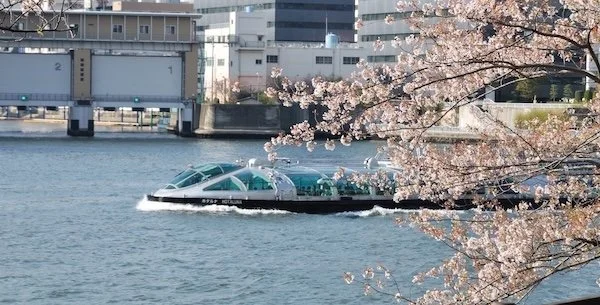
Sumida River Cruise amidst cherry blossoms
The walking portion of today’s tour is roughly 4–5 miles (depending on where you join our tour and how long you stay to explore the Hama Rikyū garden), and the ~40-minute Sumida River boat ride portion itself covers about 4 miles.
Map link to Asakusa Culture Tourist Information Center
Asakusa and the Shitamachi
To Tokyo residents, the neighborhood of Asakusa is the very heart of the old Shitamachi working-class area, historically home to merchants and artisans in the Edo period (1603–1868).
In this period, before what we might consider the “modernization” of Japan, Asakusa evolved as an entertainment district, dotted with geisha houses catering to the wealthy merchants in surrounding neighborhoods.
The name Asakusa, literally meaning “low grass,” reflects this history. Entertainment districts were historically placed in the undeveloped outskirts of Tokyo to preserve public order.
In later periods the geisha houses evolved into theaters, cinemas, and cabaret clubs.
Takeshi Kitano, better known internationally as a director and for his role alongside David Bowie in Merry Christmas Mr. Lawrence, began his career performing in cabaret clubs in this neighborhood. https://en.wikipedia.org/wiki/Takeshi_Kitano
The image of Asakusa as a place to “play” persists in the minds of Tokyoites to this day.
Shitamachi and Yamanote
Shitamachi literally means “low city,” contrasting with Yamanote, literally “mountain hand,” the higher ground where samurai residences and aristocratic estates were traditionally located.
While rooted in geography, the terms also evoke contrasting social identities.
Shitamachi retains a nostalgic, close-knit character, with narrow streets, family-run shops, and traditional festivals. It embodies a more personal, down-to-earth Tokyo where Edo-period culture lingers despite modernization.
Many locals describe Asakusa as a “village inside the city.”
Sensō-ji and Nakamise-dōri
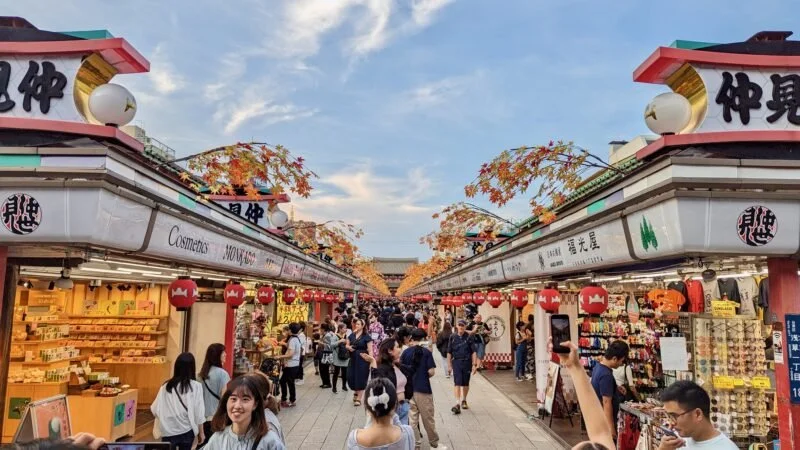
Nakamise Dori
We’ll take a short walk from the Asakusa Culture Tourist Information Center to Kaminari-mon, the Thunder Gate marking the entrance to Sensō-ji, Tokyo’s oldest and most significant Buddhist temple.
Beyond it lies Nakamise-dōri, a bustling corridor of market stalls selling traditional sweets, handcrafts, and souvenirs dating back roughly 300 years.
As you stroll you can catch the scent of:
freshly grilled rice crackers
sweet red-bean pastries
Nearby shotengai shopping streets extend like tributaries to either side — relics of an older urban retail culture.
Sensō-ji Temple
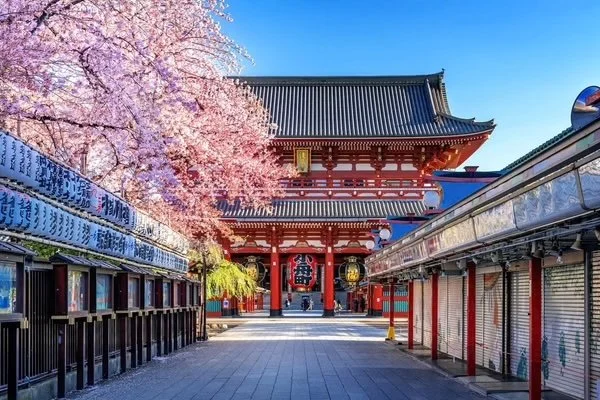
Asakusa Sensoji Temple
At Sensō-ji, the main hall and five-story pagoda frame a courtyard where worshippers pause to wave incense smoke toward themselves for good health. Click here for map link to Sensō-ji
The temple’s origins date to 628 AD, when two fishermen are said to have pulled a small golden statue of Kannon, the Buddhist goddess of mercy, from the Sumida River.
The statue remains hidden to this day according to the practice of hibutsu (“hidden Buddhas”), in which sacred images are concealed to preserve their spiritual power and reinforce the idea that faith should not depend on physical sight.
Hanayashiki Amusement Park
We pass Hanayashiki, Japan’s oldest amusement park.
Click here for map link to Hanayashiki
It opened in 1853 as a flower garden before evolving into a small amusement park.
Despite its modest size, Hanayashiki offers nostalgic attractions including:
the oldest operating roller coaster in Japan (1953)
a haunted house
a small Ferris wheel
retro carnival games
Unlike Tokyo’s larger theme parks, Hanayashiki retains a distinctly Showa-era charm.
Although we won't have time for this today, if you decide to come back, the entrance cost is approximately ¥1,200, with rides about ¥400 each.
Lunch at Komakata Dōjō
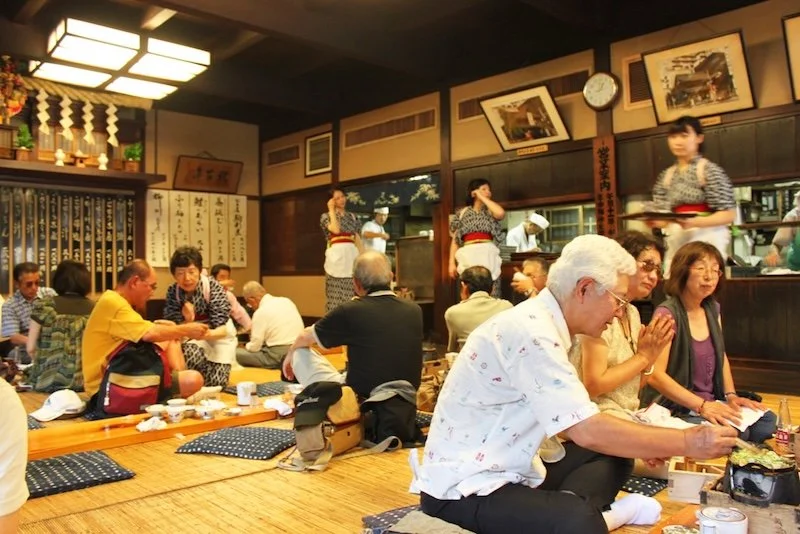
Komakata Dōjō Traditional Edo-era Restaurant
Komakata Dōjō has served dojo-nabe (loach hot pot) since the Edo period.
Meals are prepared in small iron pots simmering in front of guests, topped with finely shaved burdock root.
Typical accompaniments include:
rice
pickles
miso soup
carp sashimi
fried catfish (seasonally available now)
Another option is miso dengaku, tofu and vegetables finished with sweet miso.
Flavors are subtle rather than spicy. Click here to view restaurant website
Sumida River Boat Ride
After lunch we continue walking to Sensoji Nitenmon Pier, arriving before 1 PM for the 1:15 PM Sumida River boat departure.
The ~40-minute cruise passes beneath many of the bridges crossing the river.
The ride ends at Hama Rikyū Garden Pier.
Kyu-Shiba-Rikyū Garden
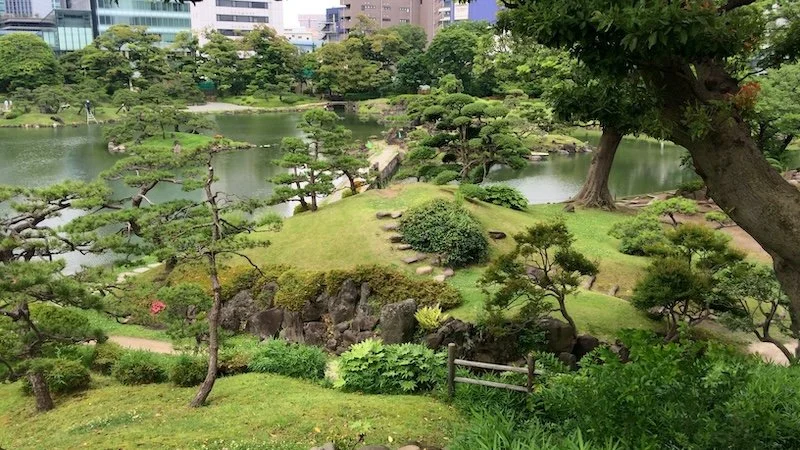
Kyu-Shiba-Rikyū Overview
Before entering Hama Rikyū, there is a detour to the smaller Kyu-Shiba-Rikyū Garden.
Click here to view Kyu-Shiba-Rikyū Garden garden map link.
This quiet space features traditional rock arrangements, still ponds, and seasonal plantings.
Together with Hama Rikyū, it is one of Tokyo’s remaining daimyo gardens, associated with feudal lord estates built on land reclaimed from Tokyo Bay during the Tokugawa Shogunate.
Hama Rikyū Garden
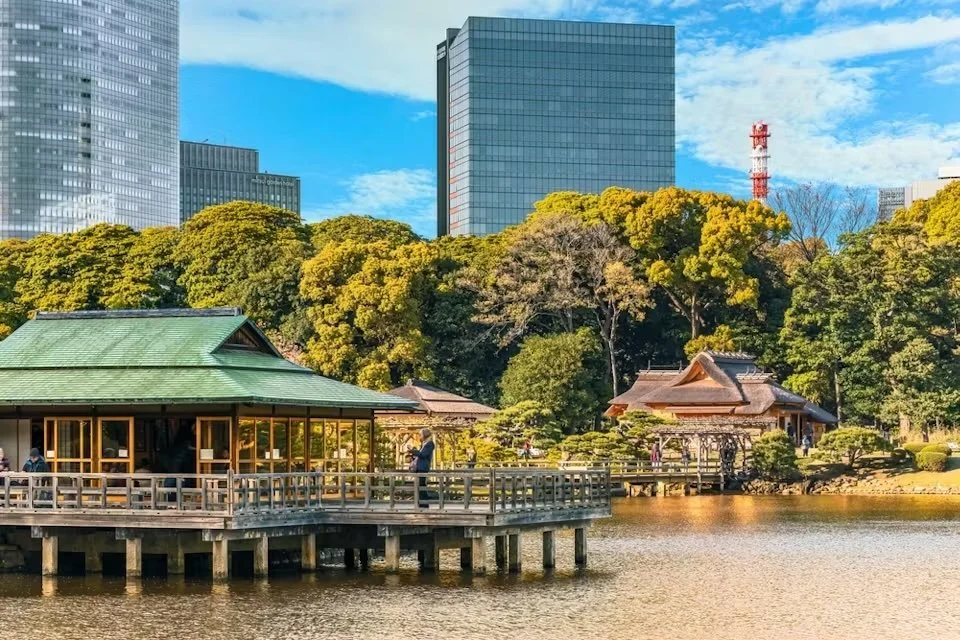
Nakajima Tea House in Hama Rikyū Gardens
Click here to view map of Hama Rikyū Gardens
At Hama Rikyū, the contrast between old and new Tokyo is striking.
Once the private retreat of the Tokugawa shoguns, the garden contains a tidal pond surrounded by winding paths, sculpted pines, and seasonal flowers.
A short walk leads to the Nakajima Teahouse, appearing to float above the water.
Here we pause for matcha tea and wagashi sweets, offering a quiet moment of reflection.
End of Tour (around 3 PM)
After tea, guests are free to:
remain in the garden
explore nearby neighborhoods
return to hotel (reminder we have a 4:30 PM orientation walk, presentation and dinner planned)
from here, the walking time back to Mitsui Garden Hotel Ginza Tsukji is about 20 minutes
Note: Hama Rikyū Garden closes at 5 PM
Optional Tour Cost
$150 USD per person
Includes:
services of local guide Dugan Lunday
light lunch
Sumida River boat cruise
garden entrance fees and matcha tea with wagashi sweet at the Nakajima tea house
The tour will happen as long as at least one person registers by 5 PM on 5 April.
Please confirm your interest via WhatsApp or email to Mark before the stated deadline.