
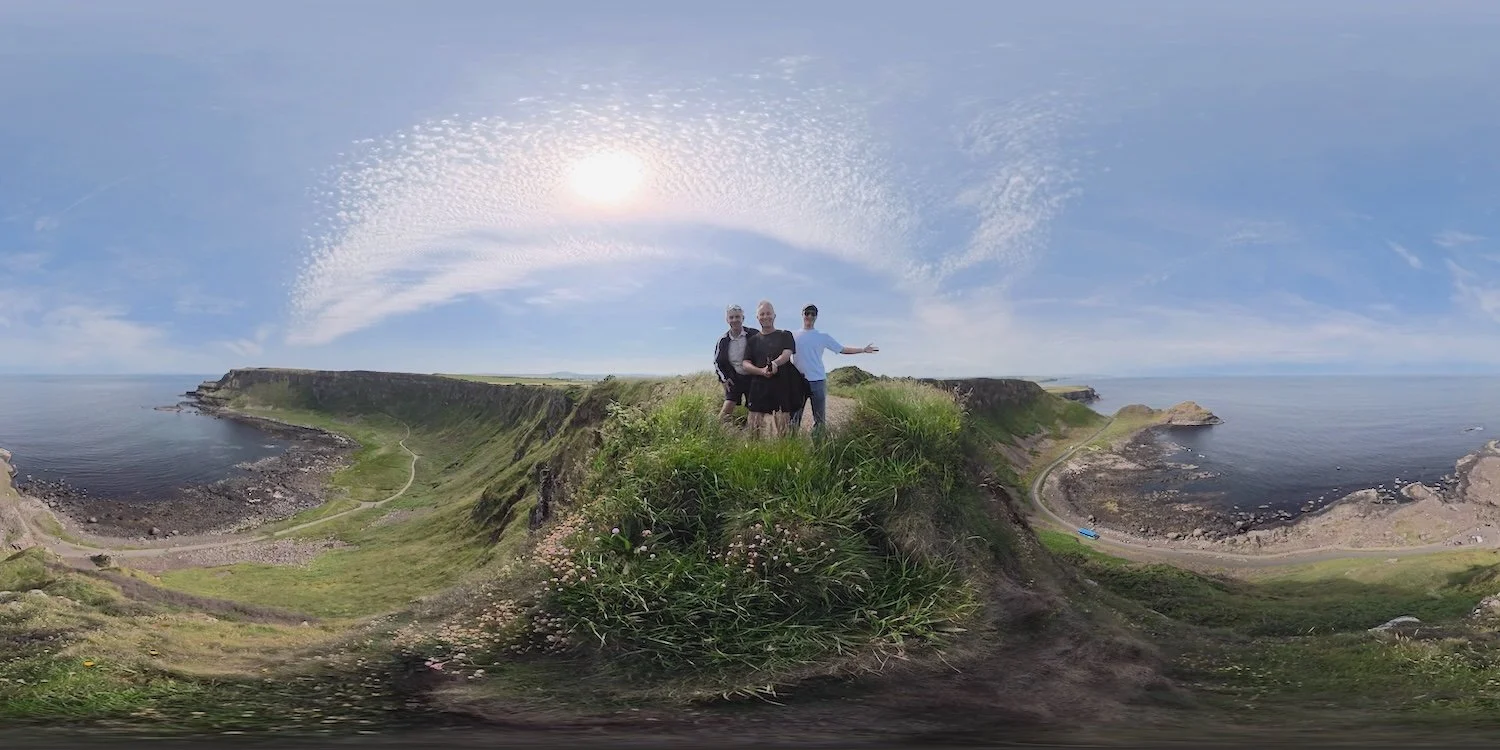
June 17–30, 2026 — Mark, Jim, and Andrew
Everyone with Irish ancestors imagines the same trip. You land in Dublin, drive to the parish your people left, find the stone, kneel, take the photograph, and come home. My brother Jim and I imagined exactly that, and in June we went, with Jim's son (my nephew) Andrew, a folder of parish records, and ten printed copies of a handout about our great-grandparents, in case anyone in Ireland wanted to know what became of them.
But that picture of an ancestry trip gets it backwards. It assumes the loss runs one way: that the people who left are the ones who lost the thread, and the people who stayed are the ones who kept it. Our family had believed that for a hundred and forty years. We had P.J. Conroy's obituary, his passport, his grave in Kansas. We assumed Tyrone had all the rest.
Tyrone had nothing. When we reached the churchyard at Beragh, the eighty-four-year-old man waiting for us had not known, until a few weeks before, that P.J. Conroy ever existed. The brother who went to America had fallen out of his family's telling so completely that a Kansas newspaper from 1922 was the only place his brothers' names survived together. We had not gone to Ireland to retrieve a story. We had gone, without knowing it, to give one back. And the rope we thought was cut in 1880 turned out to have been held, once, by P.J. himself. This is how we found out.


(above) The P.J. Conroy family of Esbon, KS in the early 1900s (L) 1918–19 (R) with Tom, Bill, Dan, John; Nelle, P.J., Mary Ann, Mayme
Why did my grandmother come home from Sixmilecross with nothing?
The family had tried this before, and the record of that attempt is a warning. In June 1954 my father Tom, a twenty-four-year-old medical student on a family tour of Europe, spent a day in a Belfast hotel reading Evelyn Waugh while his mother Nelle went down to Sixmilecross to look for her father's people. She found no one. Dad's diary for that night reads, "The trip was fruitless, as we all knew it would be, but it soothed her sentimentality." He found Ireland poverty-stricken and dull, and later carried an irreparable grudge against the church that had refused to bless his marriage to our Italian Presbyterian mother. He left the country writing in his diary, "You can have Ireland."
What we carried seventy-two years later was not much thicker than what Nelle carried. P.J. sailed from Liverpool in May 1880 as a teenager, was a policeman in Boston, worked his way to Kansas, married Mary Ann Farrell, who had left Rathangan in County Kildare as a small child, and farmed near Esbon before moving into Beloit, where he ran a dairy and sat on the city council. Six children. Two graves at St John's. On the Irish side, his father was a blank record reading "Conroy, Ireland," and his mother did not exist at all.
Where was P.J. going in the summer of 1910?
The trip was three weeks old on paper before it actually started. In the days before we flew to ireland the research answers became a steady stream. Ten days out, an obituary and a DNA match lined up and gave P.J. his parents: Patrick Conroy and Catherine McCrory of Foremass, married at Beragh in 1853. A week out, a woman in Belfast named Claire Sullivan wrote to say that one of my letters to a parish had "landed with" her, and that her father Hugh, born 1941, still lived on the family ground. Two days out, I sat up until eleven transcribing Dad's diary, and found Nelle's fruitless day.
Then, the evening I landed alone in Dublin, two more pieces arrived within hours of each other. Joseph Mullin, an Omagh man with Sixmilecross connections who had gone and looked at the registers himself, sent scans by WhatsApp: the 1853 marriage, eight baptisms, P.J. among them in 1861, and an infant sister, Mary Anne, who lived ten weeks in 1864 and whom no one alive had known about. And Marla, a librarian in Beloit, Kansas, found P.J.'s U.S. passport application, sworn on the 28th of May 1910, when he was forty-eight. Birthplace Six Mile Cross. Five foot eight, blue eyes, and under "face," in the clerk's hand, "fat." He was, the form says, "about to go abroad temporarily," alone, and meant to return within three months. It does not say where he was going. I put the question in my pocket with the handout and went to bed.
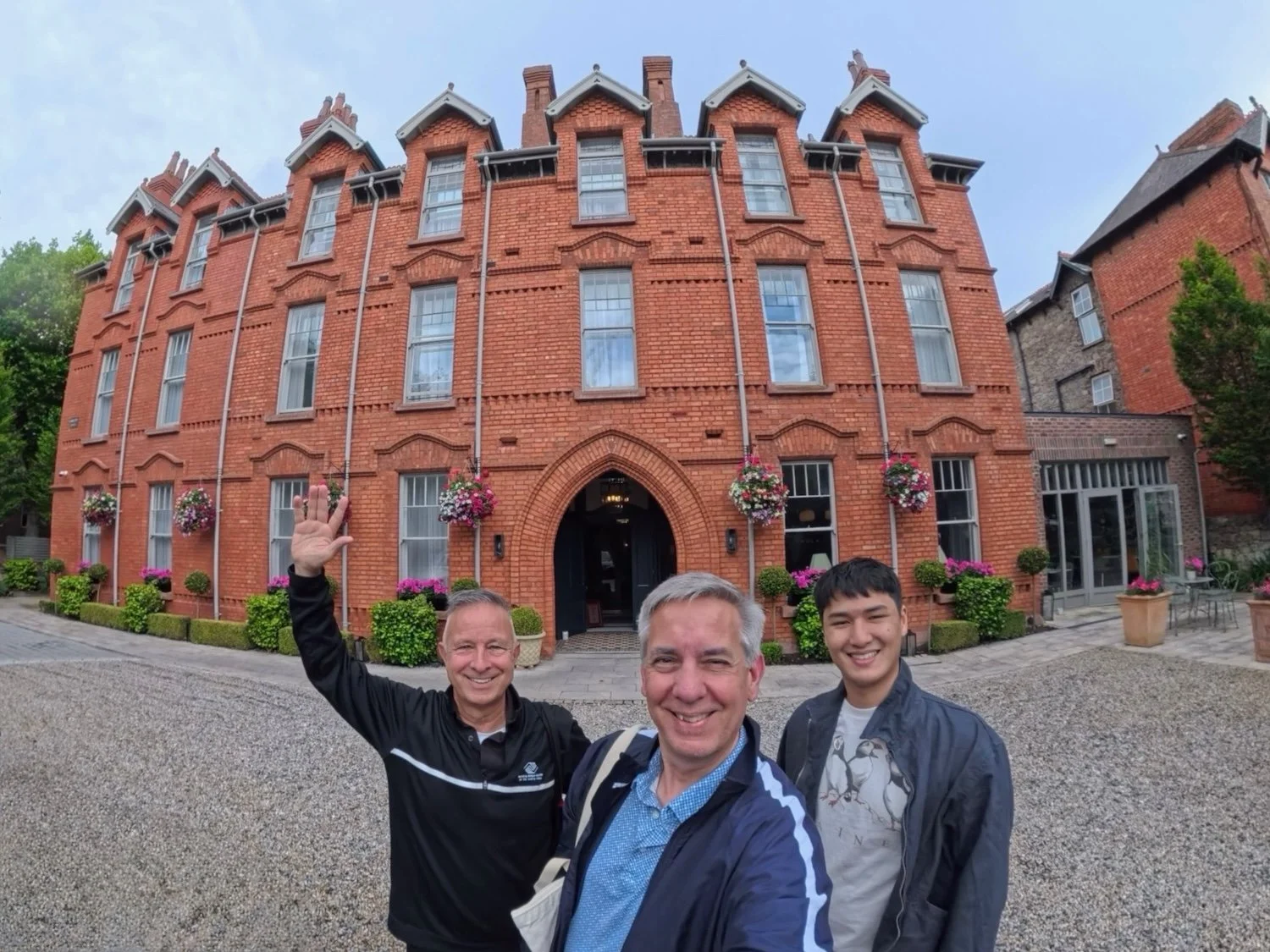
The Wilder Townhouse Hotel
Jim and Andrew landed the next morning, and Dublin gave us three days that were not part of the quest. The EPIC emigration museum, where a loop of Spike Milligan singing "Water Boy" until a bucket hits him became the road trip's anthem. Word from an Italian court that our citizenship through our mother's side had been approved, and a rainbow behind the three of us minutes later. A picnic in St Anne's Park with our Italian cousin Alessandro and his wife Alexandra. The first Guinness, at the Stag's Head; mine was the 0.0. A Sunday roast with friends visiting Dublin from Paris and a walk home along the Grand Canal through the Metallica concert crowd (many parents with kids, all wearing dark and agressive Metallica garb). Then, on Monday morning, I took the wheel on the left side of the road and the trip turned toward its reason.
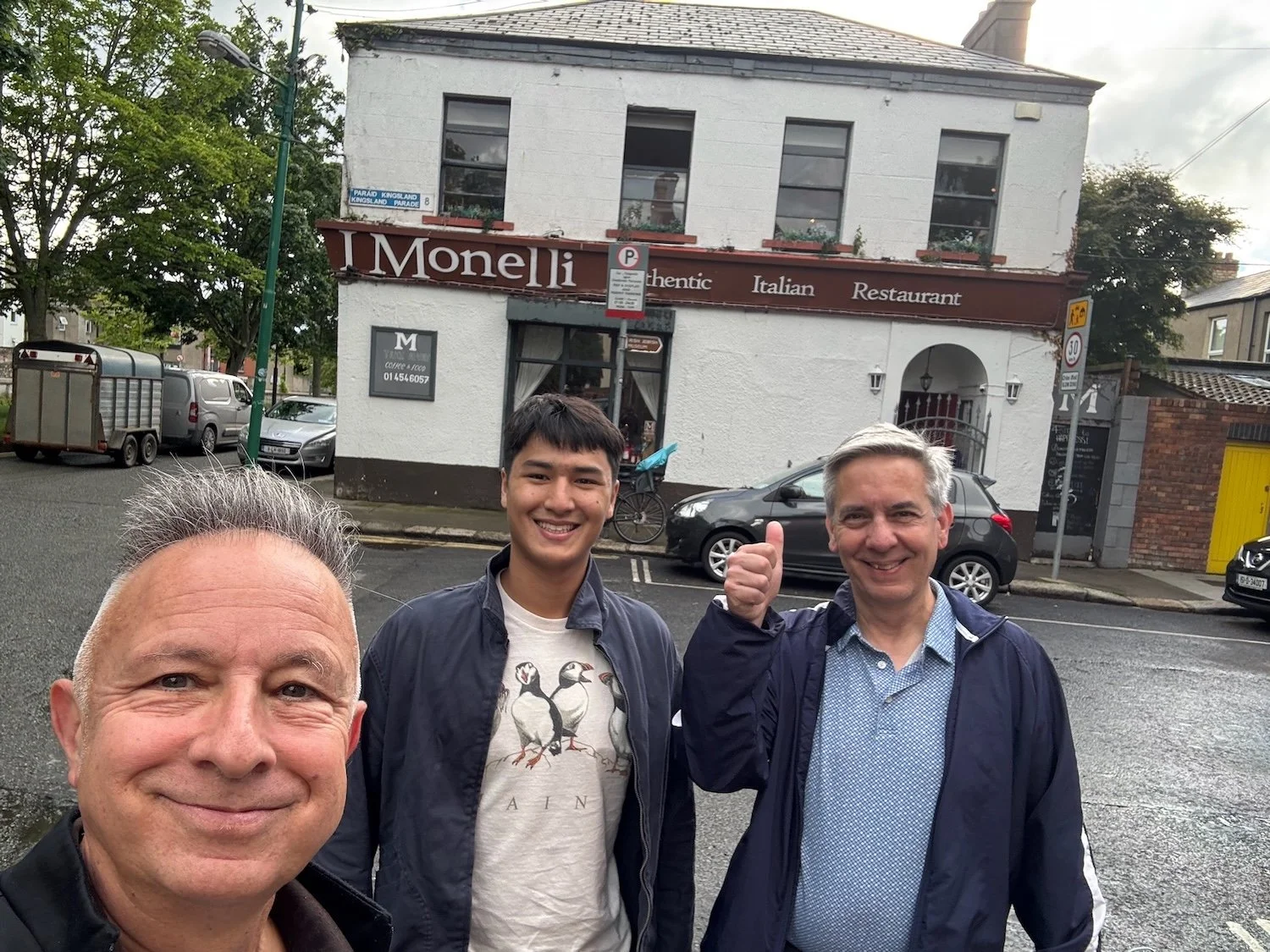
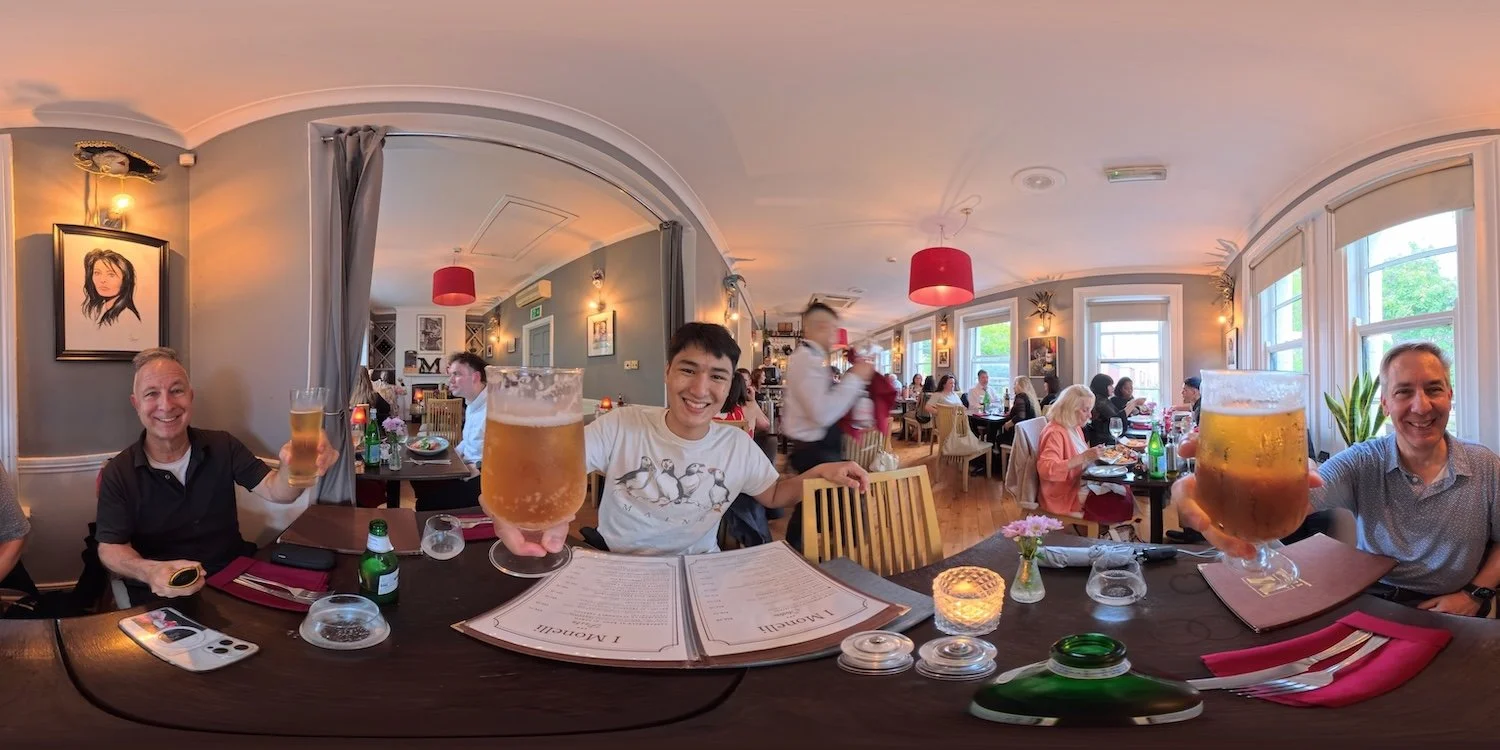
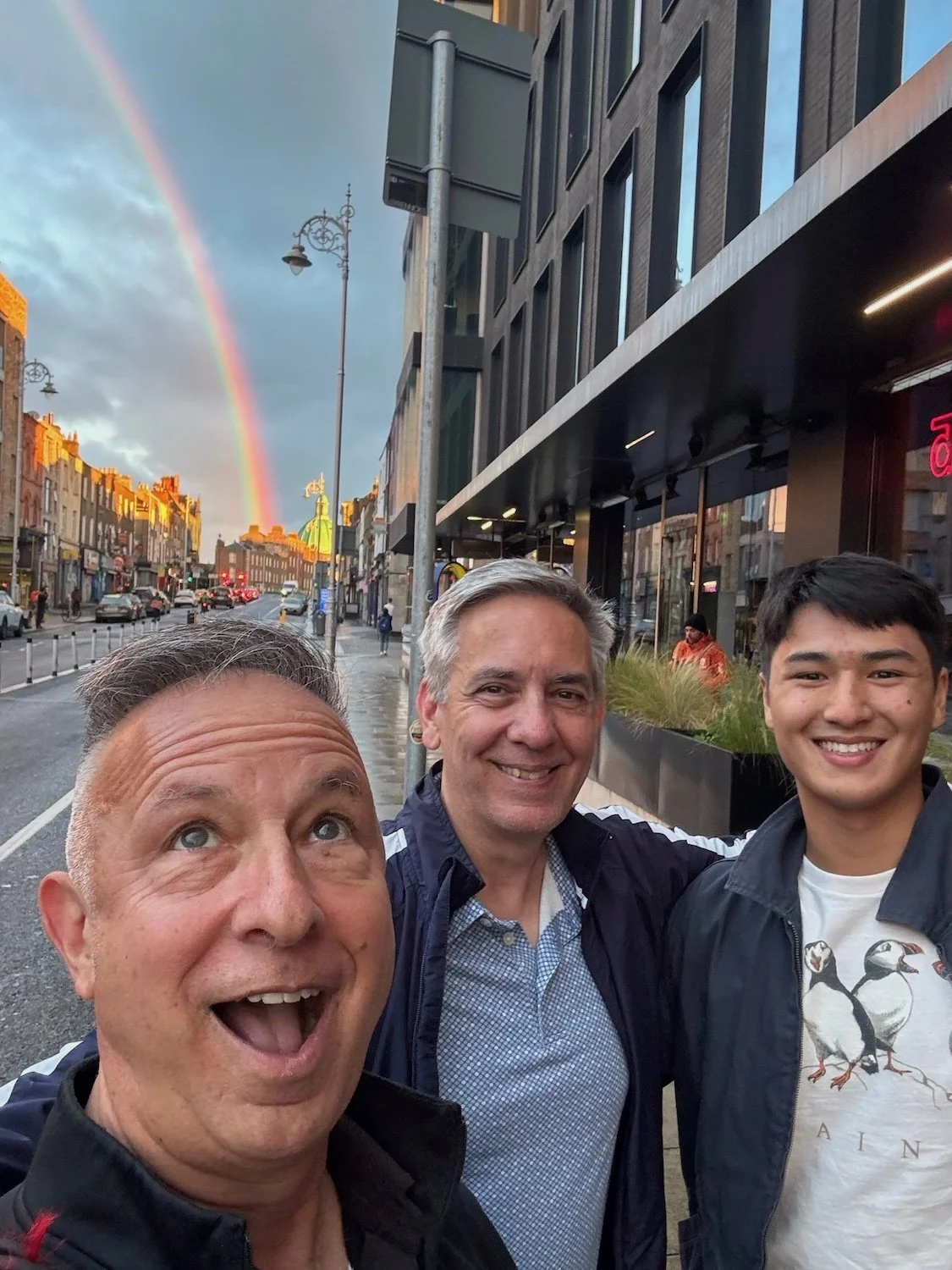
I Monelli Italian Restaurant (above)
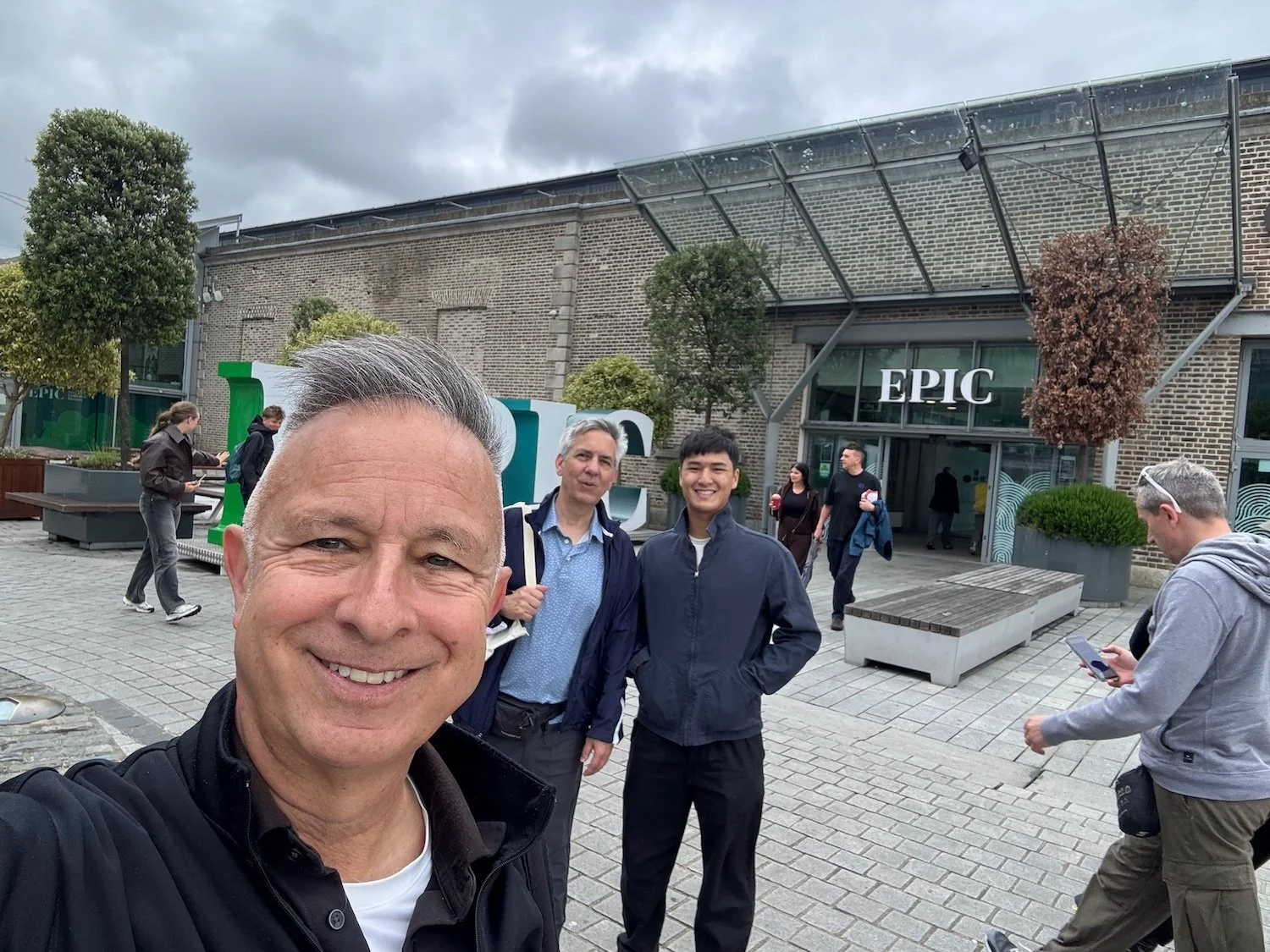
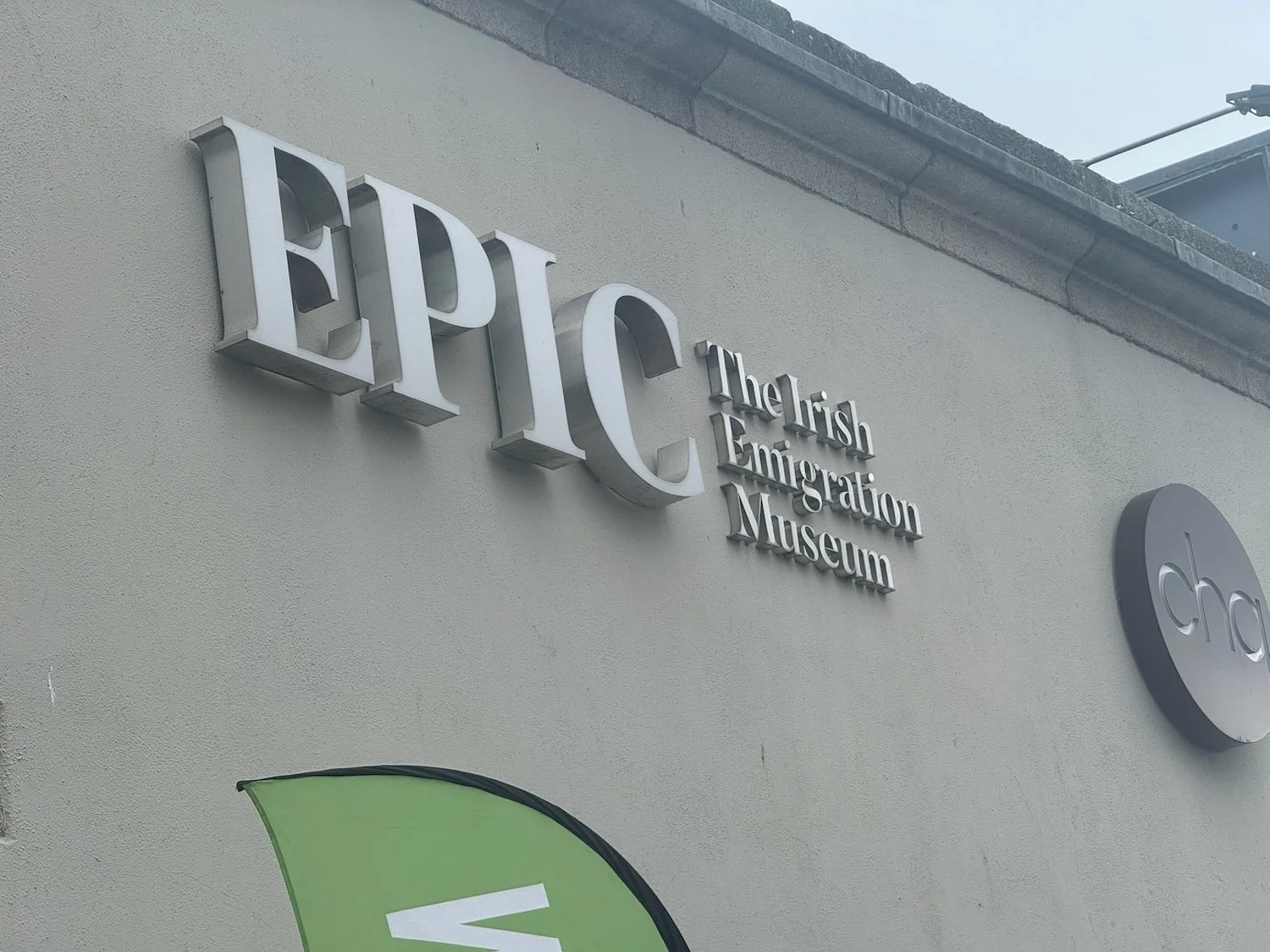
EPIC Museum (above)
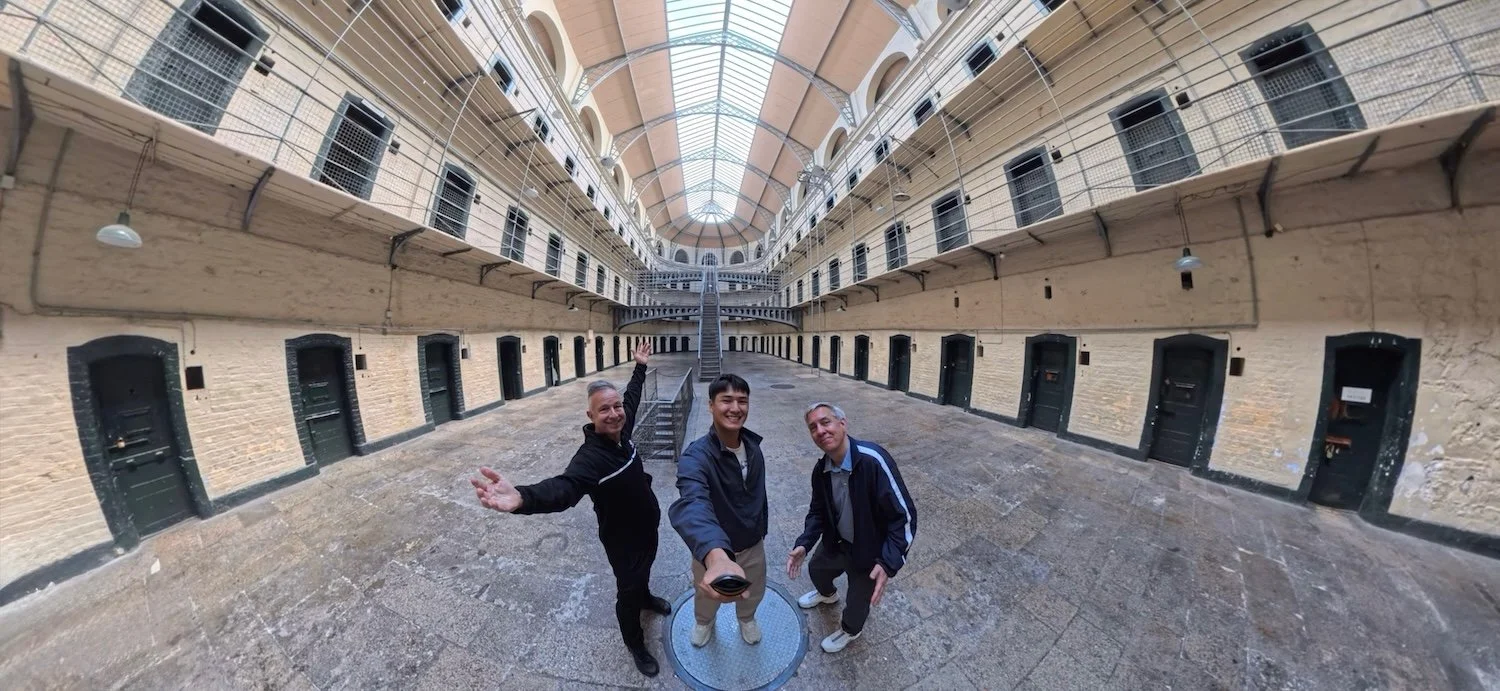
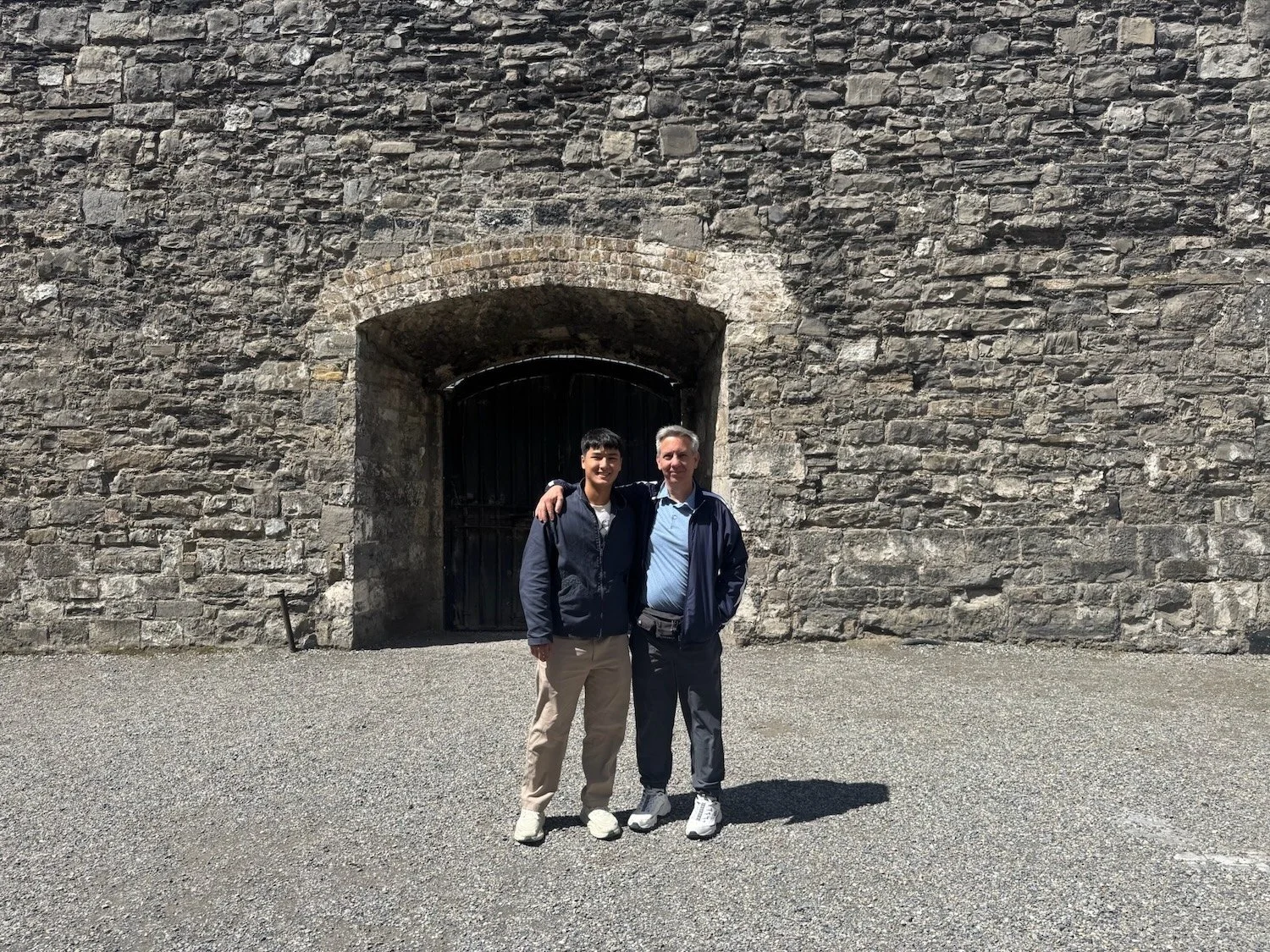
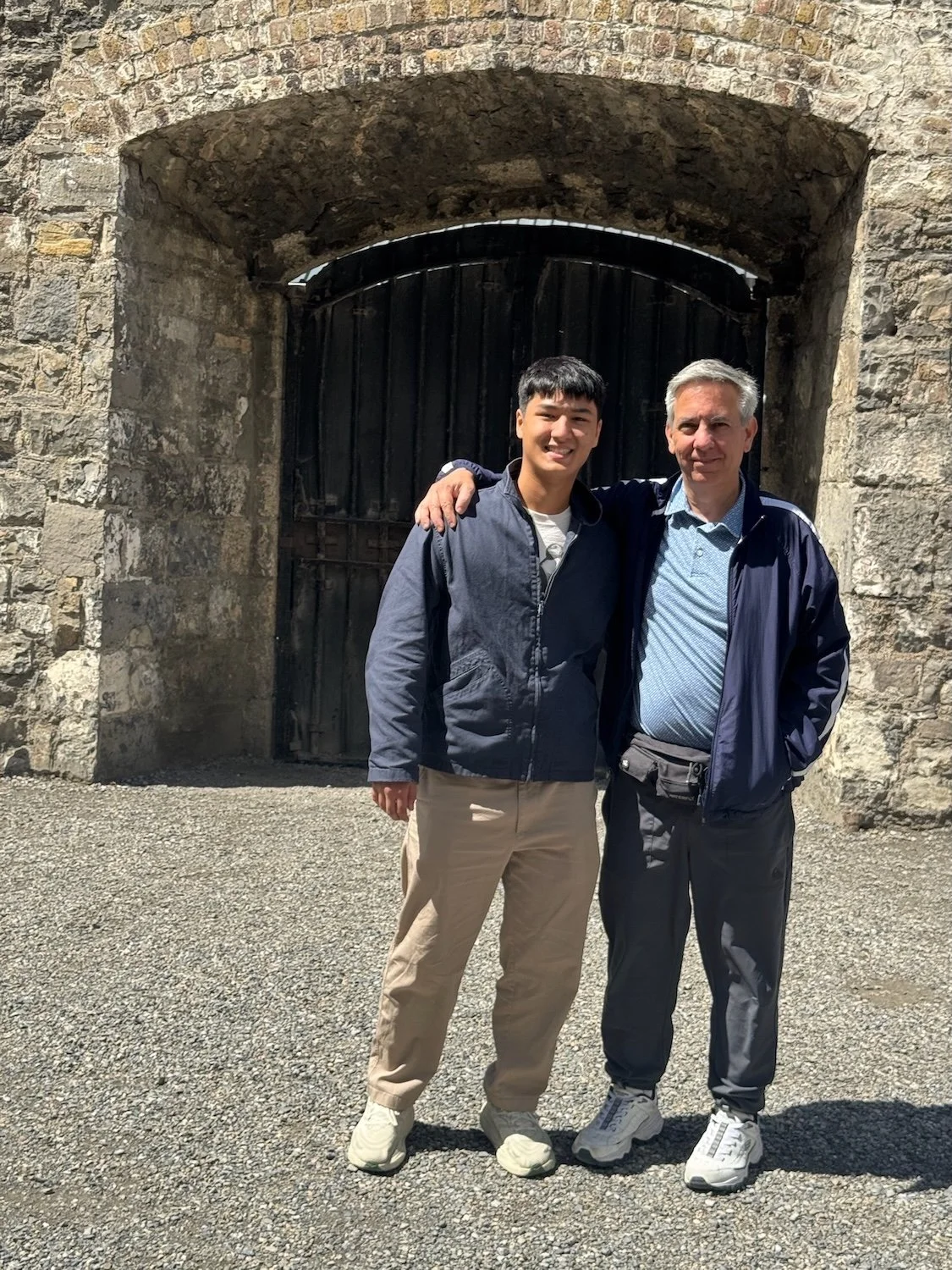
Kilmainham Gaol (above)
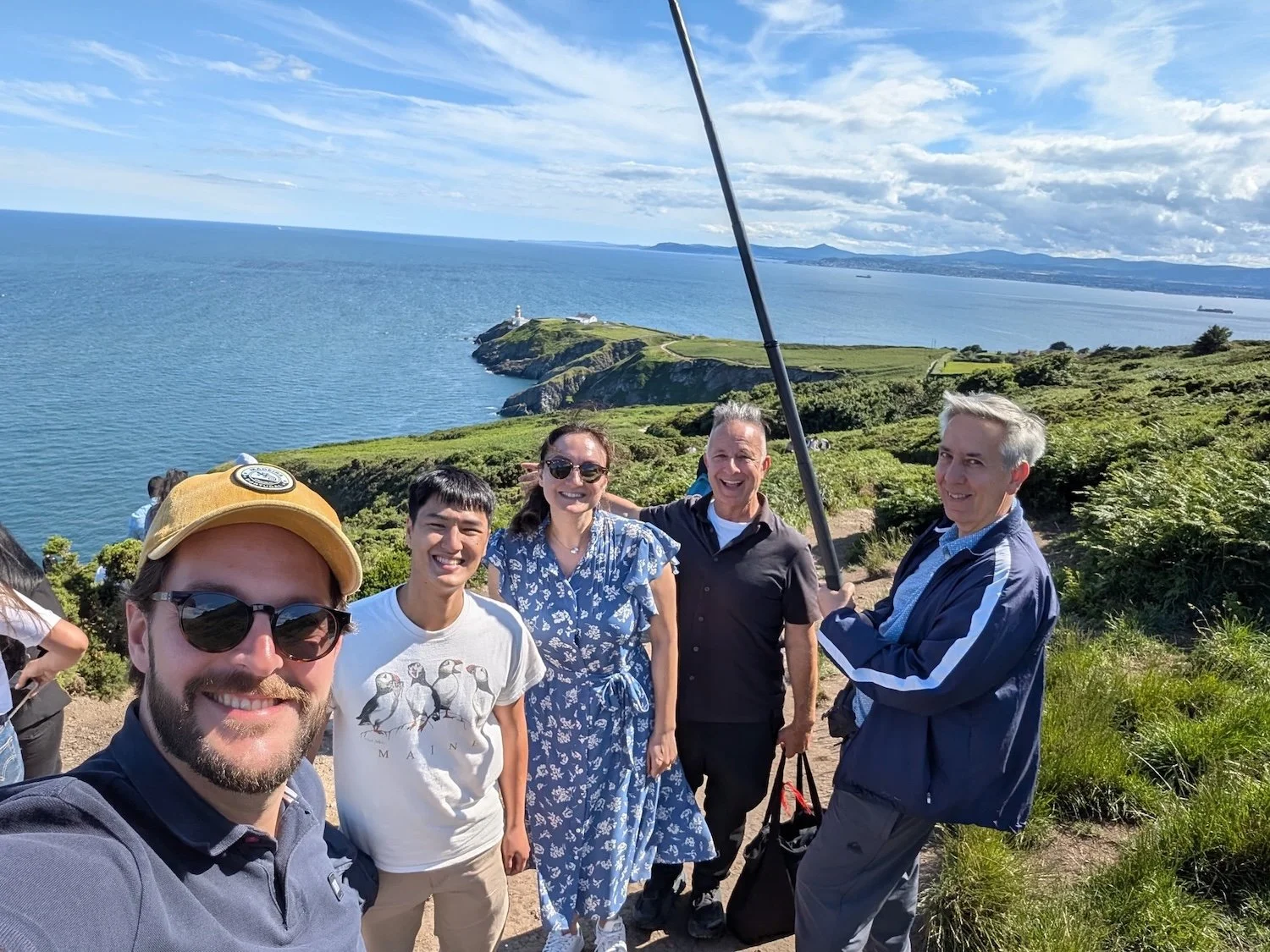
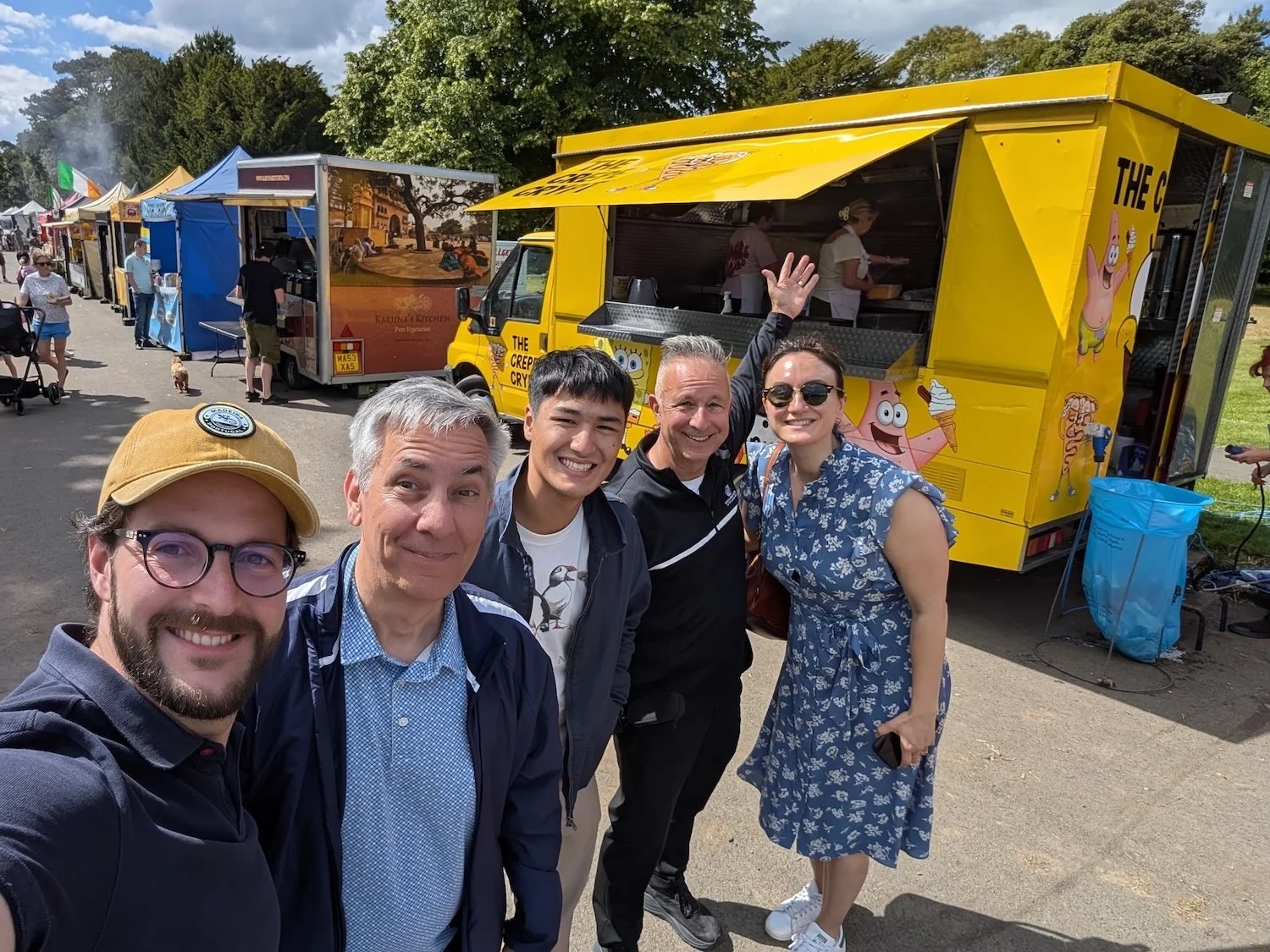
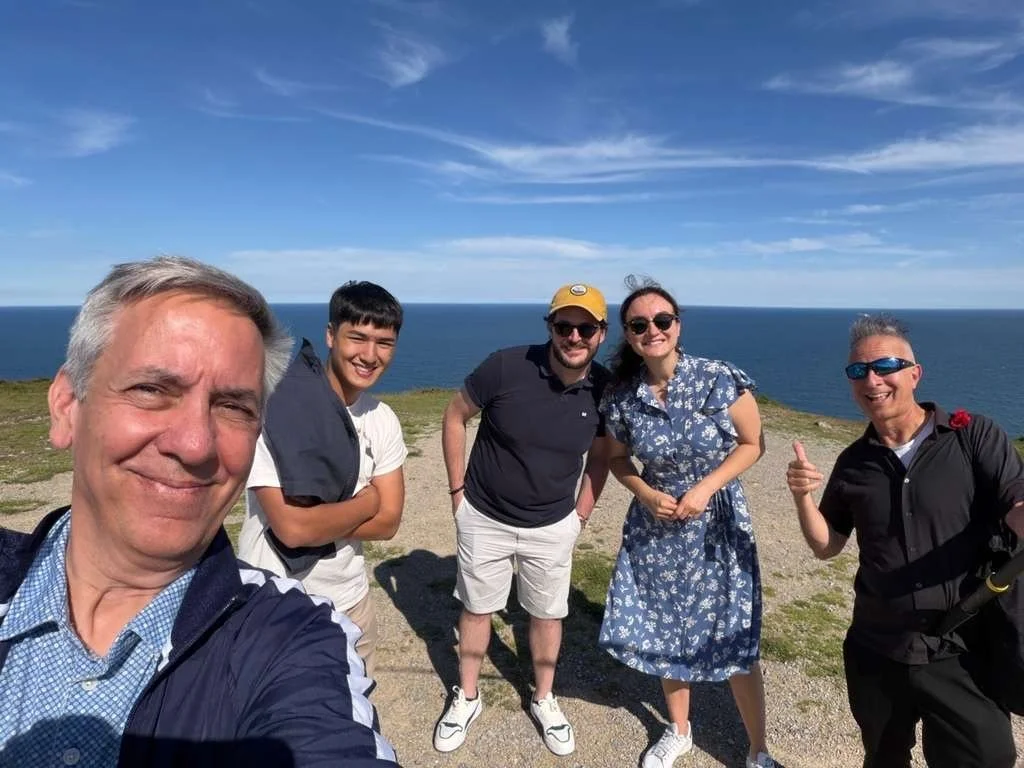
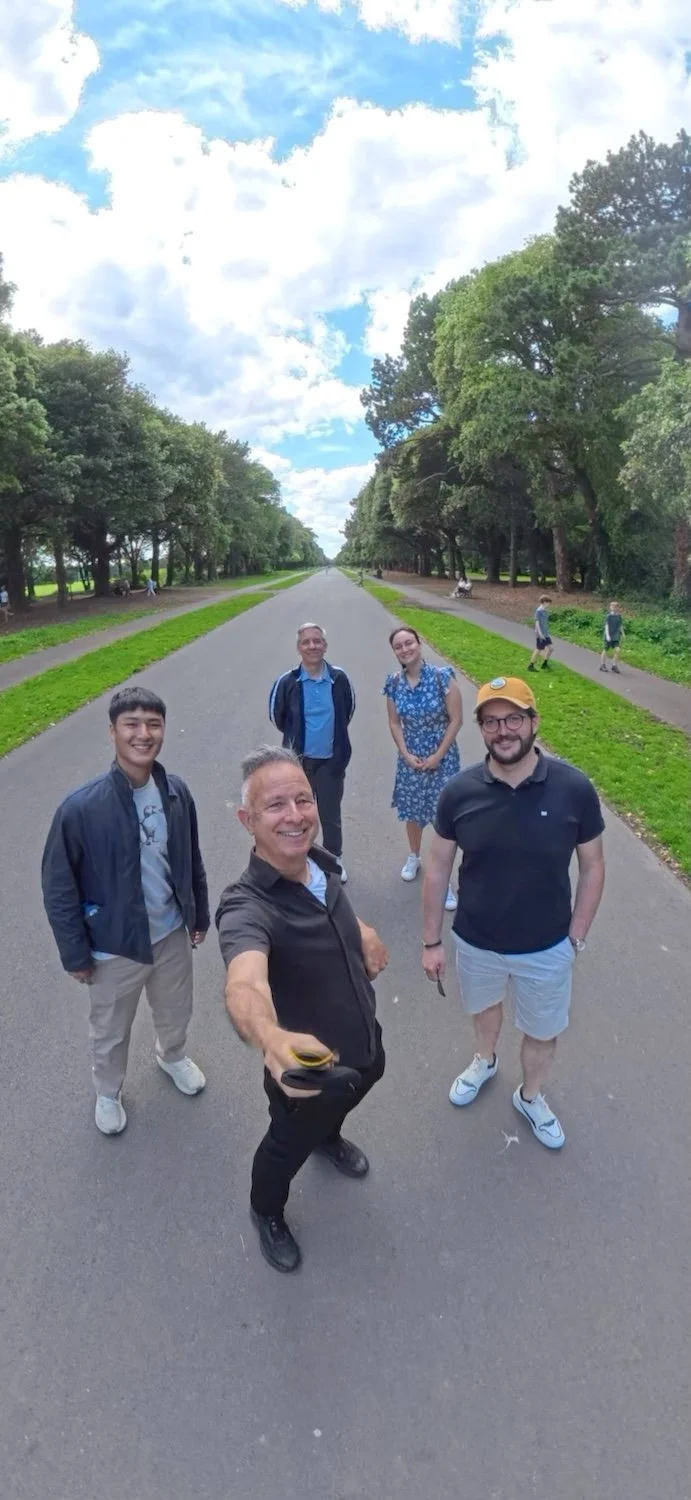
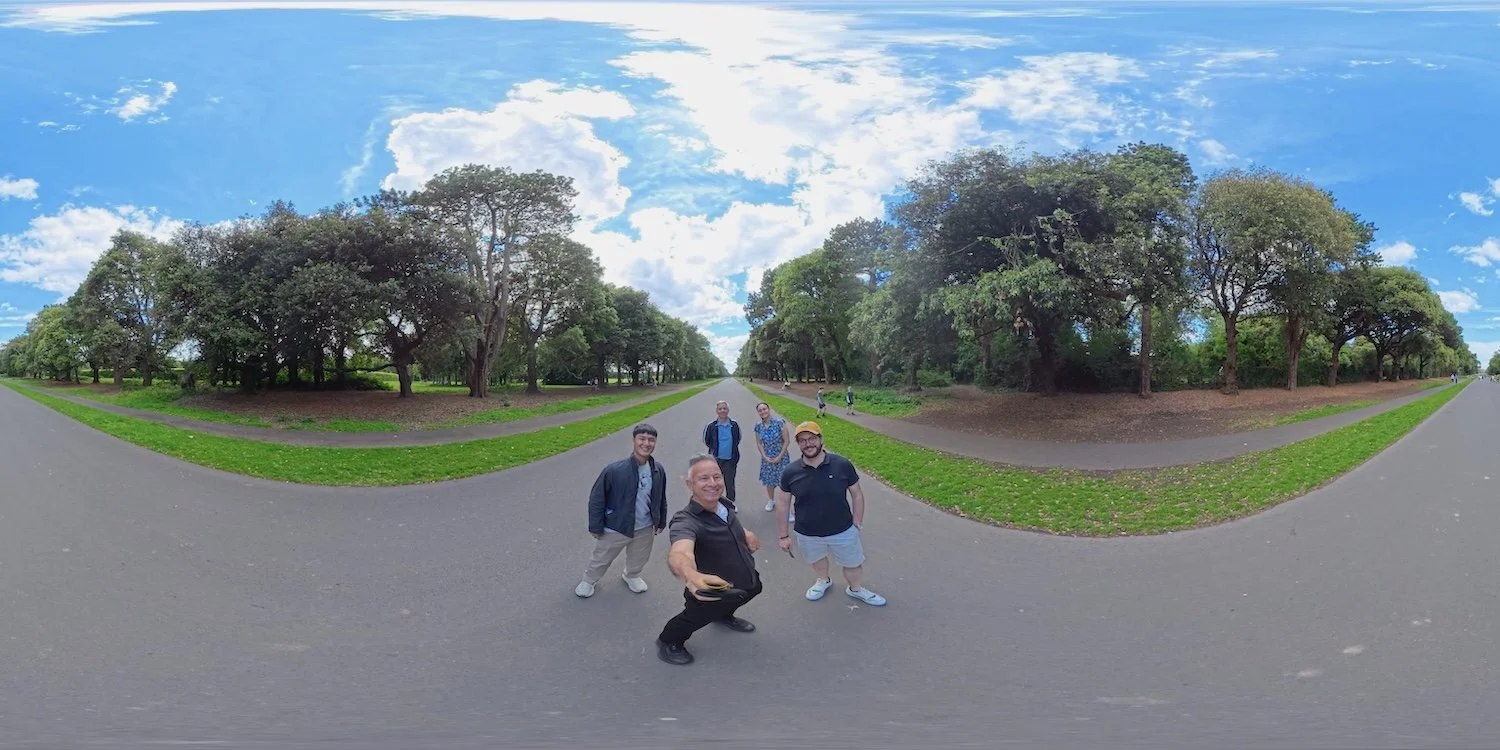
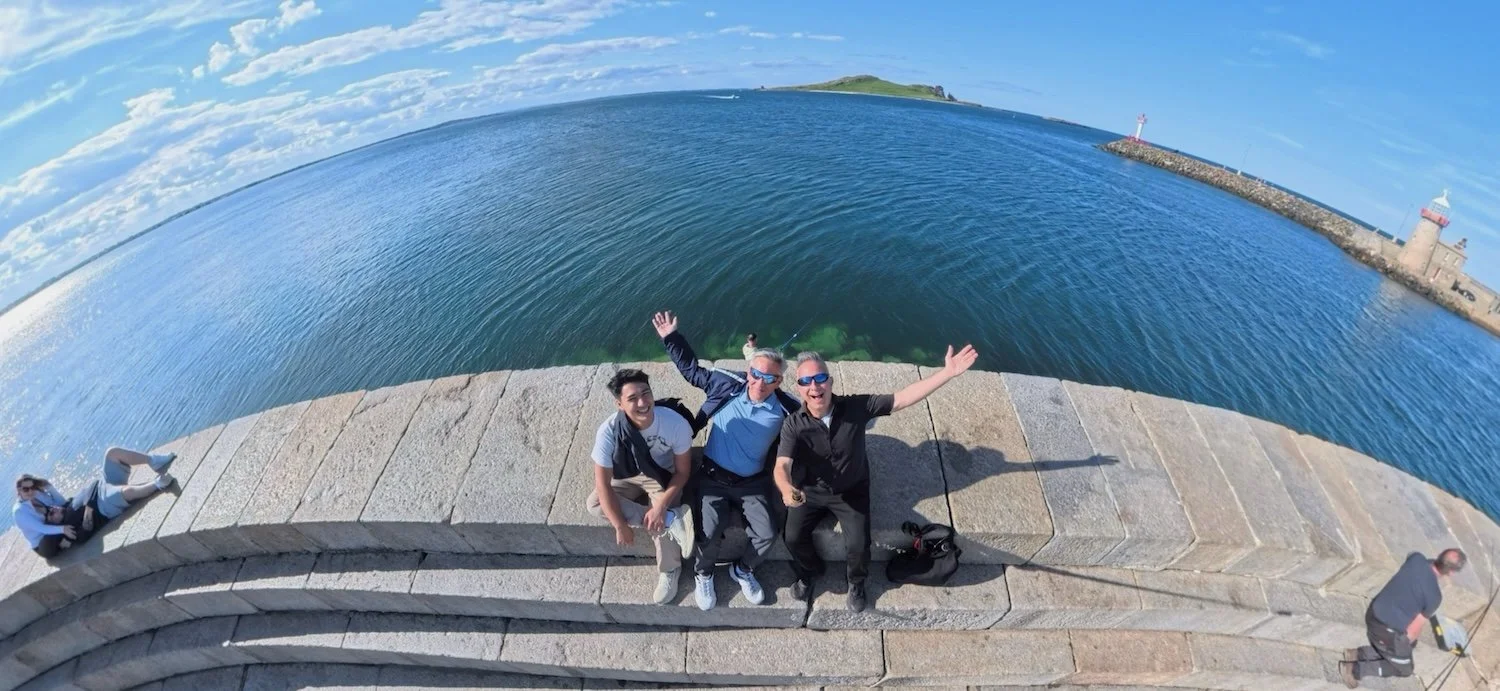
Howth

Stag’s Head Pub, Dublin
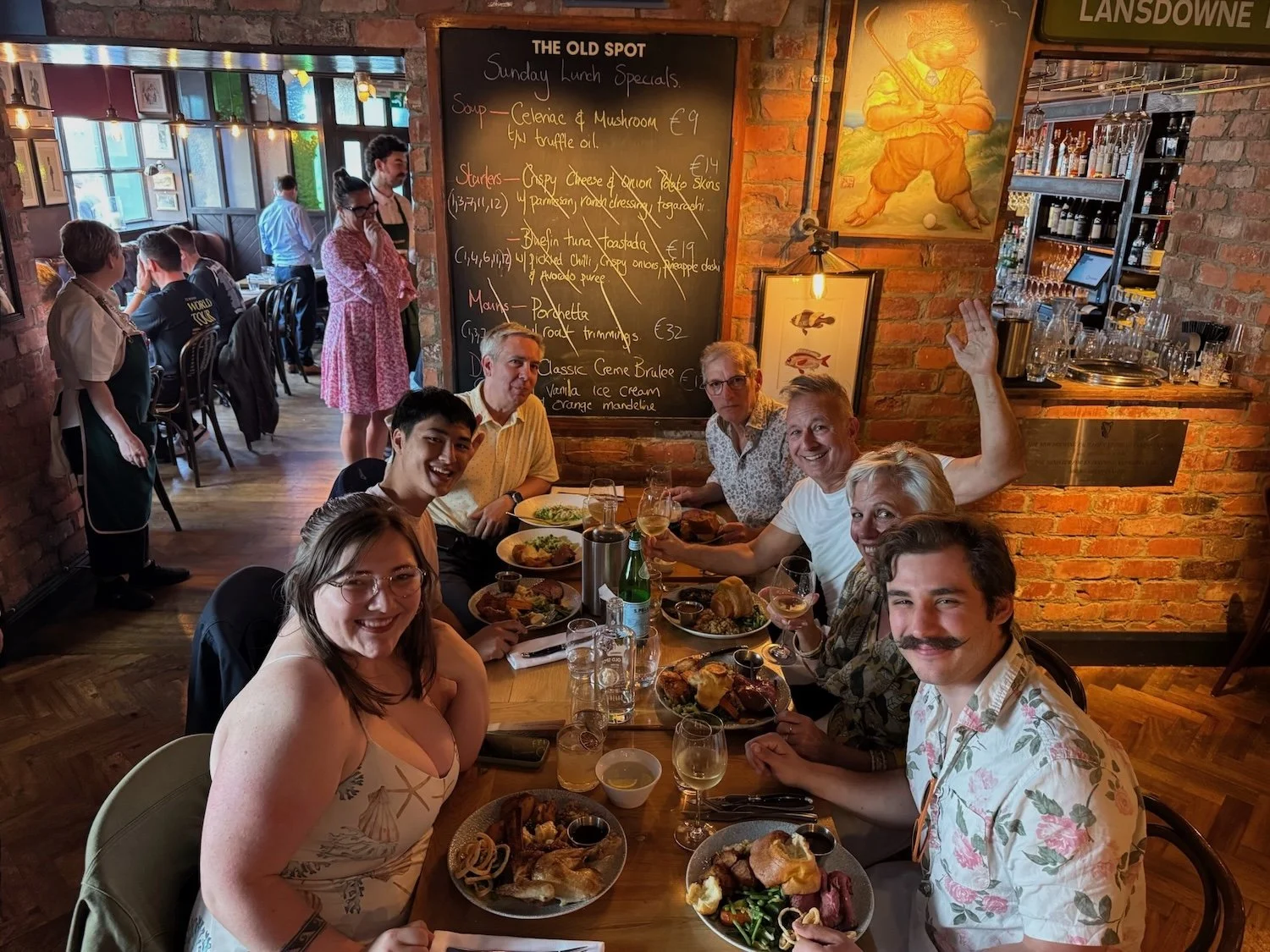
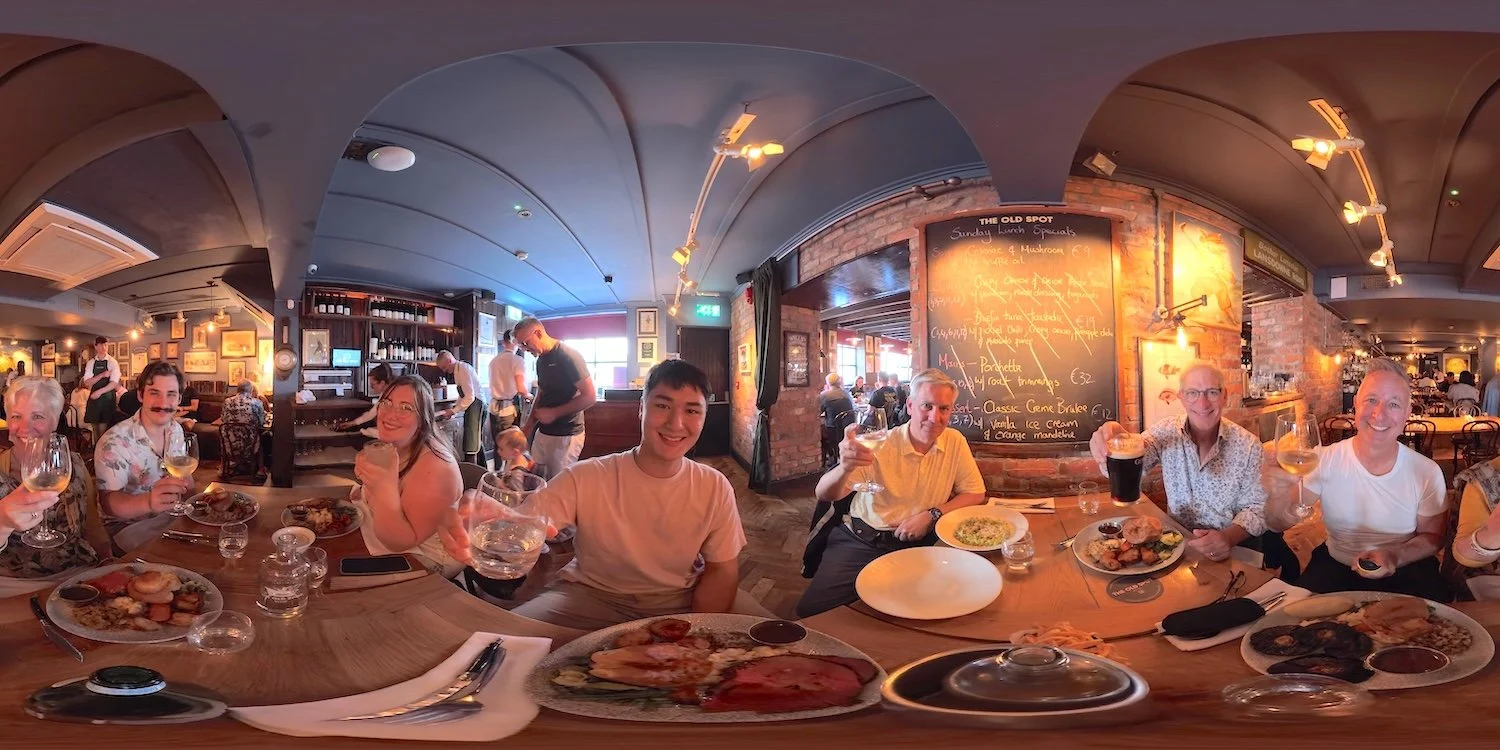
The Old Spot, Sunday Roast, with the Sturmans (above)
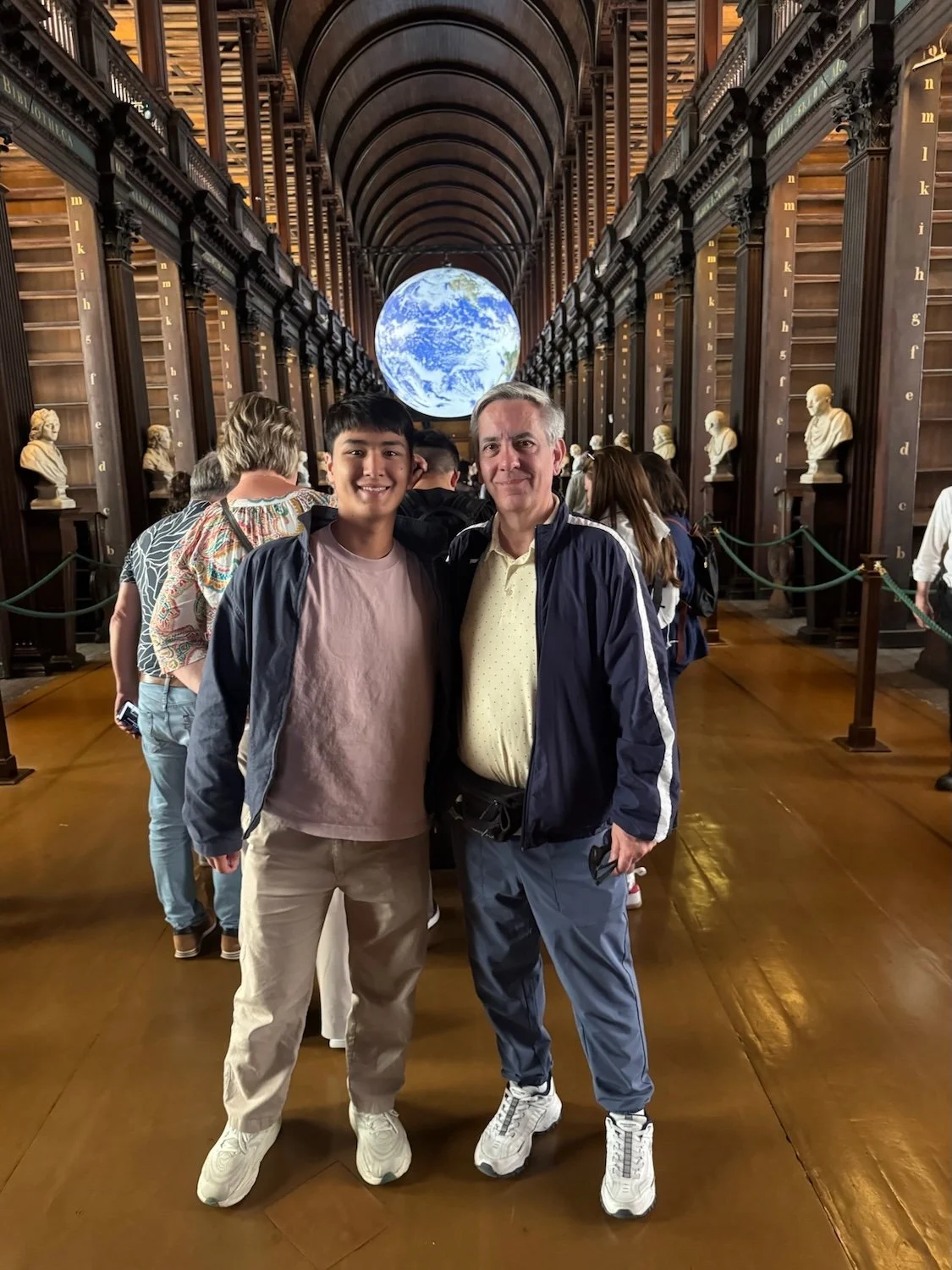
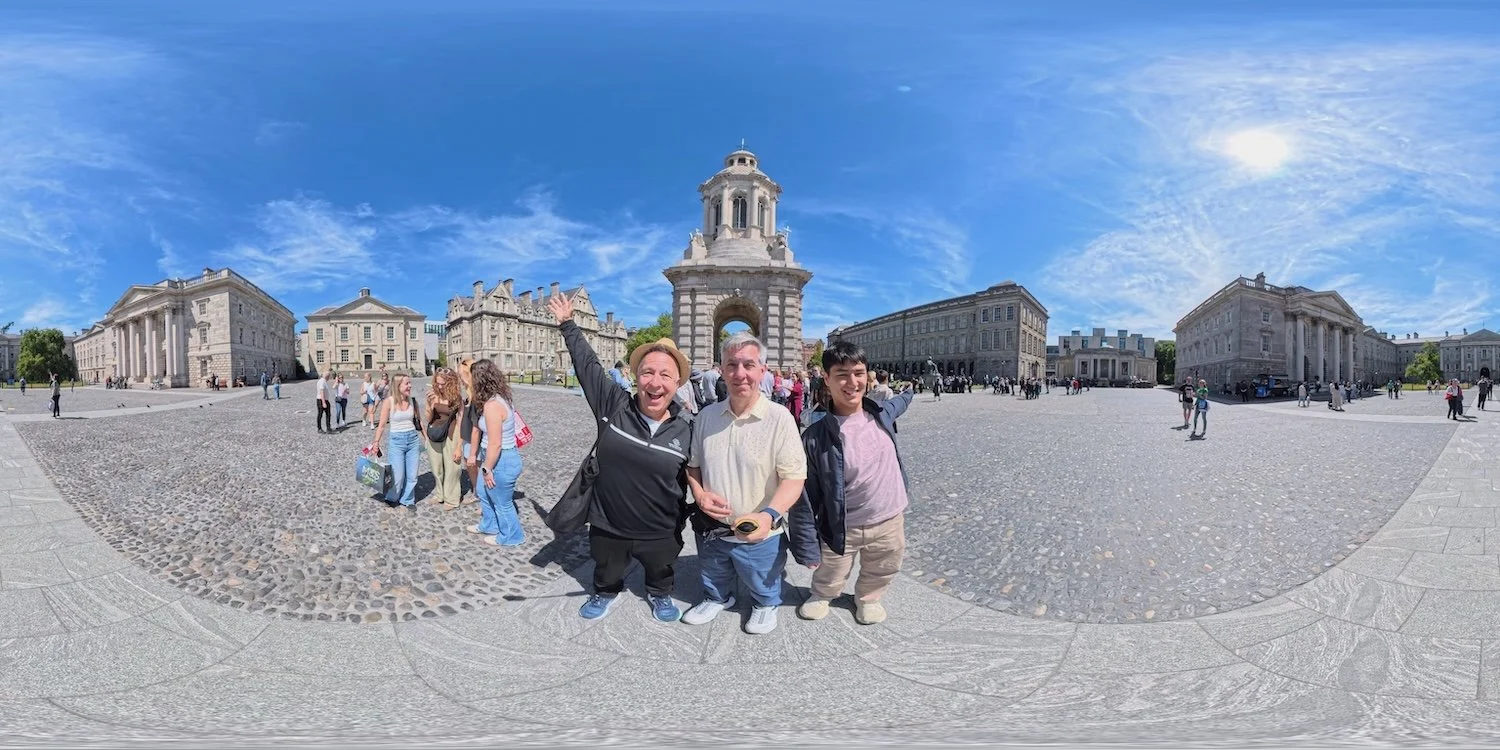
Trinity College (above)
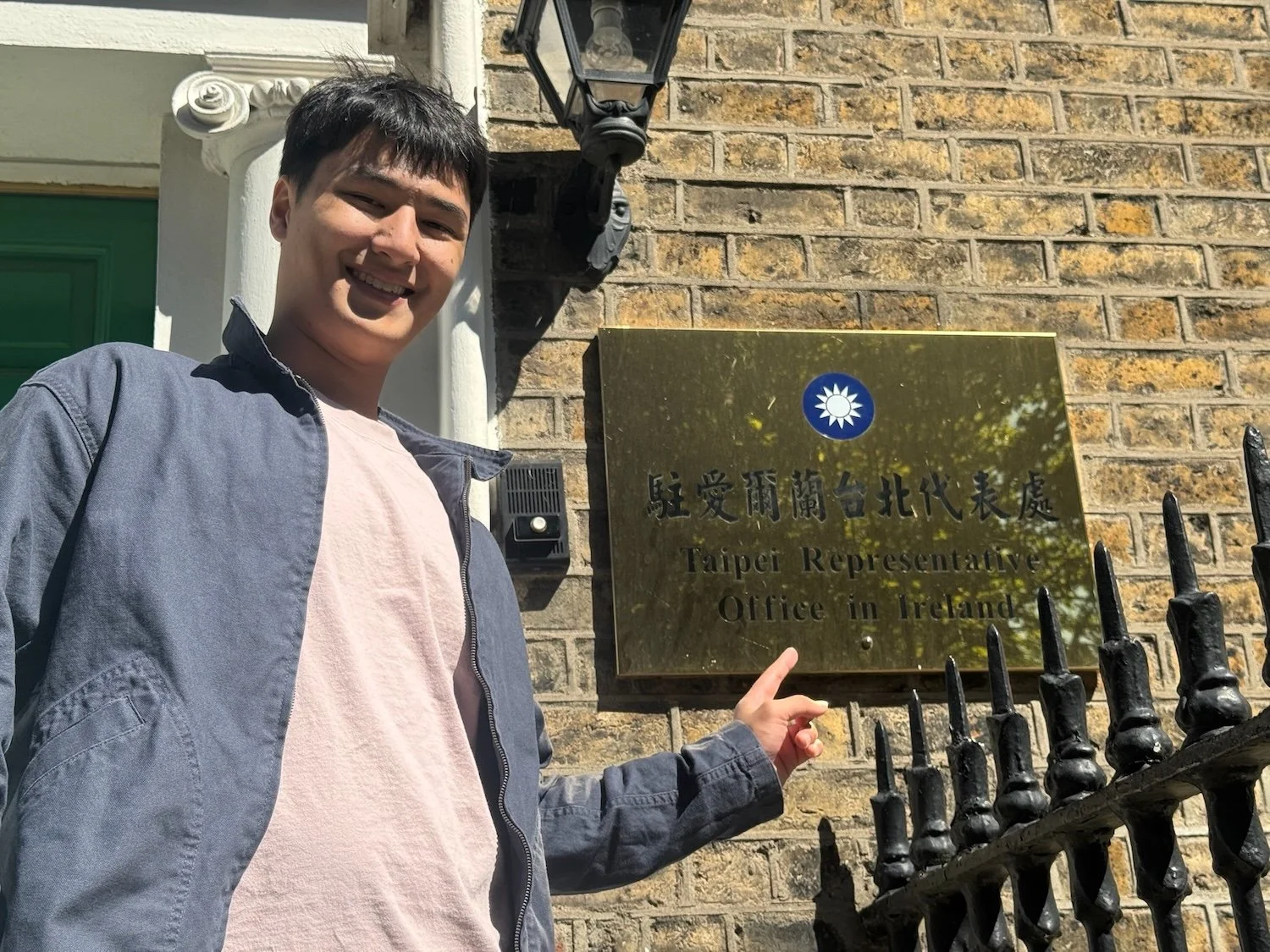
Taipei Representative Office in Dublin
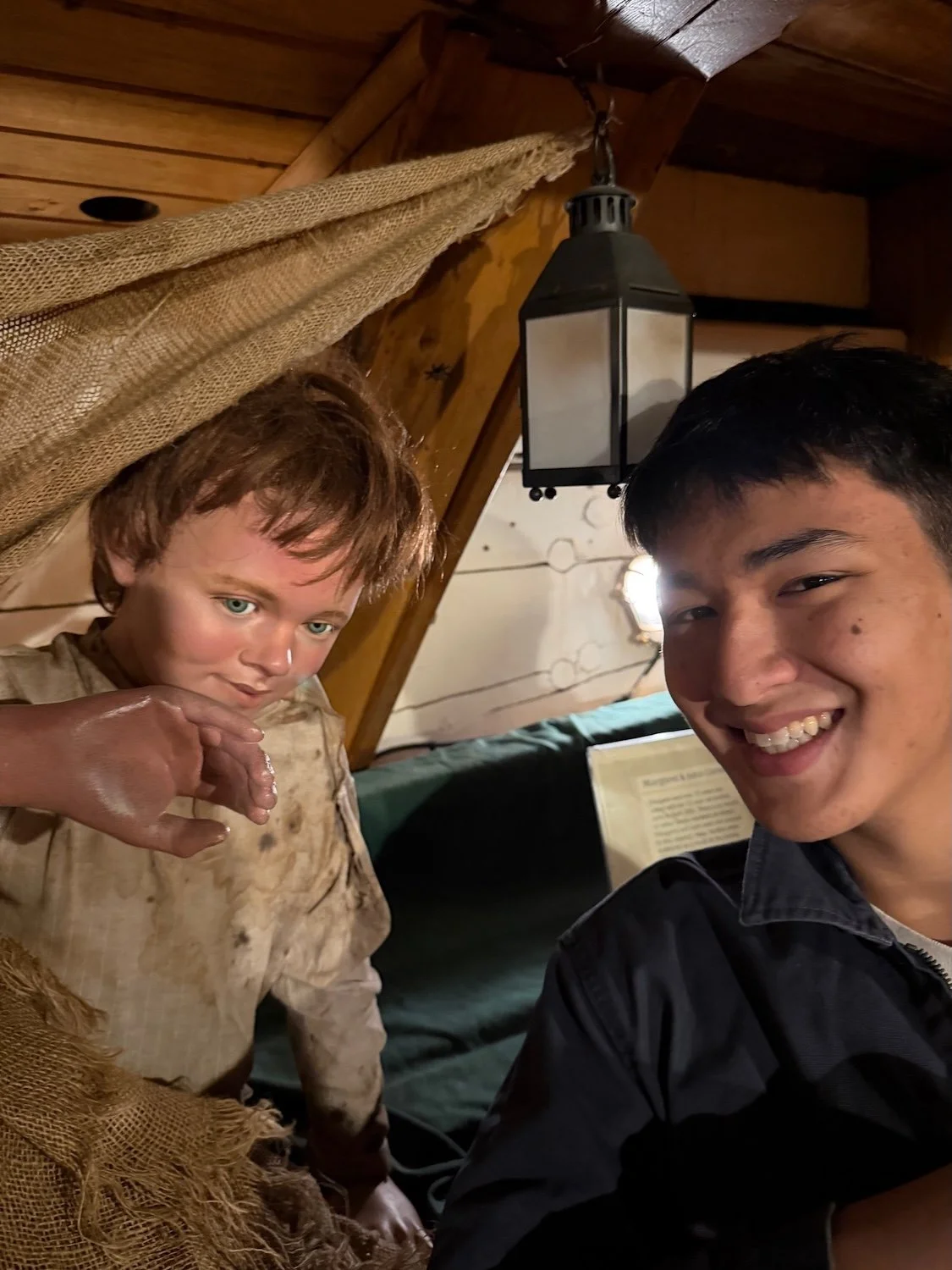
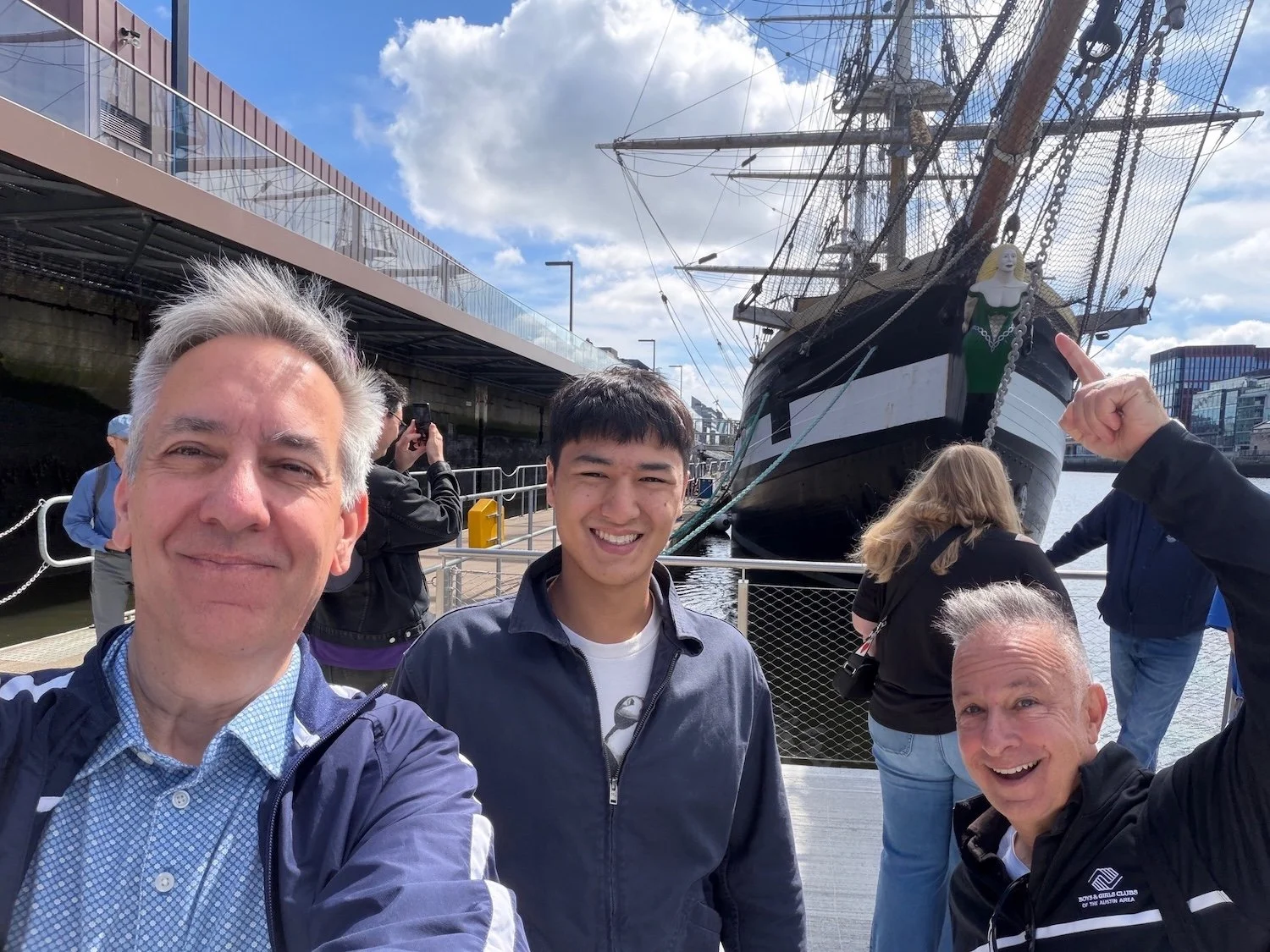
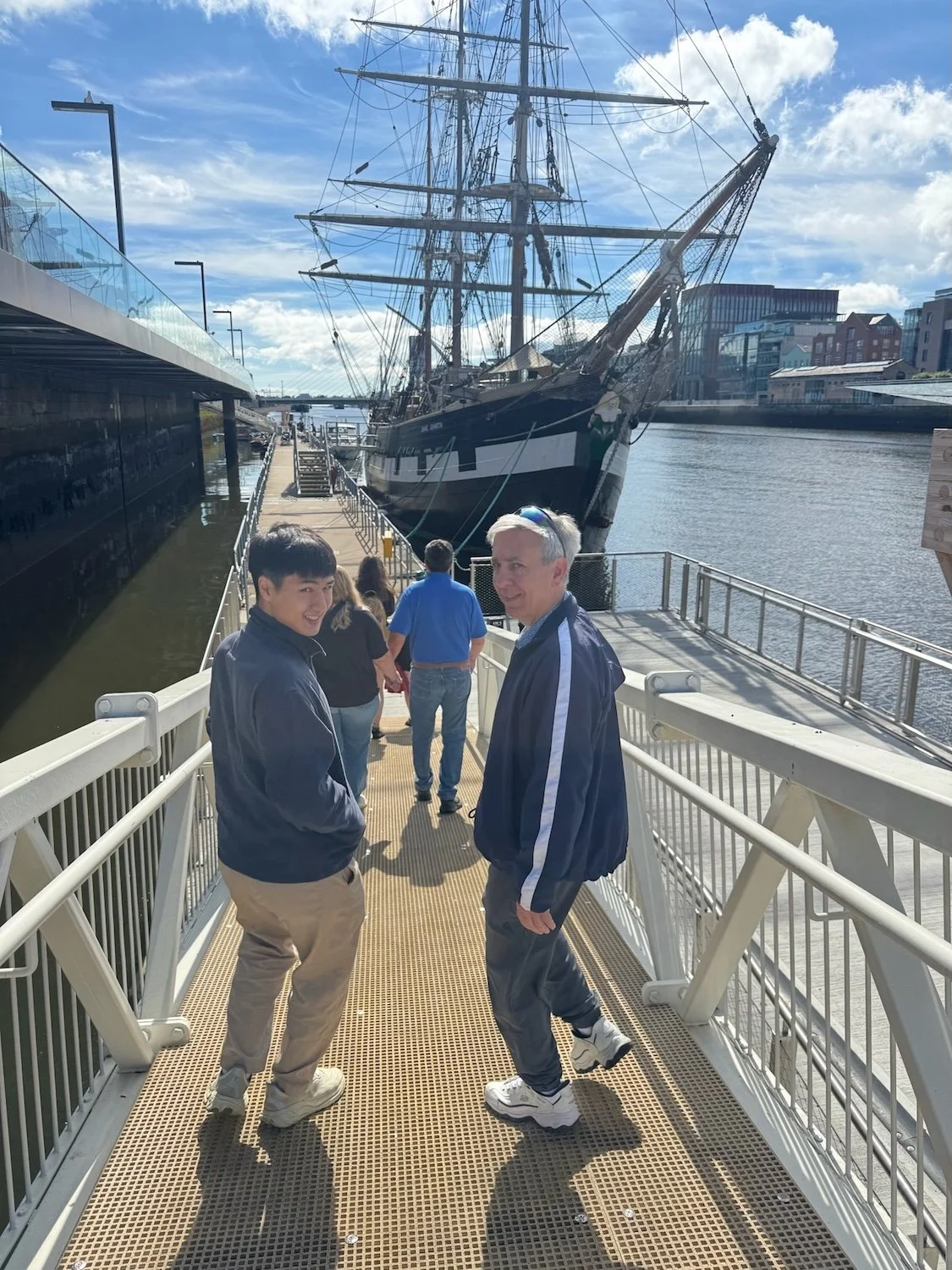
The Jeanie Johnston Famine Ship (above)
Why did the Farrells leave Kildare?
Rathangan gave us the Farrells and the Floods, and it gave us something the records had not, which was a living community reaching out. The parish had organised itself around us after weeks of letters: Mary Wright, the secretary, thirty-five years in the village and "still a blow-in"; Jack O'Connell, the sacristan, who was meant to be footing turf on the bog that day and gave us the afternoon instead; and Fr. Bill Kemmy, who worked the old graveyard with me from a booklet that indexes every legible stone. Call a number, count the rows, kneel and read. The stones came up with famine dates on them: a son dead at twenty-six in 1845, a husband in 1848, a grandmother in 1861 who had been born in the 1700s. Standing at the 1861 stone it occurred to me that this is about when Mary Ann's people left, and that these deaths are part of why.
Then, over lunch, Mary handed us the minutes of a meeting held in January 1817 to plan the building of the church. Fifteen men signed. Three of them were Simon Farrell, John Farrell, and William Flood. Both our surnames, in one room, two hundred and nine years before we walked into it. "This is gold," I said. Nobody argued.
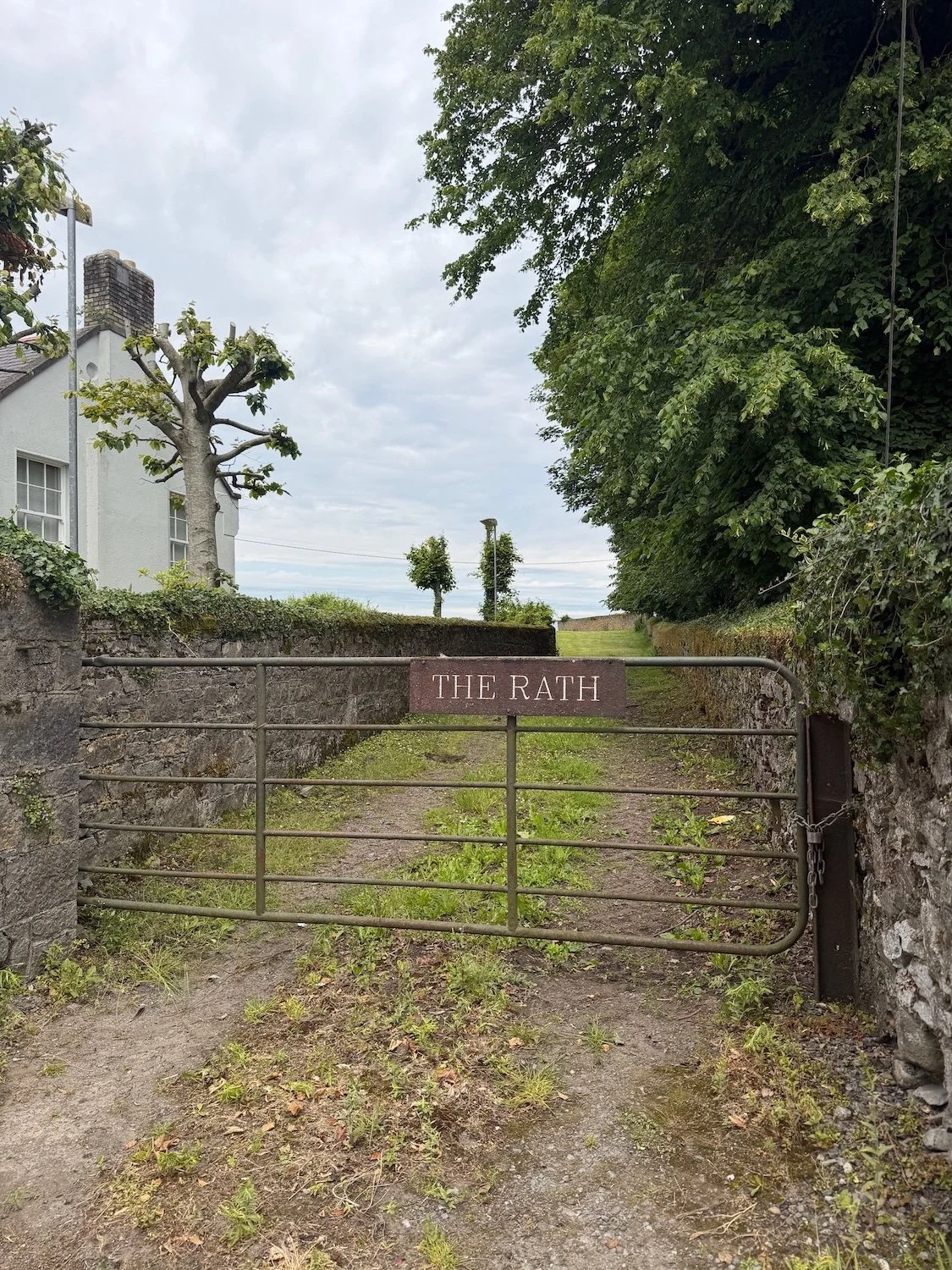
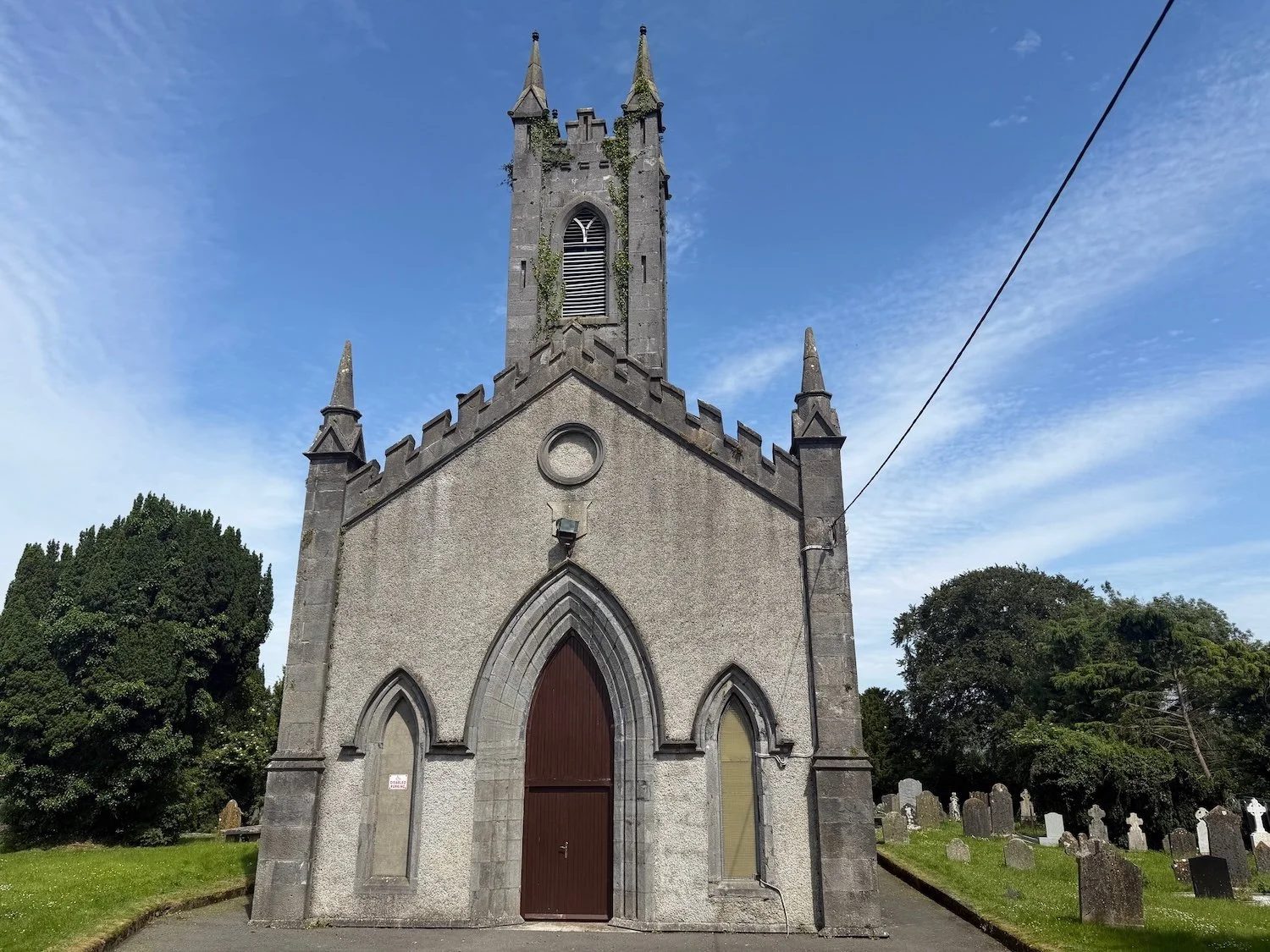
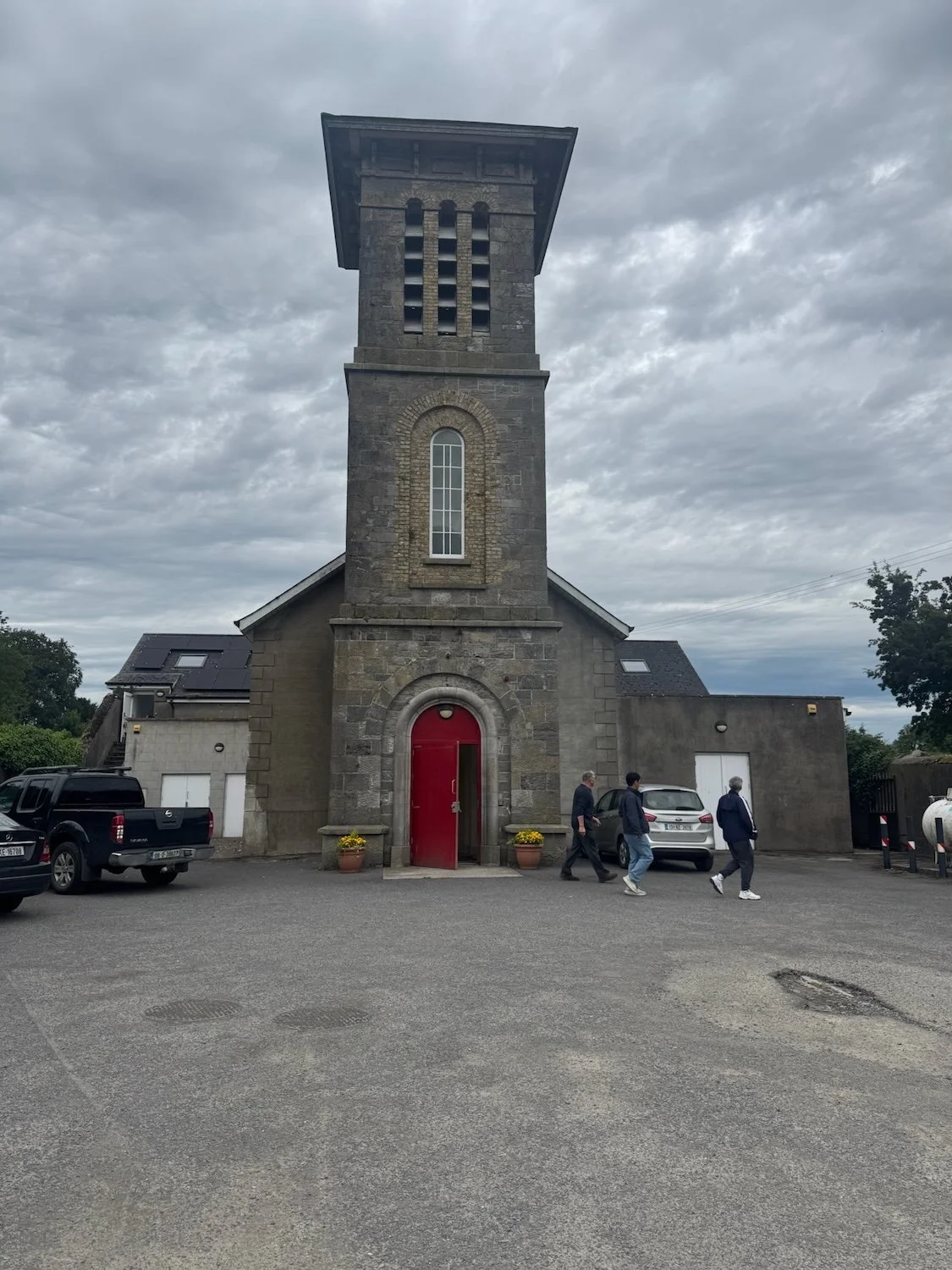
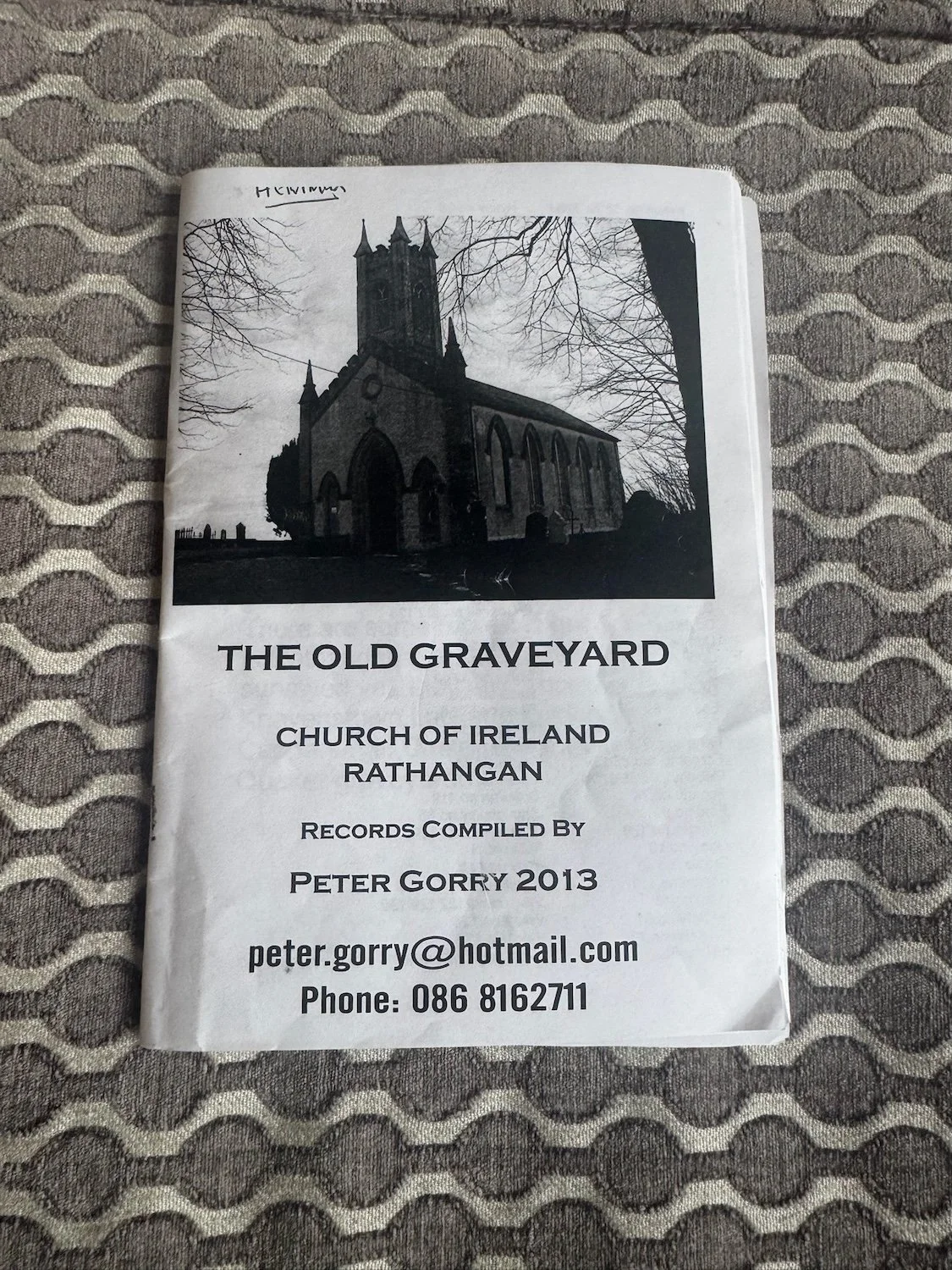
Rathangan, County Kildare (above)
Who was waiting for us at Beragh?
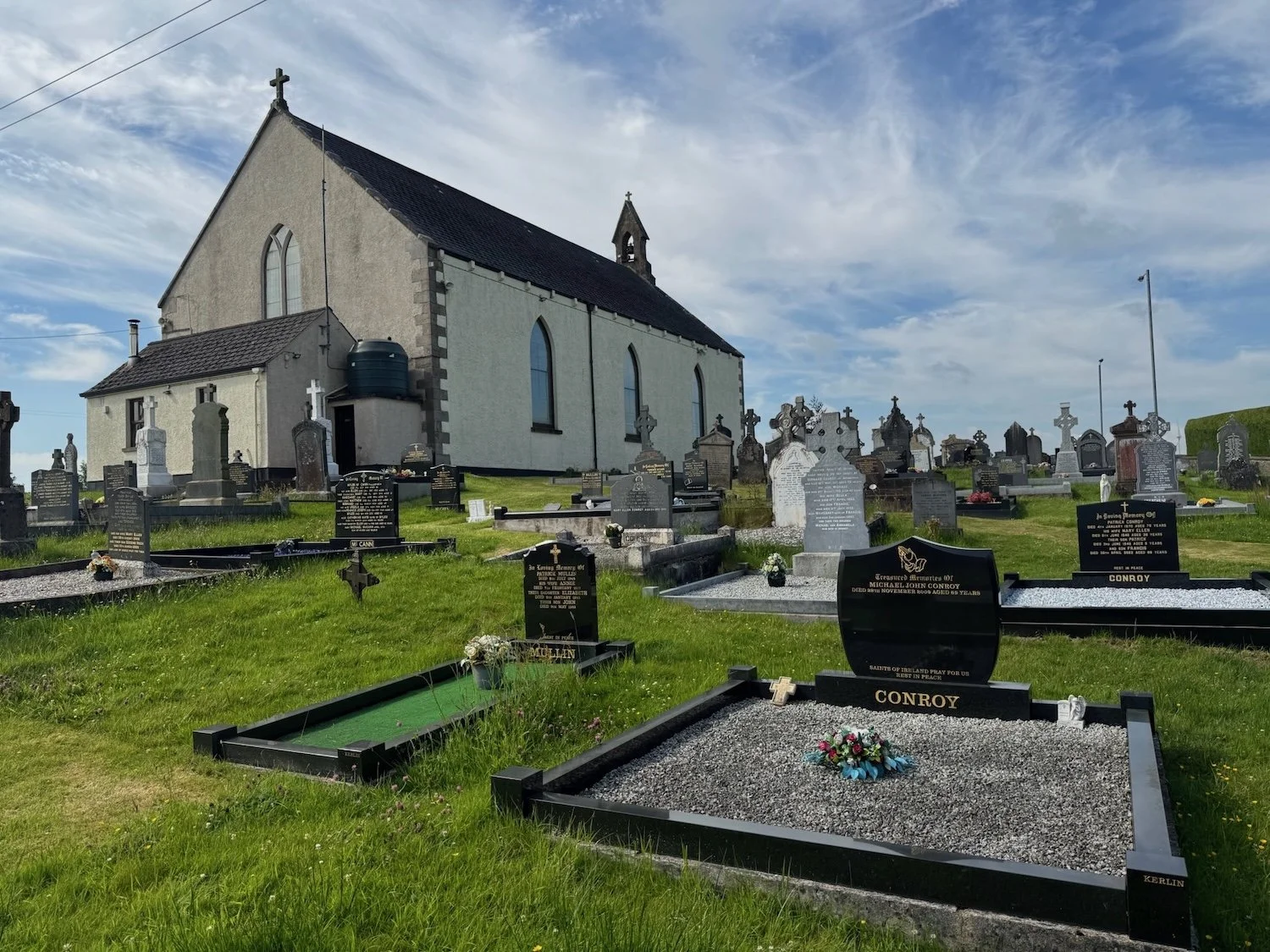
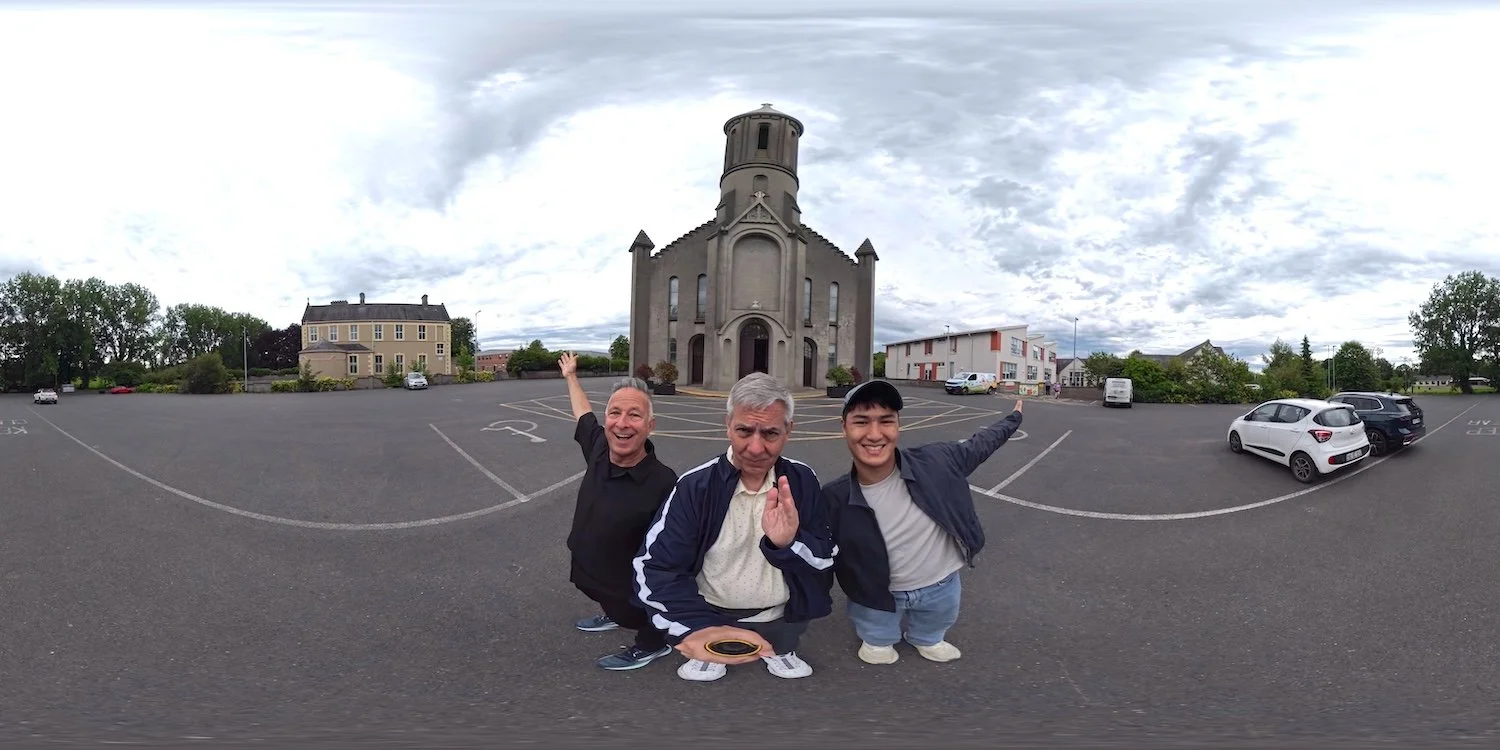
Most of of the planned quest happened in the morning on Tuesday the 23rd of June. We had drove through our ancestral townlands that morning, Foremass and Dunmoyle and Sixmilecross, previously just names on a map, and pulled into the church car park to find the family waiting. Hugh Conroy, my second cousin once removed, walked us up to the plot and its big white marble stone, which he had set on concrete himself years ago when it began to lean. Nobody had asked him to. Between his accent and a voice built for privacy we caught perhaps a third of what he said, and his daughters told us later we were not the first; it did not matter. Joseph Mullin was there, the man whose scans had reached me in Dublin, and Martin McCrory, a third cousin whose unread Ancestry messages from me got answered at the graveside instead.
The revelation had already happened, by email, before we ever reached the car park. When Claire first wrote in the middle of June, she went to see her father, and Hugh told her he had no memory of any great-uncle going to America. His grandfather Tom, P.J.'s elder brother, had died before Hugh was born, and the brother who went to Kansas had simply gone out of the story. By the time we met, Hugh had seen my photograph and had agreed with a cousin that I have a look of the Conroys, and he knew from the obituary that P.J. had died in 1922 naming Tom, Terence, and Katherine as the survivors in Ireland. What Beragh added was not the news but the ground it stood on. I handed him the two-page handout, and he stood at the stone he had shored up himself, holding a photograph of the brother his grandfather never mentioned. We had crossed an ocean to find them. They had lost us more completely than we had lost them.
When I asked Martin why anyone would leave land this green, he did not hesitate. "You can't eat beauty." Small farms, five sons, no inheritance for the younger ones, and the food going to England while people went hungry. P.J. left because he had to.
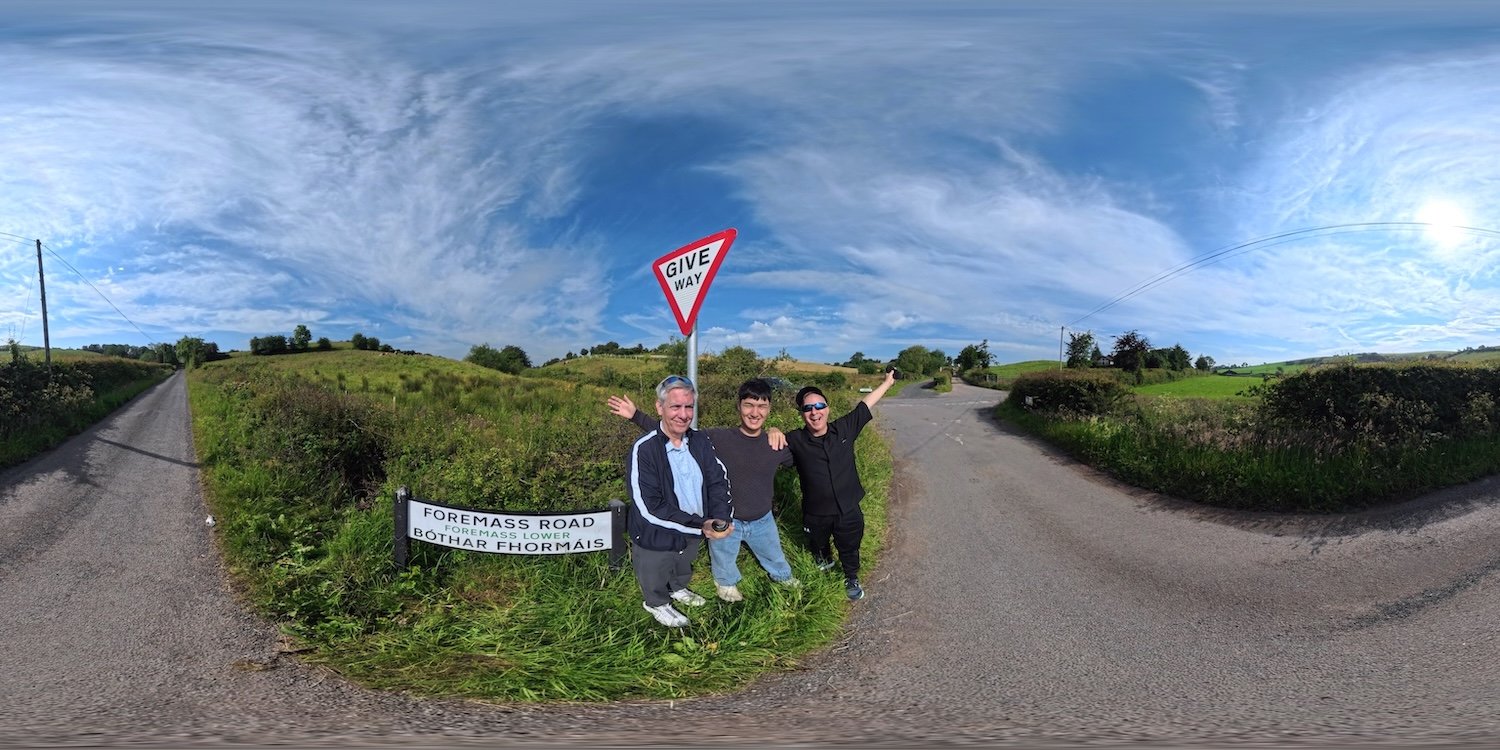
Foremass, County Tyrone, PJ’s home
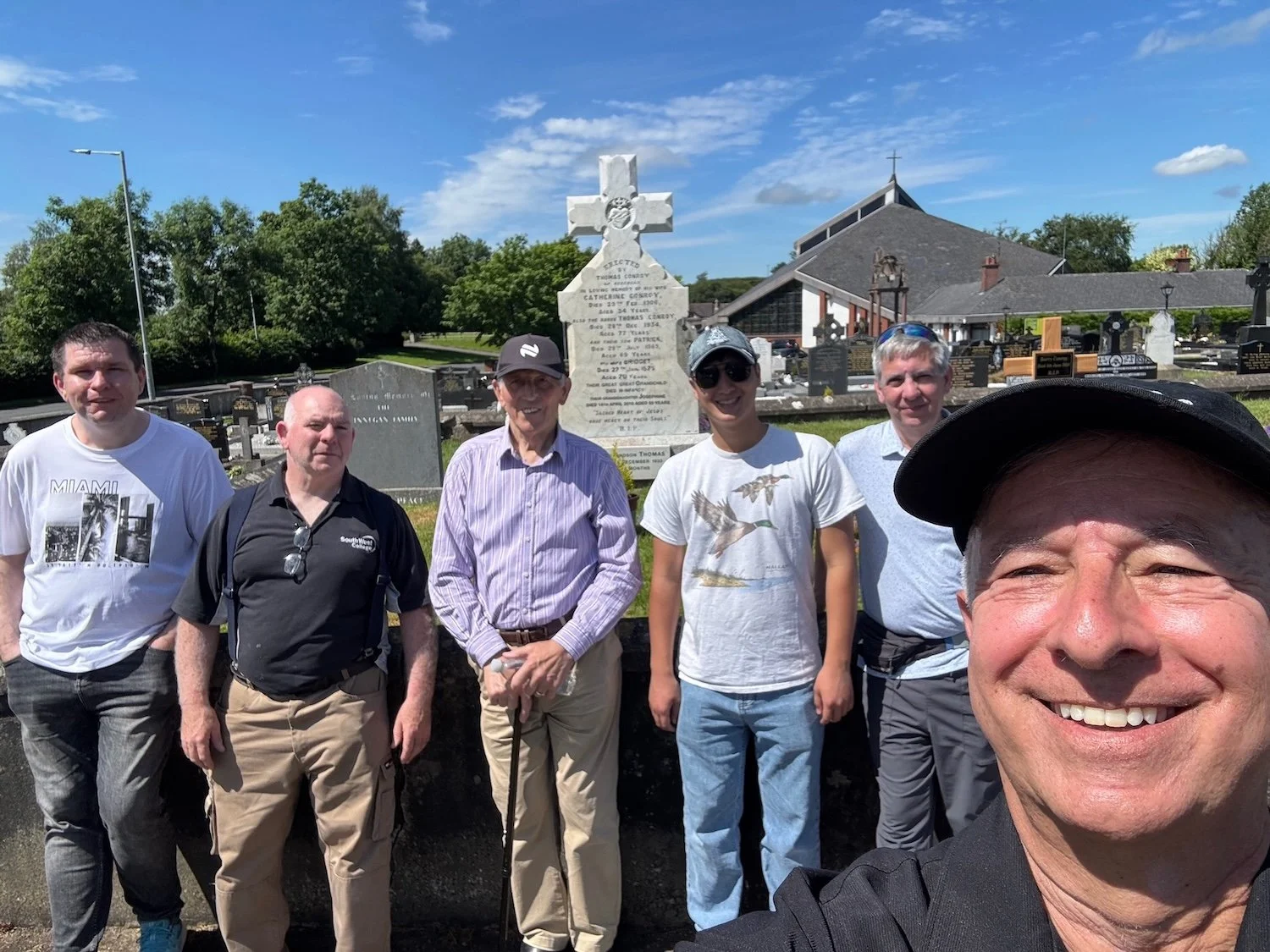
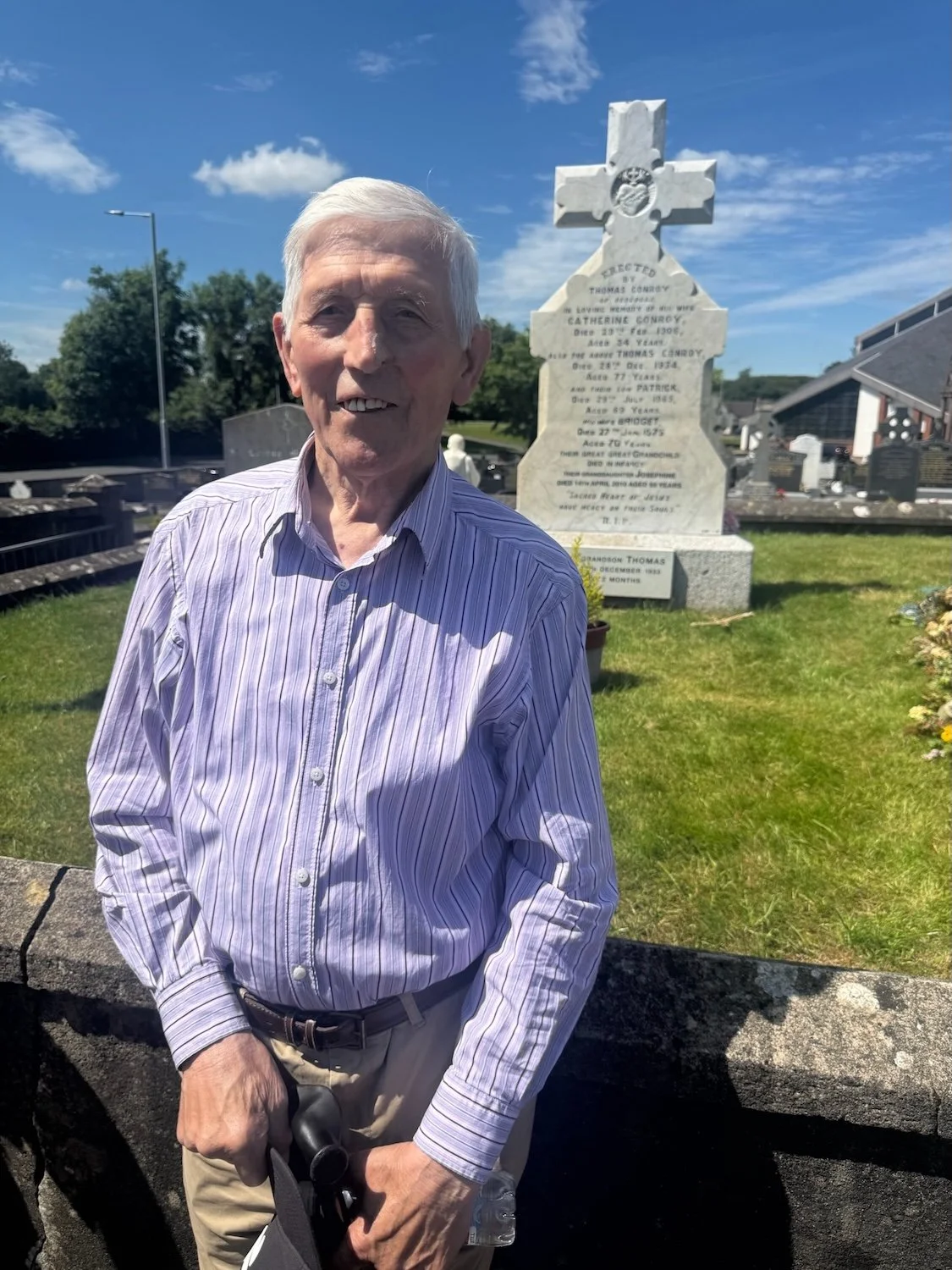
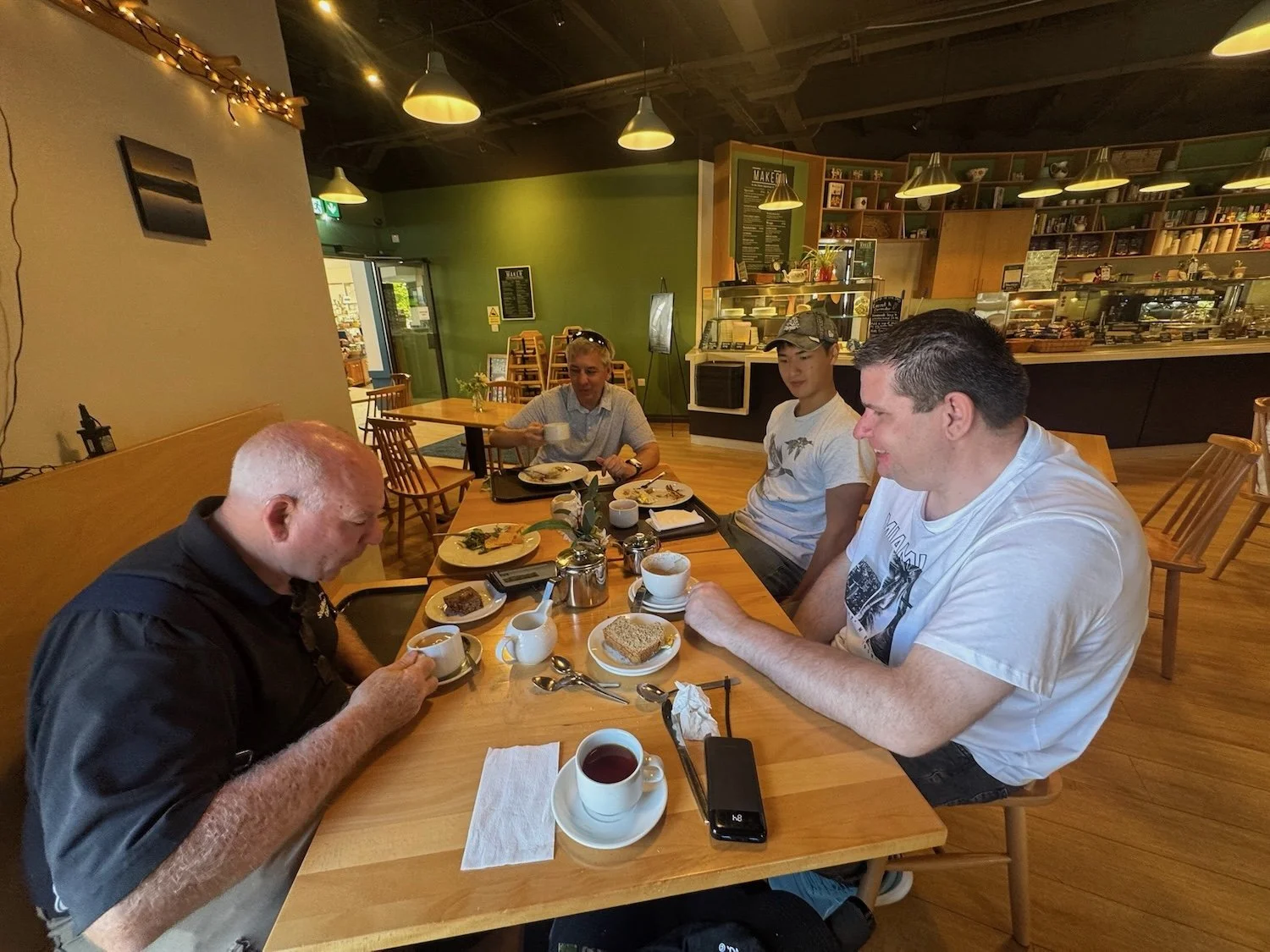
Beragh and Omagh (above)
The afternoon carried the theme to the Ulster American Folk Park outside Omagh, an open-air museum of emigration toured by the emigrants' descendants with Joseph and Martin along for lunch. Andrew classified the costumed staff as "LARPers" inside a minute. We ended the day walking Derry's walls and the Bogside murals in solstice light that held until ten.
What do you do with cousins once you have found them?
Belfast is where the family stopped being names on a headstone and became people across a table from us. Claire and her husband Paul met us for lunch at City Hall and the lunch ran four hours. Stories crossed in both directions: an infant brother of Hugh's discovered only through a sister's death notice; the cattle dealer whose money raised that marble stone; Daniel, P.J.'s unmarried brother, who followed him to Kansas and is buried in the family plot there. Paul told us about the stroke fifteen years ago and the genealogy that taught him to read at length again, and when I offered him my unspent record-office credits he turned them down flat. "You have to do the research yourself." I have thought about that refusal since. And there was a grief only weeks old in their family, which gave the trip its motto in Claire's words: you live life to the full, because you really don't know. We're doing it right now, I said. I'm glad we didn't put this off until our seventies.
At four came the counterweight. A Black Cab tour of the peace walls with a driver who grew up on the Falls Road, whose father was shot when he was a baby, who threw petrol bombs as a boy and went to prison as a teenager and then got out, into a mixed neighbourhood, an education, children raised without the hatred. He passed two rubber bullets back over the seat, about a third of a pound each in the palm, and said the line I cannot shake: "We need our older generation to pass on." Of course he meant Belfast. But stting in the back with my younger brother and my nephew, I understood that I am the older generation of my own family now, and I hope that what I hand down will be positive and worth keeping, and unlike "You can have Ireland."
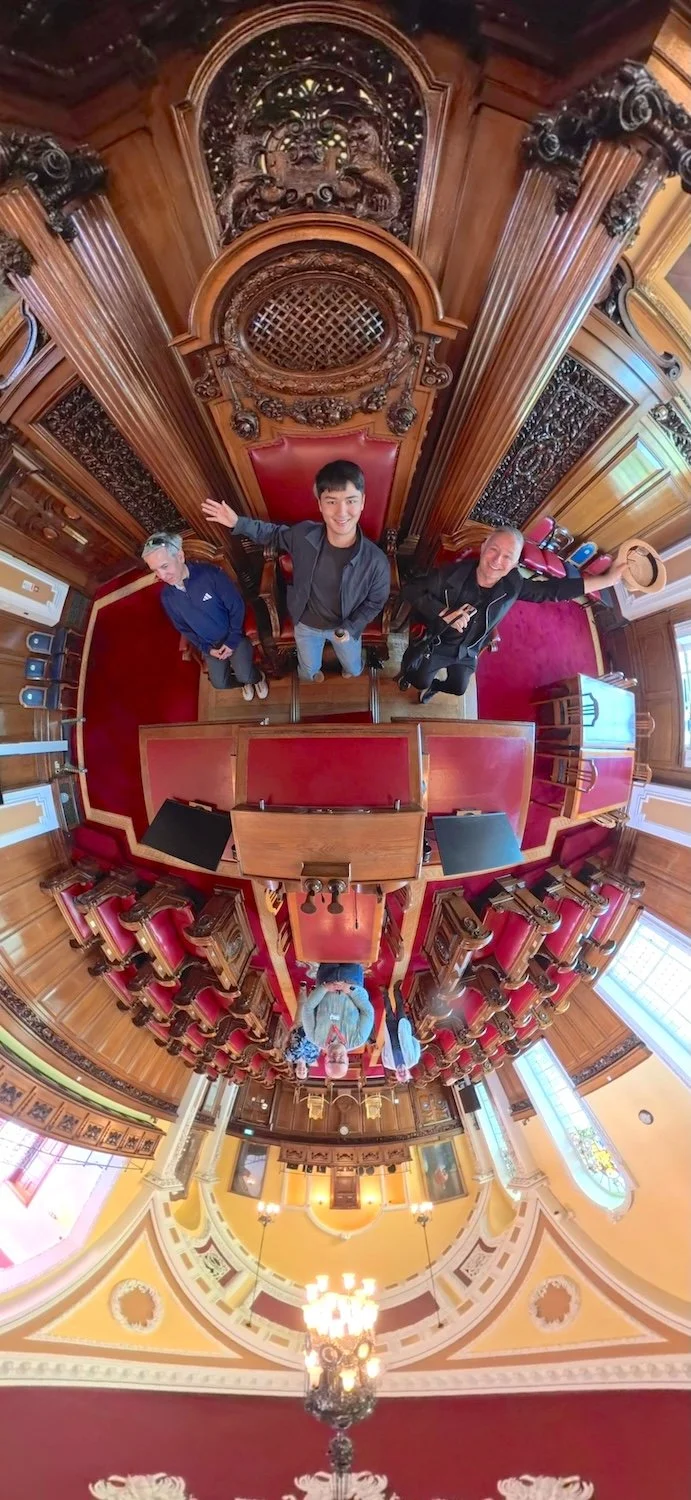
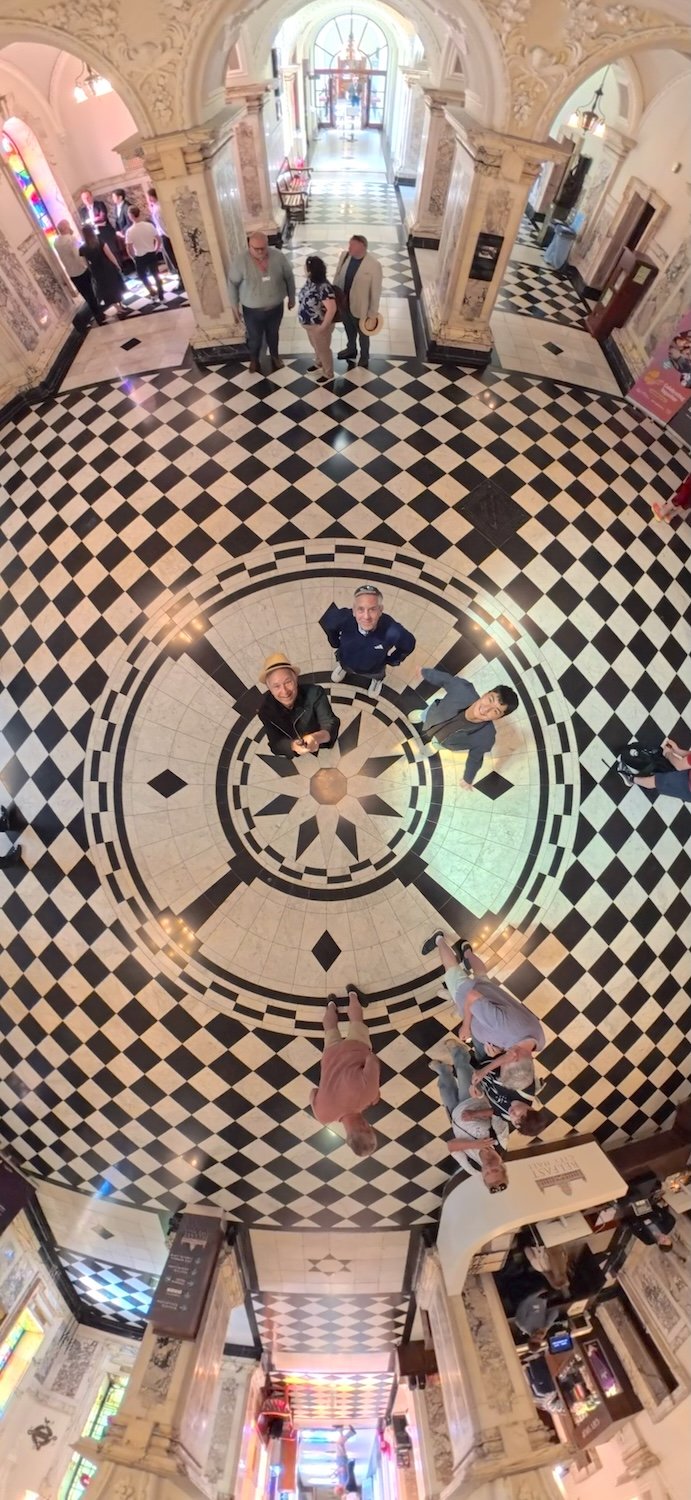
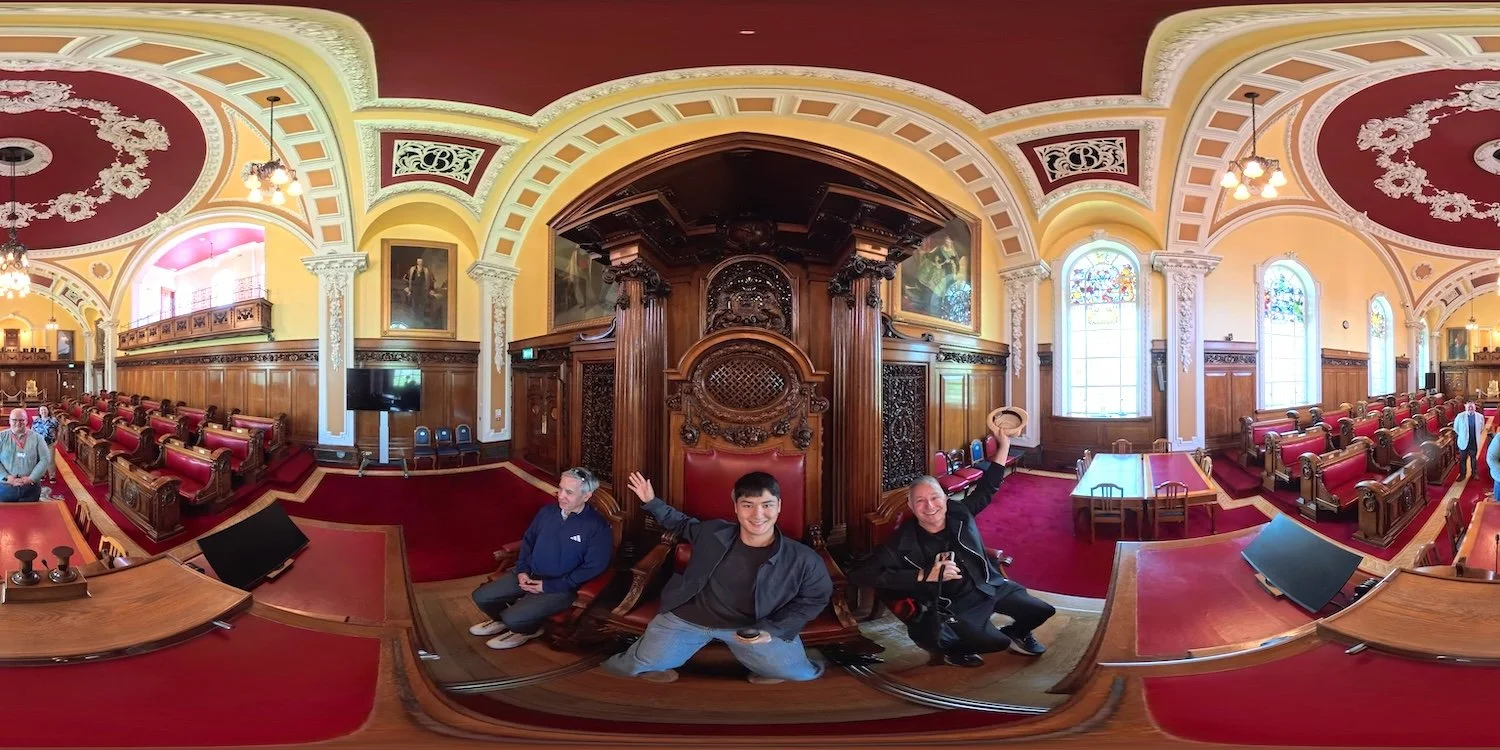
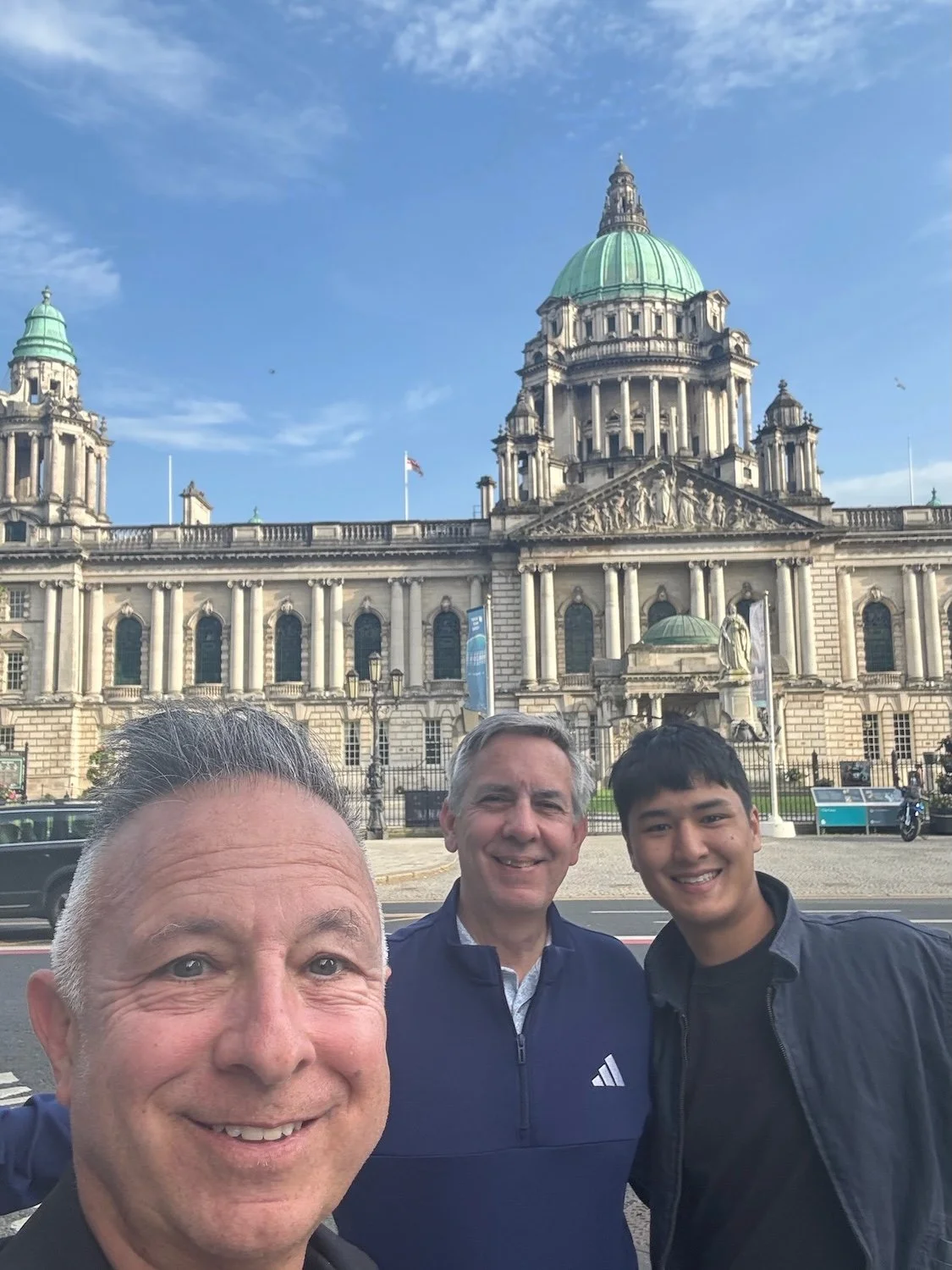
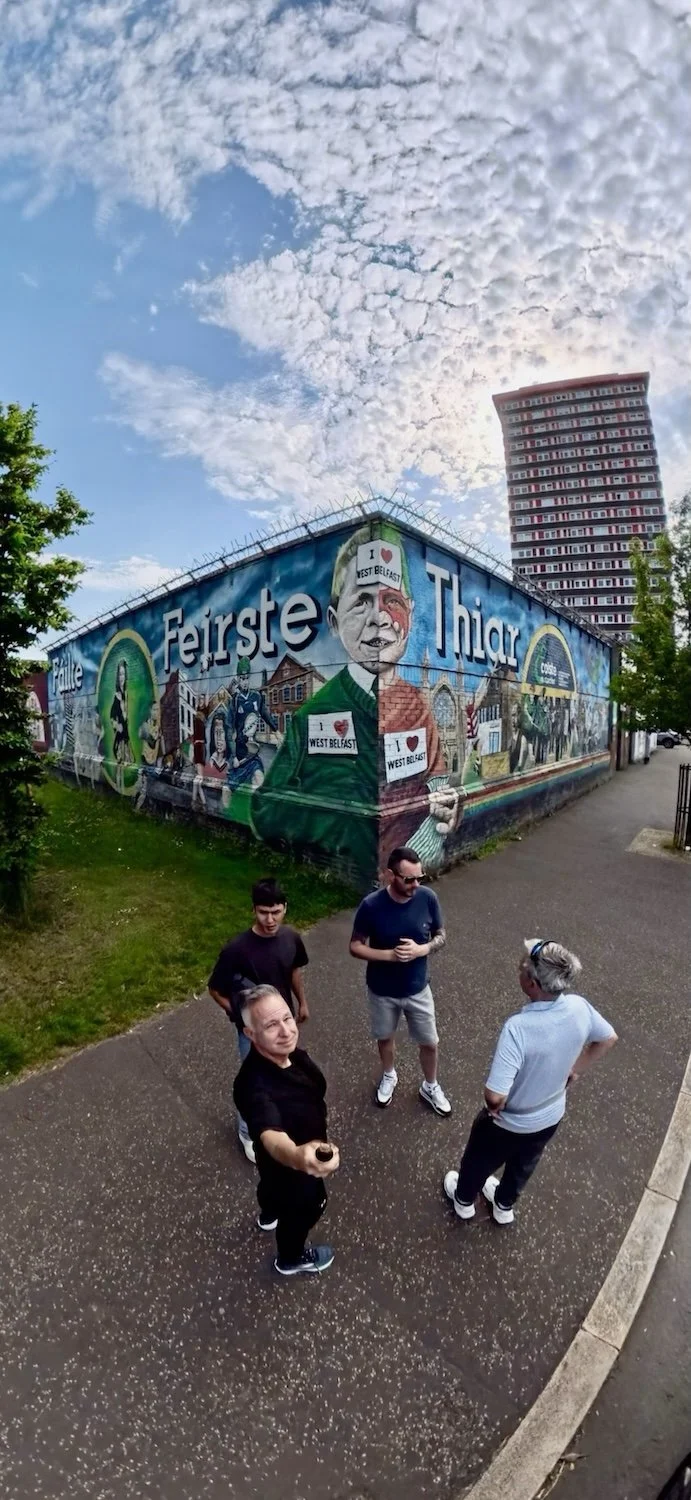
Belfast City Hall (above)
How many cousins does one island hold?
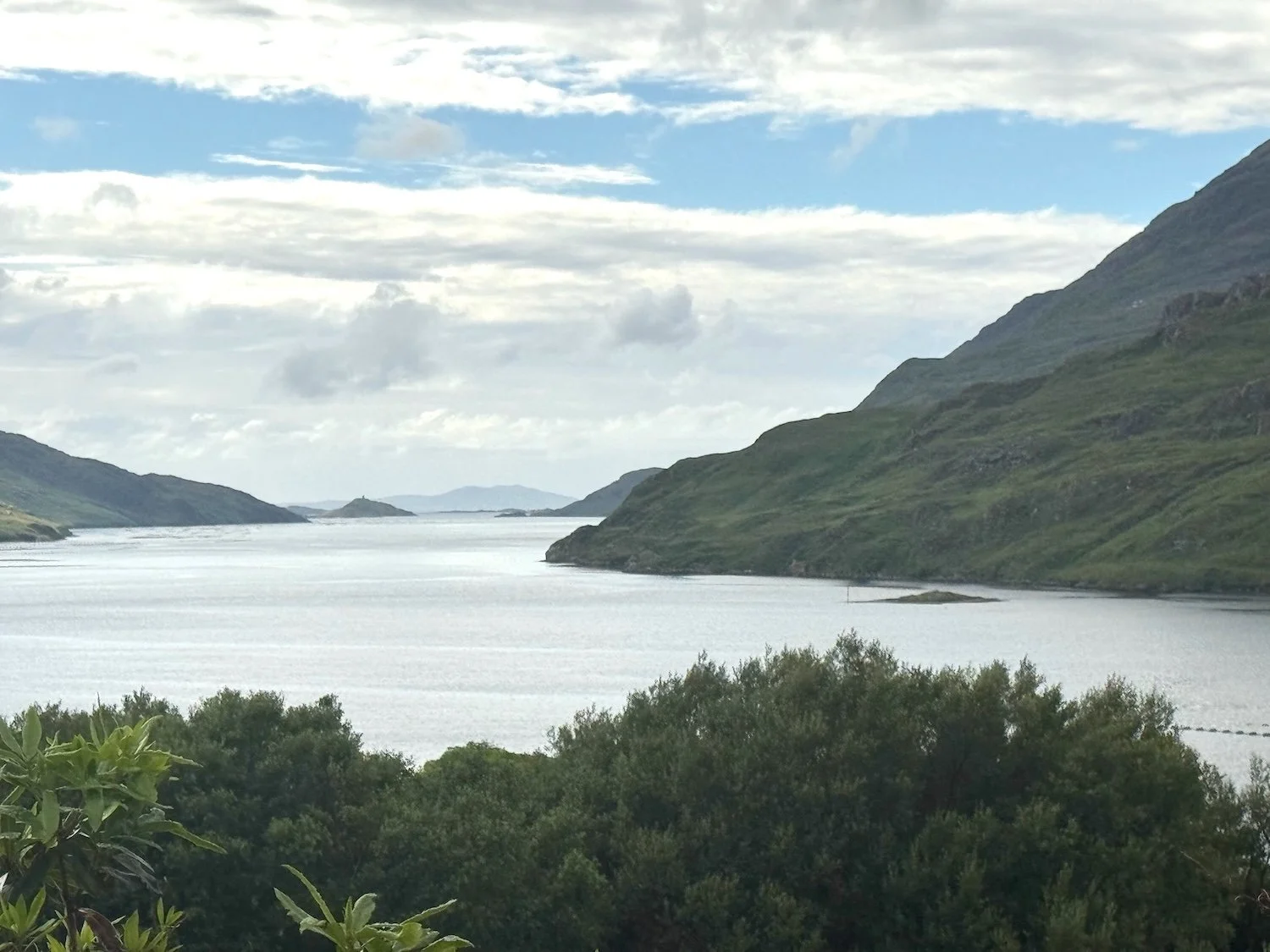
After Beragh the trip became a road trip, and the family kept multiplying anyway. The Giant's Causeway at nine in the morning, ahead of the buses. Two Game of Thrones sites in an hour for the fans among us, and Mussenden Temple on its cliff. Rain from Donegal to Connemara, which is part of the contract, and two nights at Leenane with a fjord out the window and nothing to do, which after a week like ours was the point. Galway's buskers, the Cliffs of Moher, and then dinner in Ennis with the Quinlivans of Quin: Bronagh, Claire's sister; Gerard; and Nora and James, fourteen and ten, who sat either side of Andrew and told him about the Gaeltacht, the school that teaches half the week in Irish, and the road signs that switch language once you cross into it. Ten days earlier these people were names in a register. When the bill came they would not let us near it.
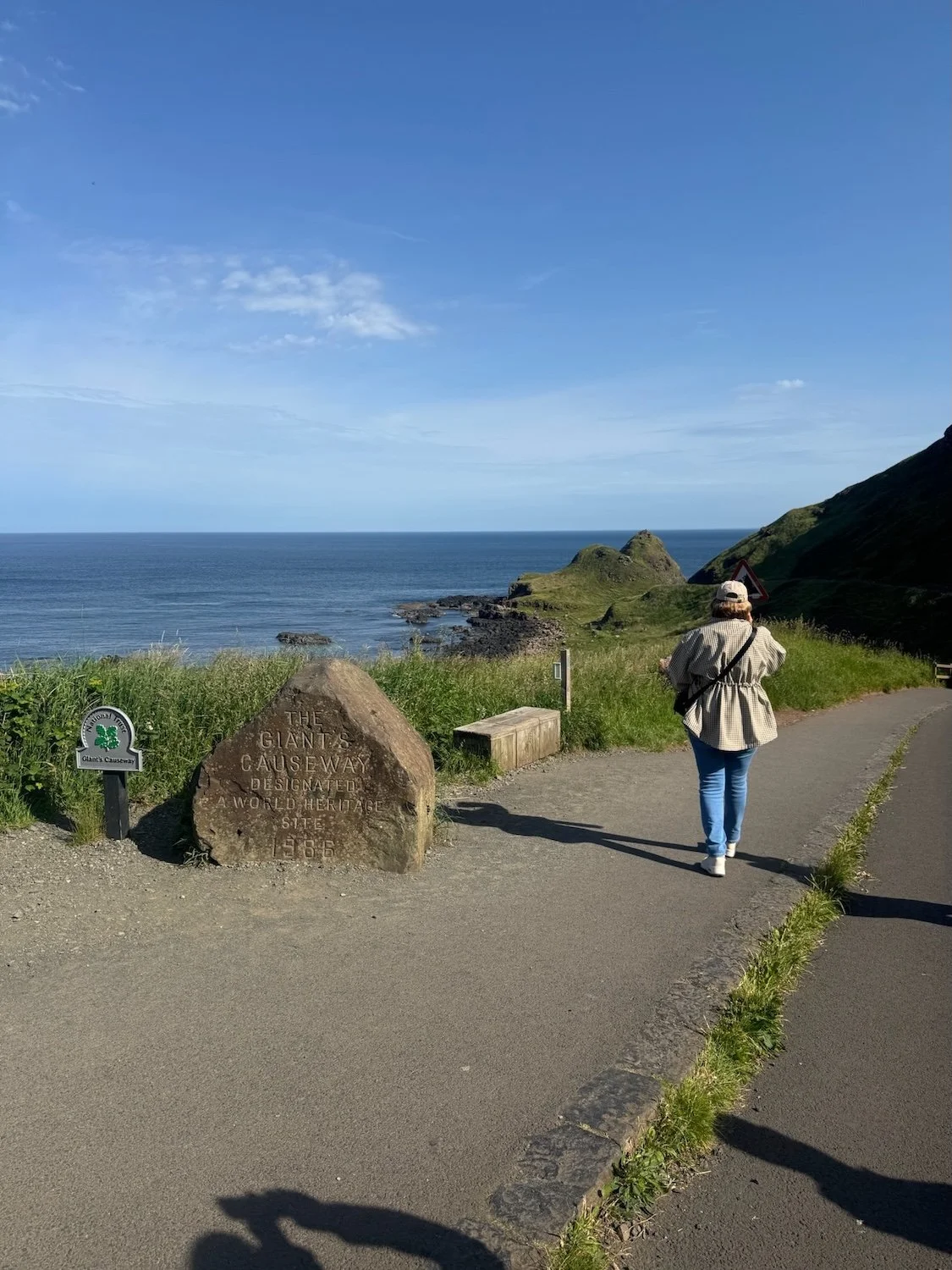
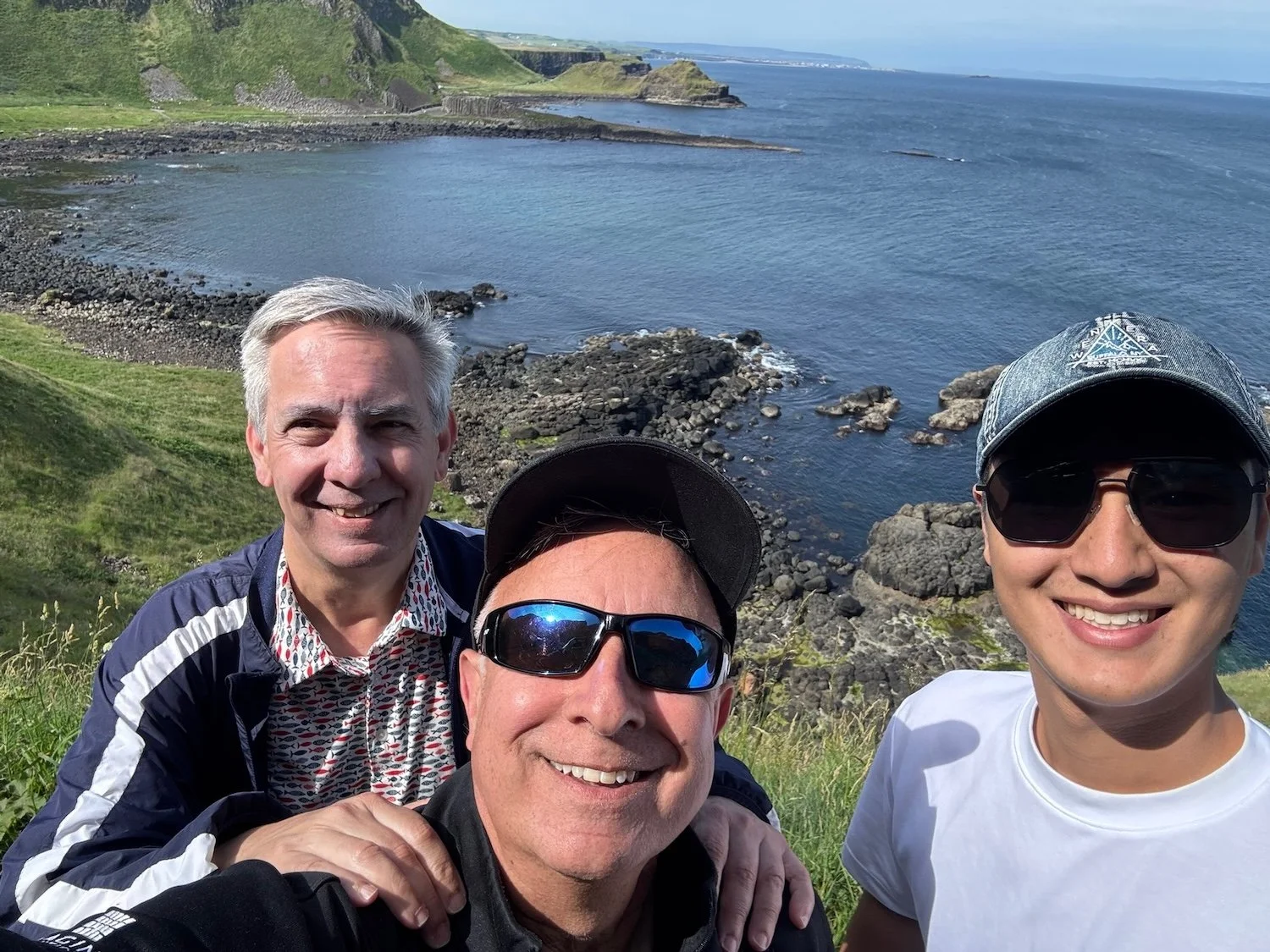
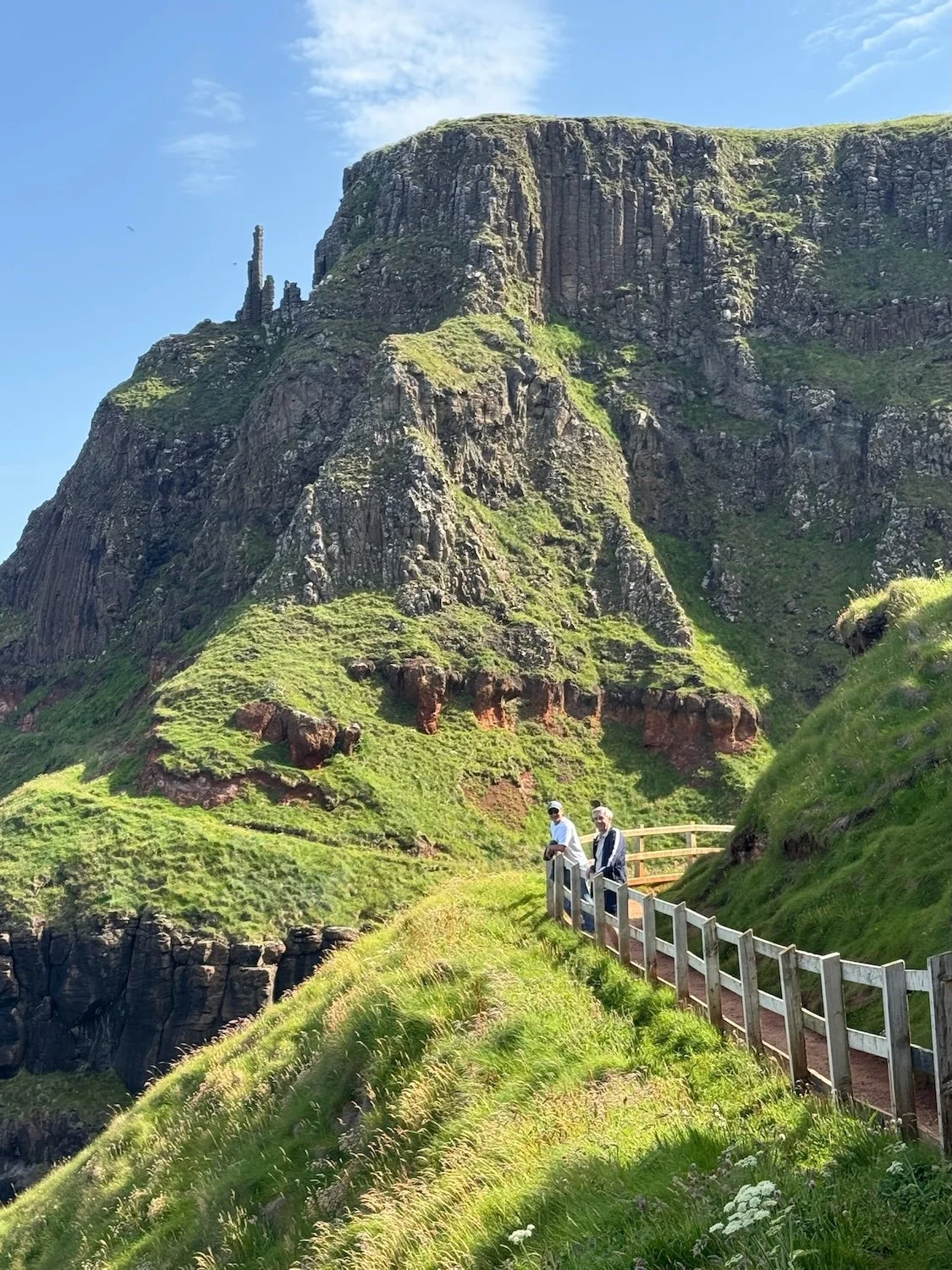
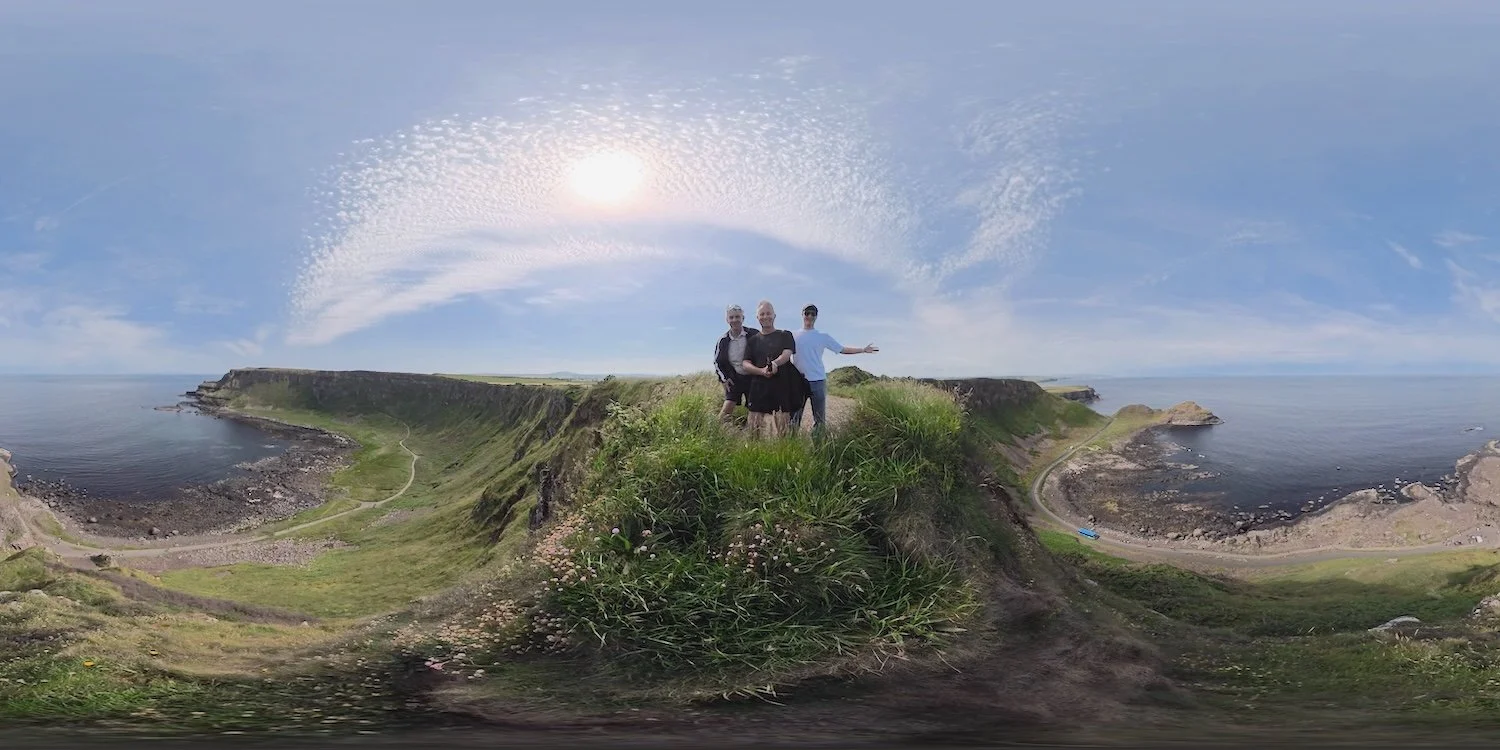
The Giant’s Causeway (above)
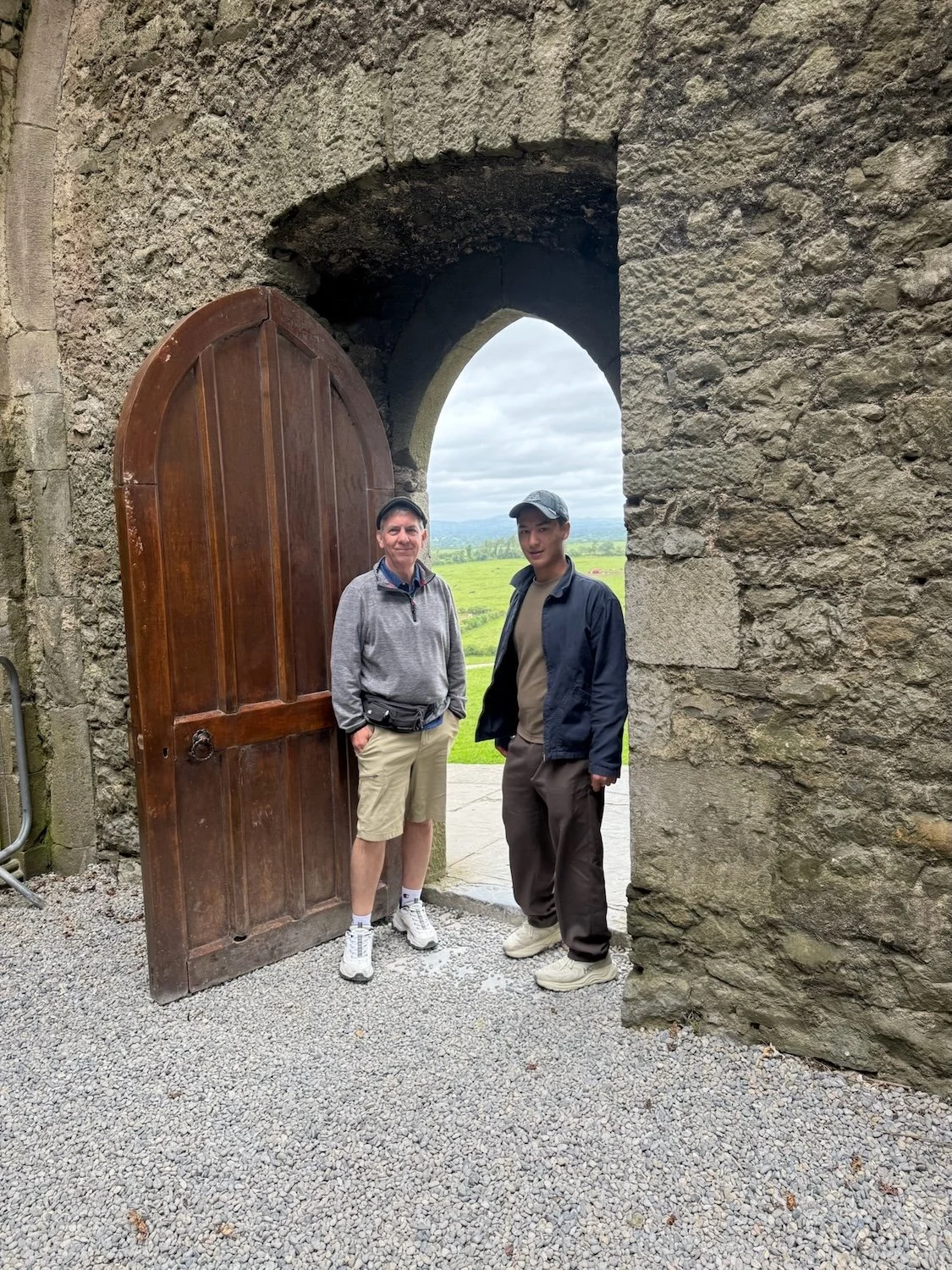
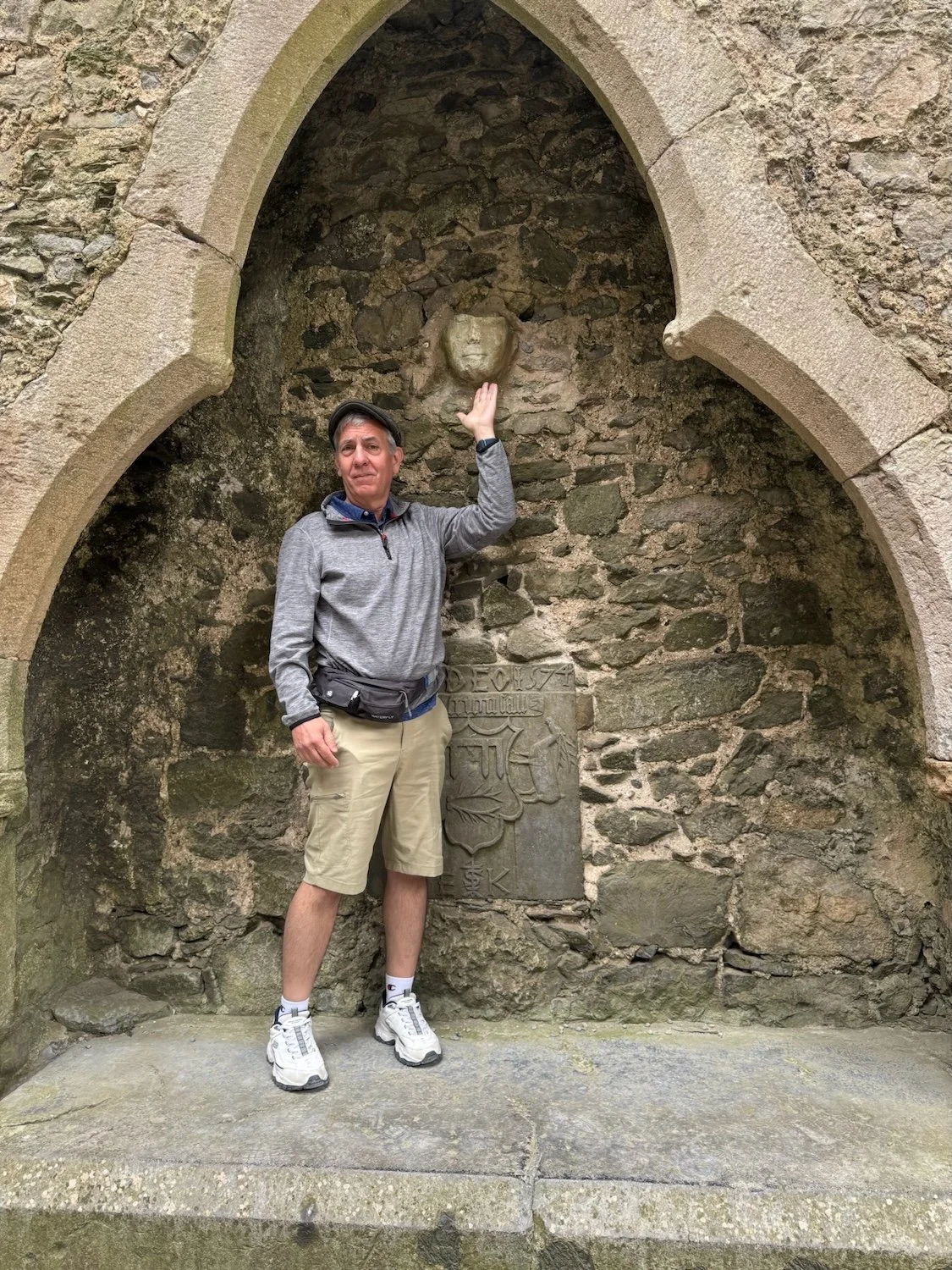
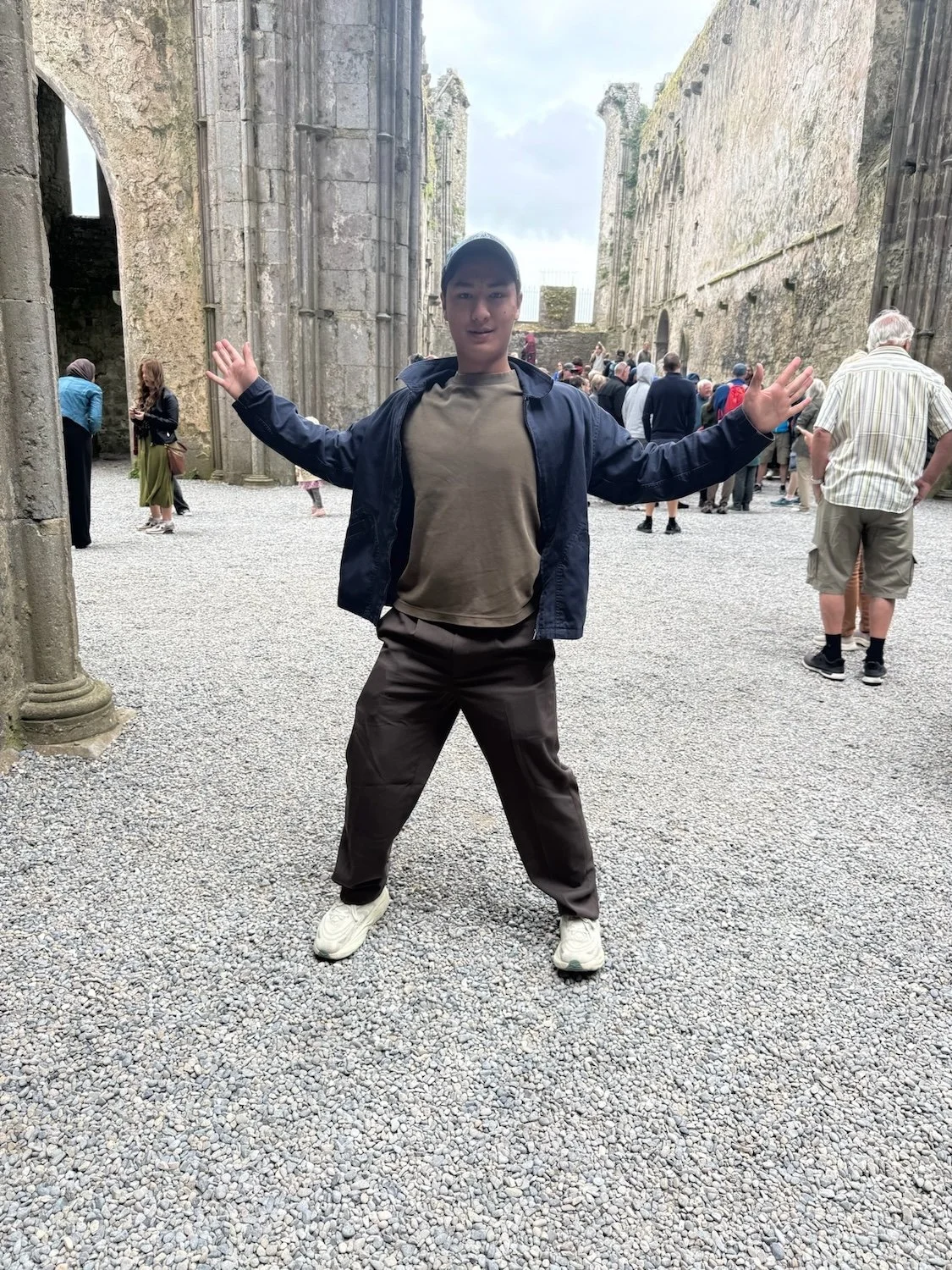
The last day bracketed the story. The Rock of Cashel in Tipperary, the county where family memory starts the patriarch Patrick Conroy around 1812, and then Waterford, where Sabrina Birner, a colleague from my MIT Media Lab years, and daughter Astrid who lives in Galway, gave us a long lunch, the Viking Triangle, and an evening at our cottage in the gardens at Mount Congreve. At 6:41 the next morning we left in the rain to get Andrew to his flight. Jim and I then spent four hours doing nothing in an airport hotel, and I walked the office parks around the terminal looking for a post box, with a handful of postcards in my pocket, until I noticed in the rain that the stamps were Northern Irish and useless in the Republic. They are on my desk still.
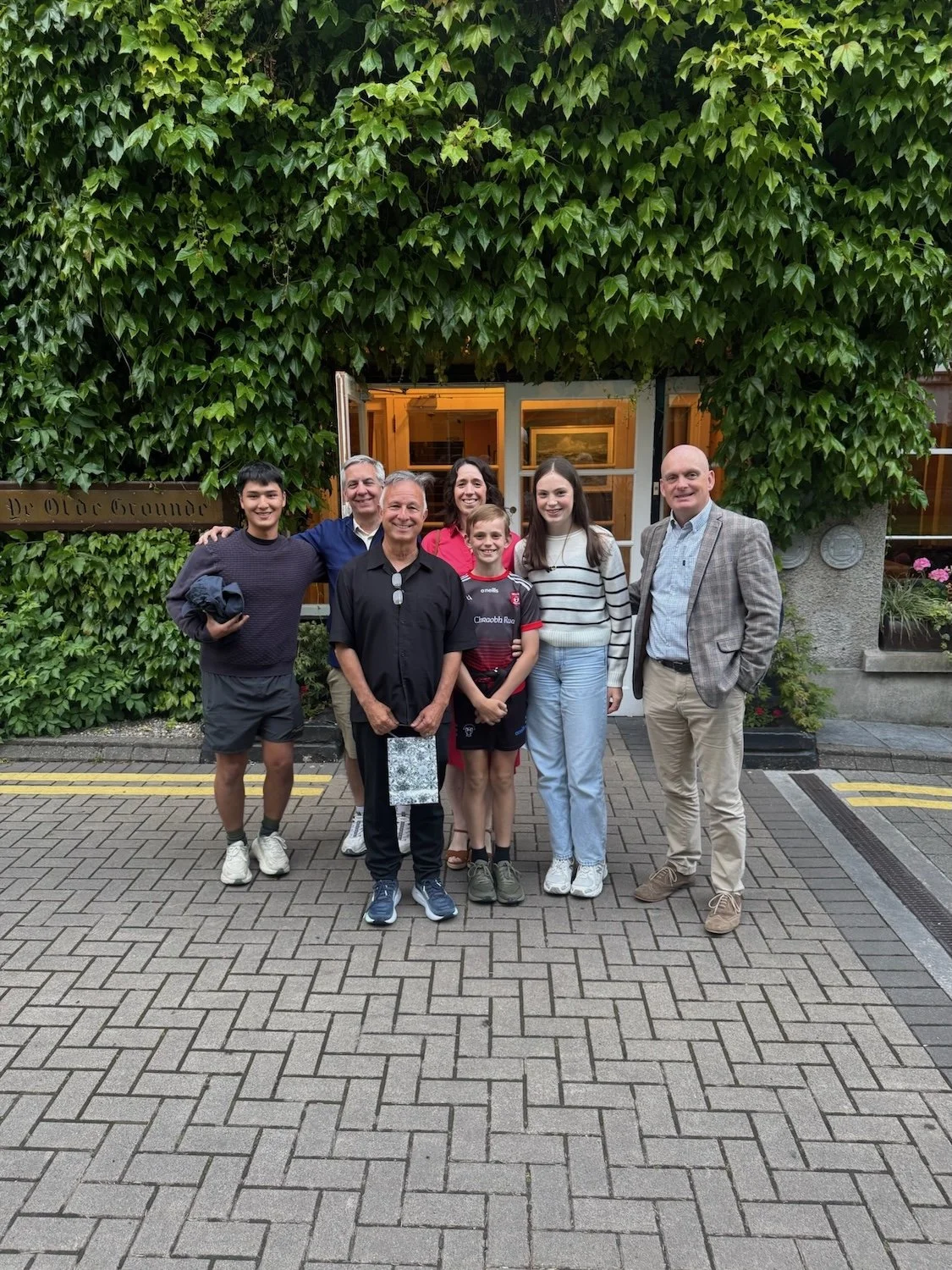
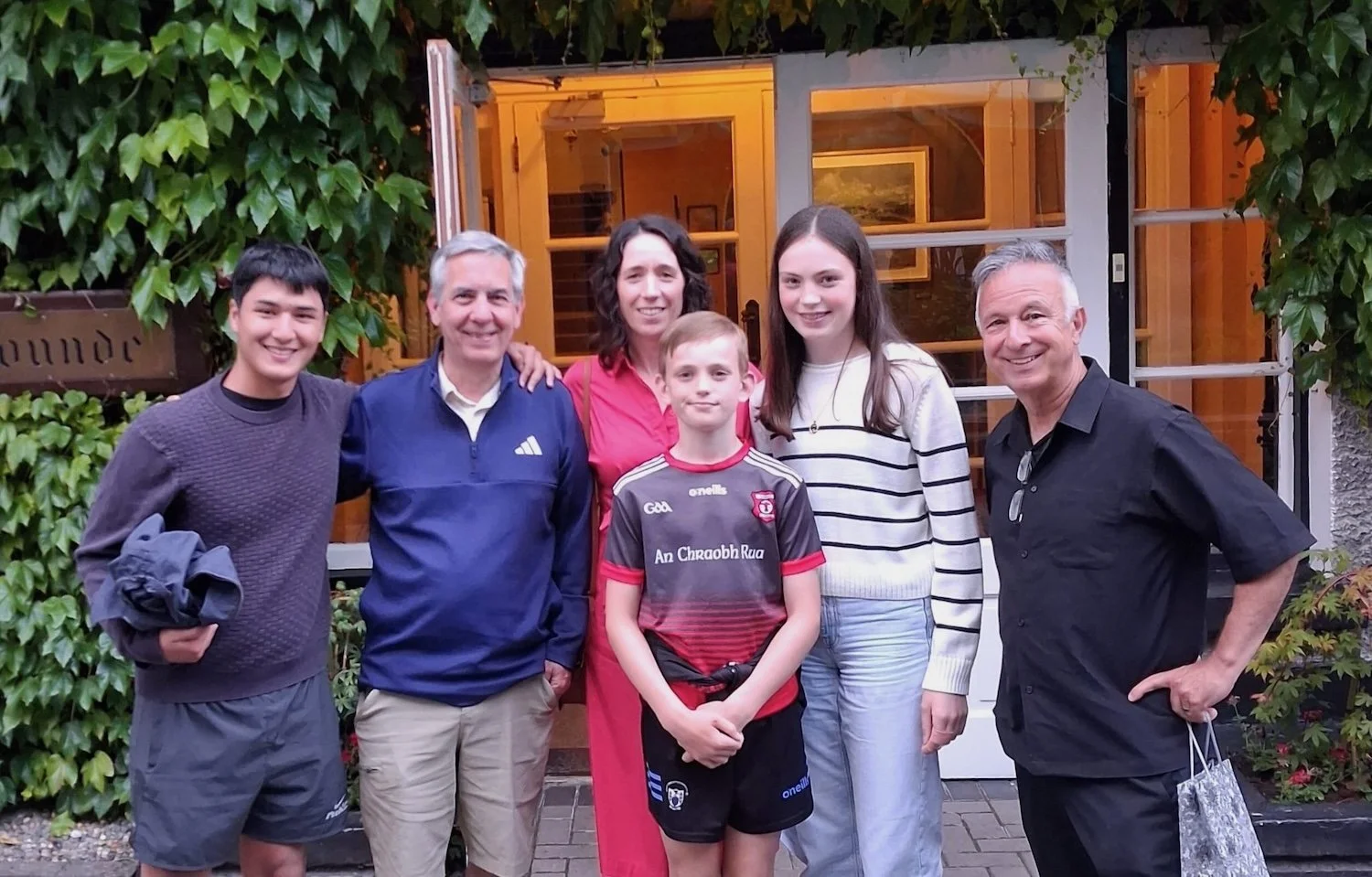
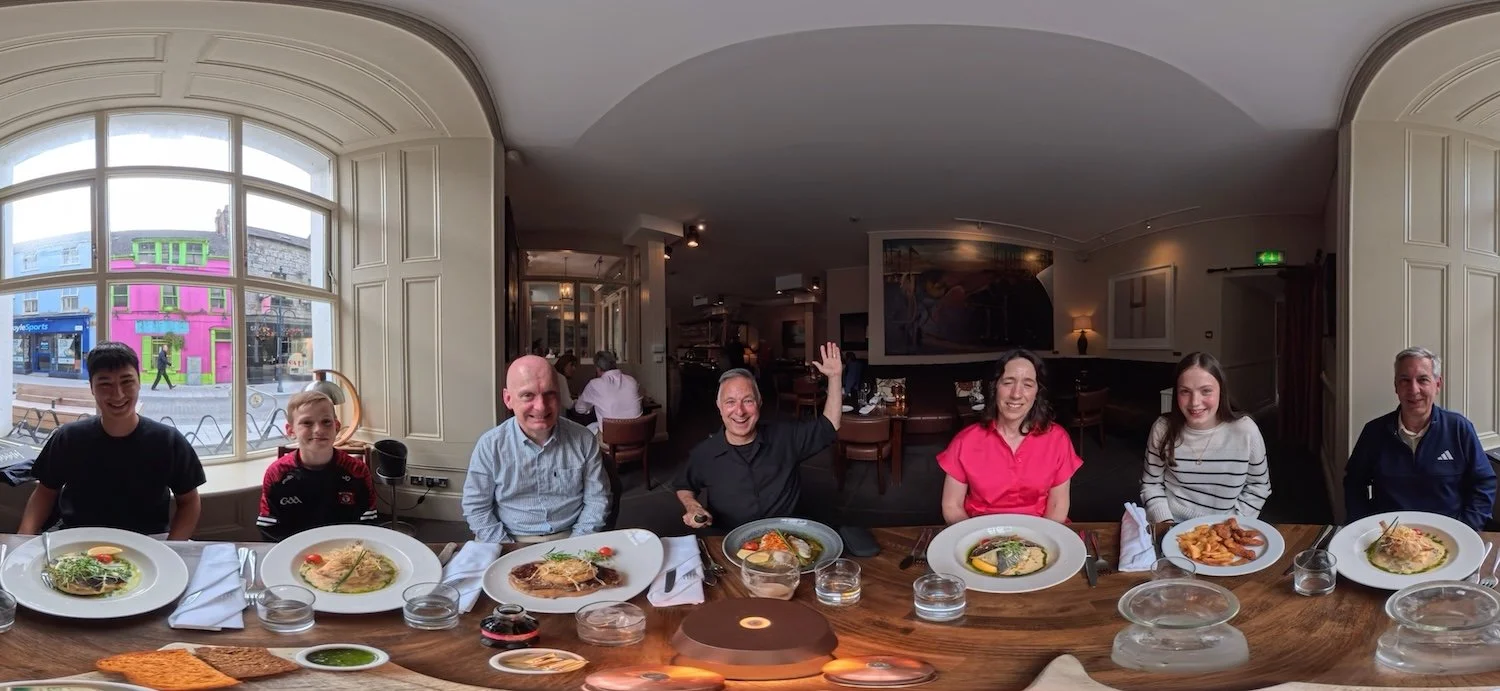
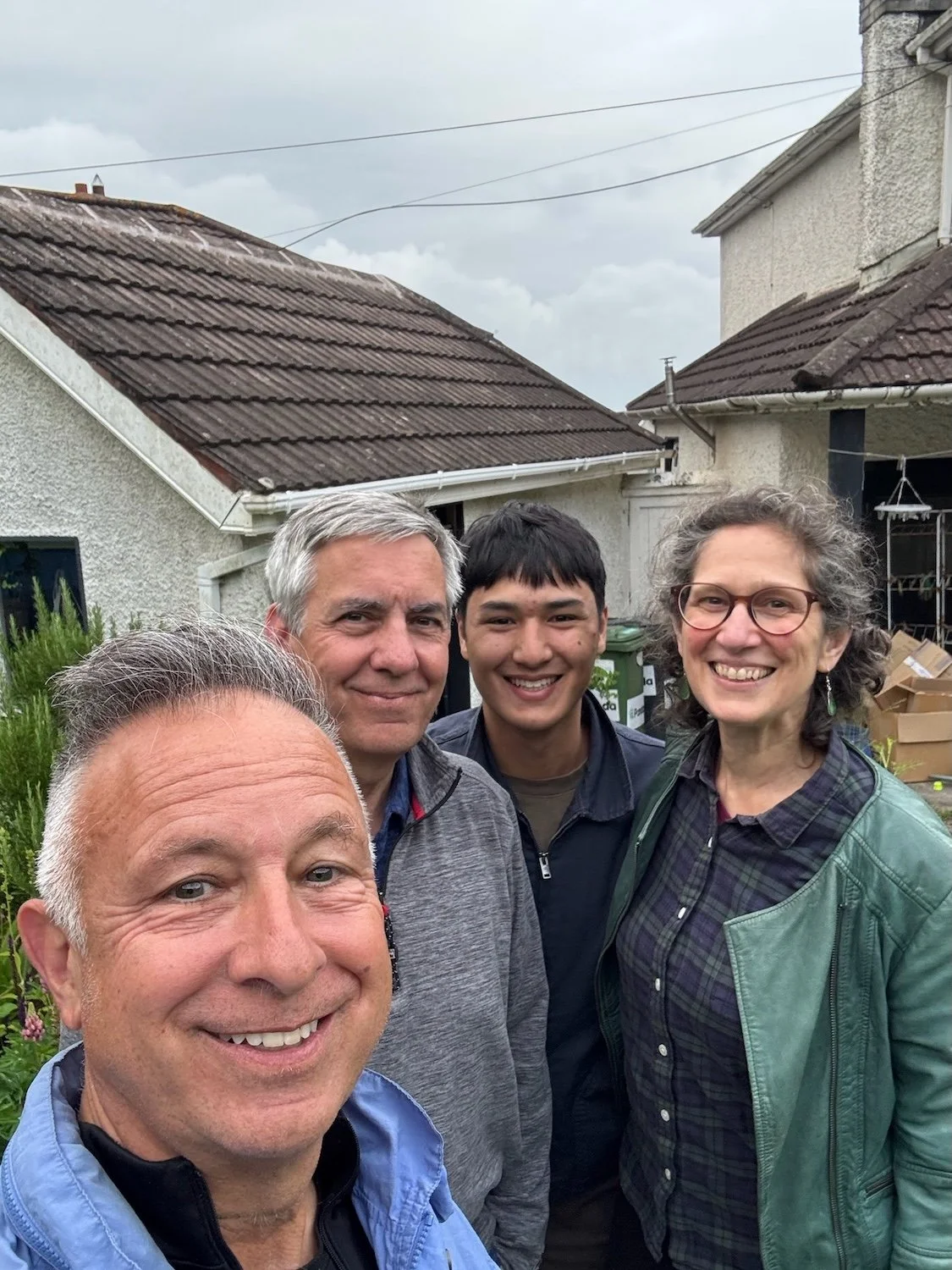
Mark, Jim, and Andrew with Sabrina (Astrid not in photo, she had to go back to Galway)
So who let go of the rope?
The question I put in my pocket in Dublin has an answer, and it changes the shape of the whole story. P.J.'s passport was issued on the 2nd of June 1910. The Ellis Island manifest has him re-entering as a citizen of Beloit at the beginning of August, three months later, exactly as he had sworn. His mother had died in 1900. His brother Dan had just spent two years at home in Foremass. The family in Kansas always said he went back once, and I now believe this was the once: a forty-eight-year-old farmer with a florid face and a dark grey head of hair, standing in the yard at Foremass in the summer of 1910 with the brothers who thought they had lost him.
That manifest has a name now. Marla found it this August: the S.S. California, out of Londonderry, docking in New York on the 1st of August, 1910. Line 10 is P.J., forty-eight, married, a citizen, bound for Beloit. Line 12, two rows below him, is Thomas Farrell — fifty-three, a citizen, also bound for Beloit. Thomas was Mary Ann's brother. My great-great-grandfather had gone to Tyrone alone, sworn to return within three months, and did — but he did not come back alone. He brought his wife's brother with him. Whatever passed between the Conroys of Foremass and the Farrells of Rathangan that summer, it ended with a Farrell stepping off a boat in New York, headed for a Kansas farm with his brother-in-law.
So the rope was not cut in 1880. P.J. held the two ends together for one summer, and then both families let go. I have wondered since whether there was a quarrel behind that, some resentment nobody wanted to bring up at the table, and I do not think there was. Look at who died when. Mary Ann died in January 1920, Dan fifteen days later, P.J. in August 1922; every American who had stood in the yard at Foremass was gone within thirty months, and Nelle was twenty. In Tyrone, Terence died in 1927 without children, Kate in 1928, and Tom, Hugh's grandfather, in 1934. Hugh was born in 1941. By the time either side could ask, nobody was left who had met the other. The one person who might have carried it was Hugh's father, fifteen the summer his American uncle came home, and whatever he remembered stayed with him.
I have been through this once already on the Italian side, where six family letters written between 1916 and 1935 surfaced in late 2023, after a cousin's memorial. One of them, from 1917, is a brother in Reggio re-establishing contact with his sister in Chicago "after many silent years." Another, from 1924, urges her to write monthly. The refrain across them is the same: why don't you write more? I used to read that as a quarrel starting. I now think it is what the end of a relationship sounds like when nothing is wrong. Correspondence lasts as long as the correspondents, and the children inherit the obligation without the acquaintance. That is what an emigrant family loses, and it is not what I thought we were going to find. Nelle went to Sixmilecross in 1954 and found a closed door. Her son came home saying you can have Ireland. Seventy-two years later her grandsons and her great-grandson went back with two pages of paper and found Hugh, who had shored up the stone with his own hands, and Claire, and Bronagh, who set a table for our nephew. I went over with a puzzle on paper and came back related to people. The rope is spliced again, and so far it is holding.
We learned some of Ireland's chapters. We imagined more. We'll be back for the rest. If you want the chapters in order before you go, the book I would recommend is Richard Killeen's A Brief History of Ireland short enough to finish on the flight over, and enough to make the stones in Rathangan and the walls in Belfast read as one story. (Thanks to Irish Pro Guide Breeda Greene for recommending it to me, and thanks to my friend Joe Elliott for introducing me to Breeda)
What it meant
What I want to say about these two weeks is simple. I had never been to Ireland, and I got to see it for the first time with my brother and my nephew — two generations of one American family, driving a gorgeous country in search of the people we came from, and finding them alive: cousins who walked us to graves, told us stories we had never heard, corrected the ones we had, and set tables for us. My brother has his own line for it now, and it's the one I want to end on. Our father wrote "You can have Ireland" and meant it as a door closing. Two generations later, Jim texted me: "We'll have & keep Ireland." Same country, opposite verb. Neither of us had planned that. Sharing our life experiences while standing on our common ground was the most powerful premise a trip could have. And Ireland kept its side of the bargain — a country that inspires thoughts about history at every turn, with more chapters than we could read in a lifetime. We learned some. We imagined more. We'll be back for the rest (well, at least I hope to return soon and to bring Dana with me next time!)
Outtakes and oddities
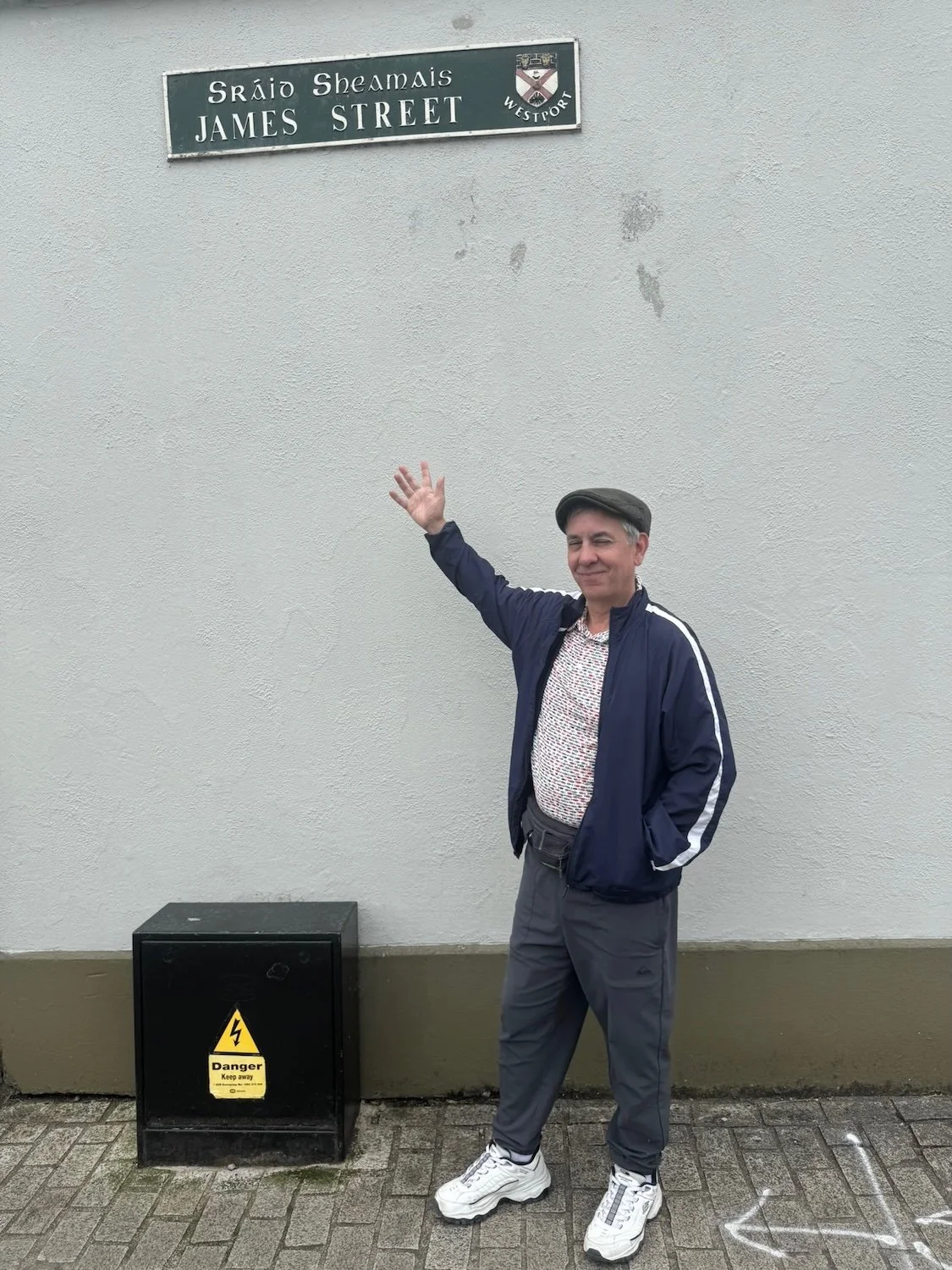
James is Seamus in Irish
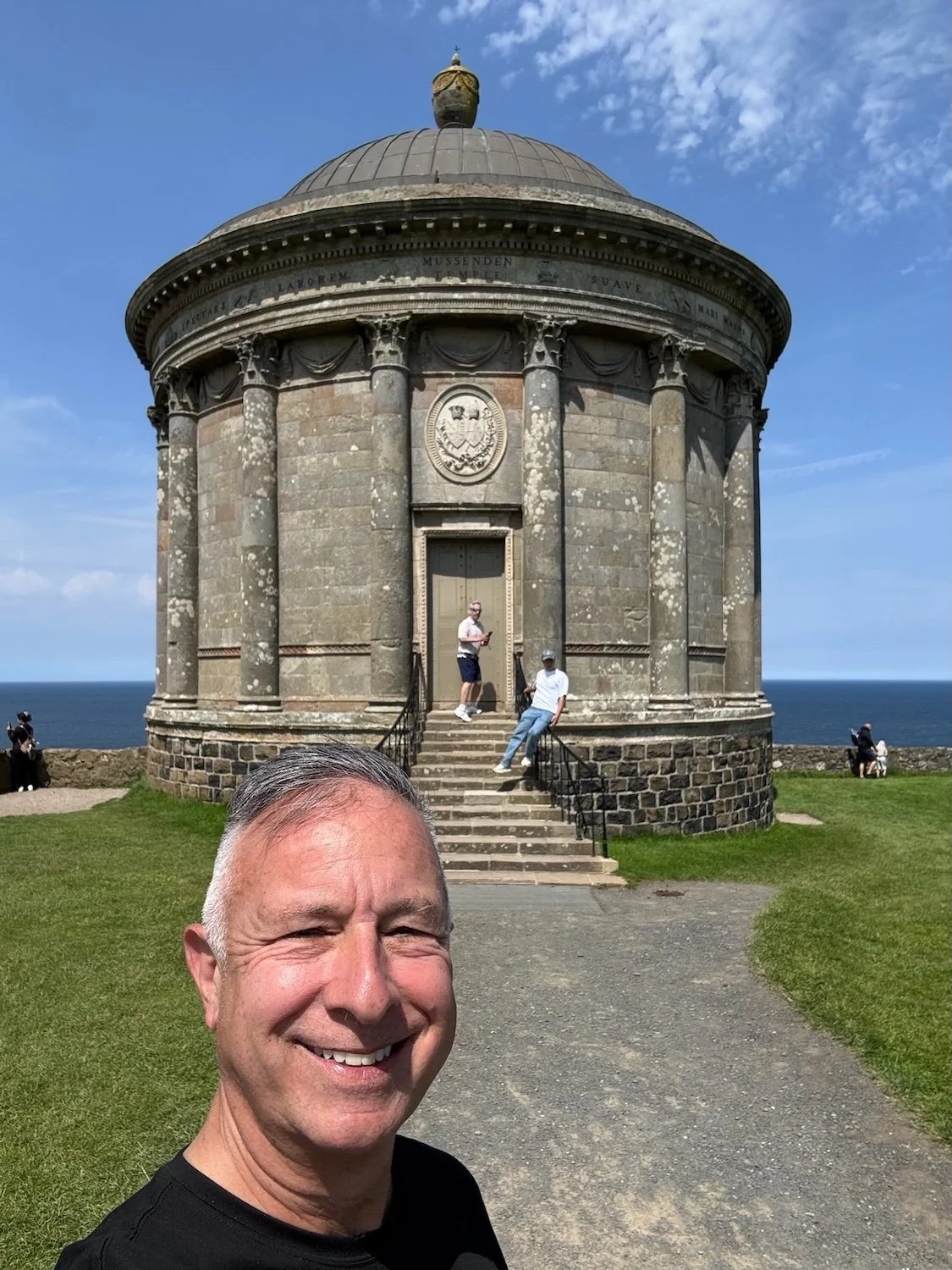
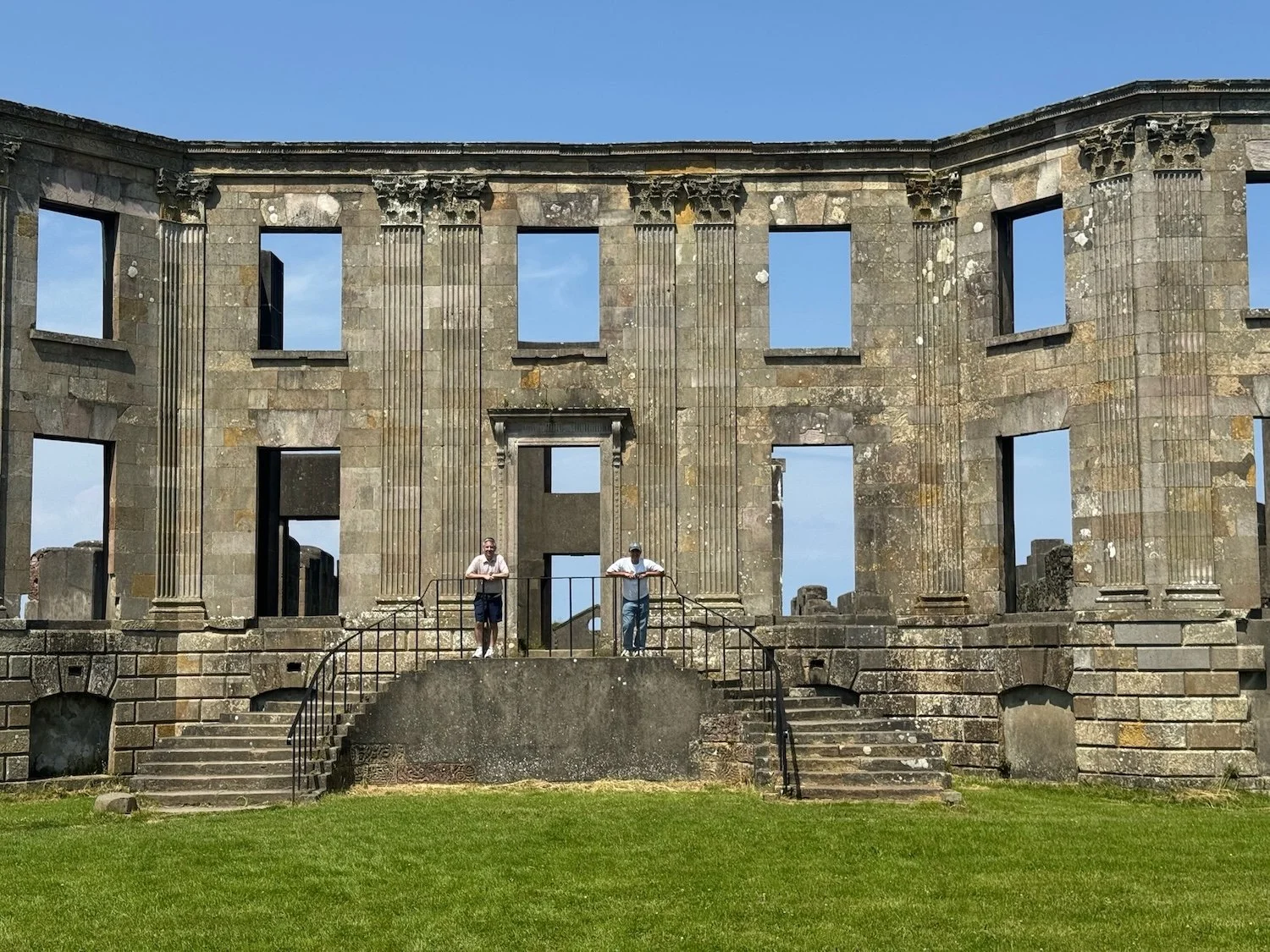
Mussenden Temple and Downhill House (above)
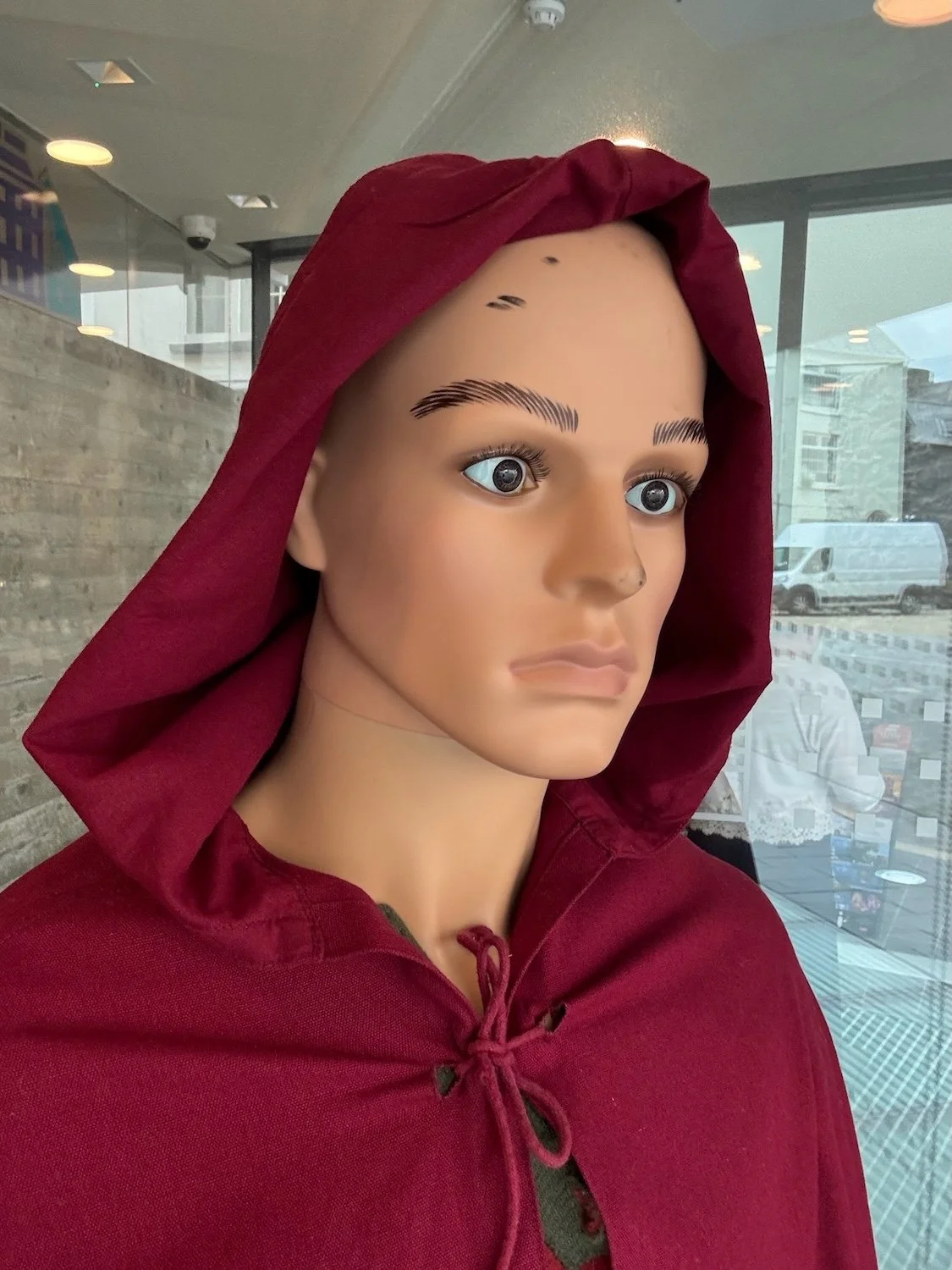
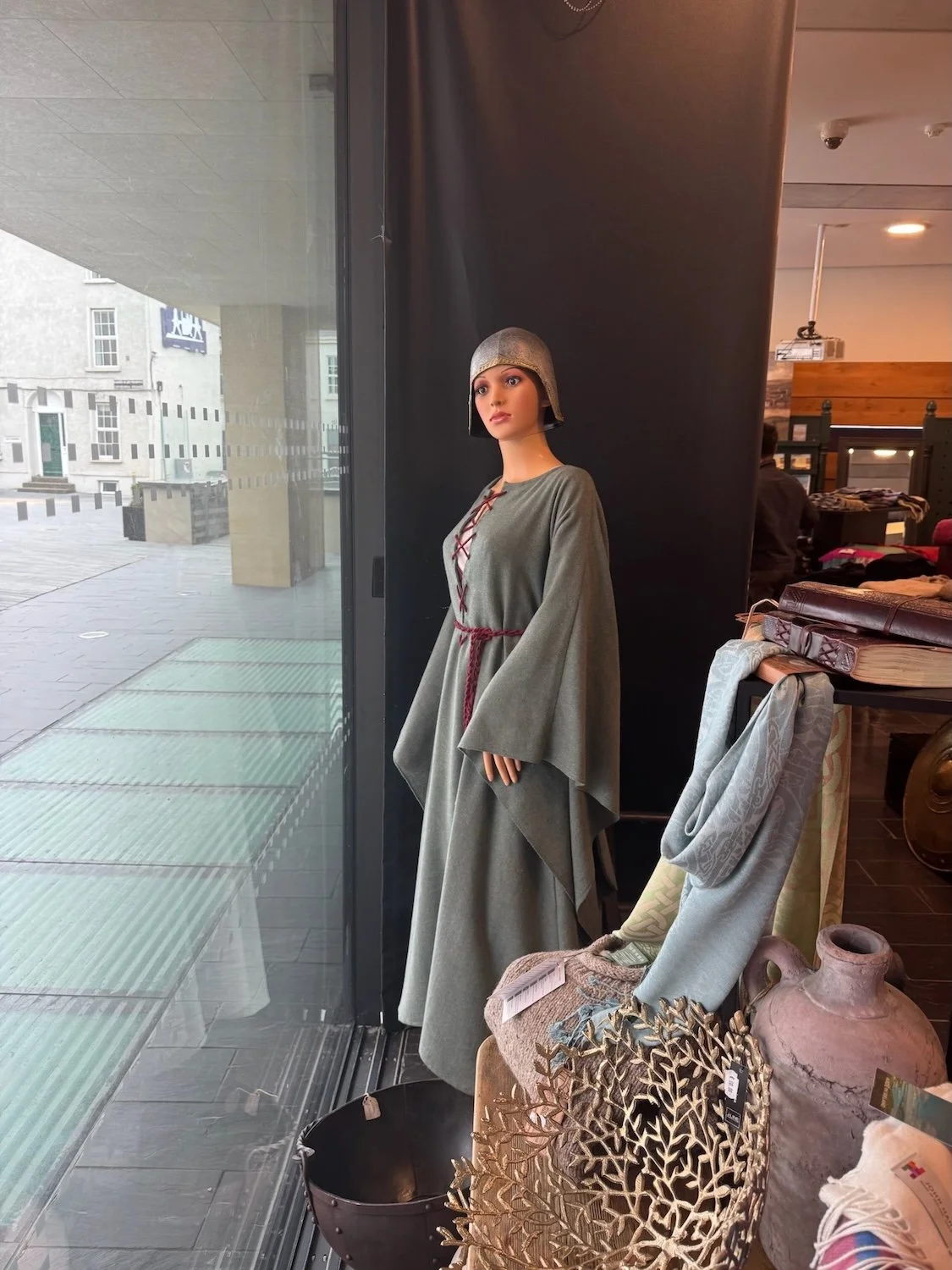
Creepy
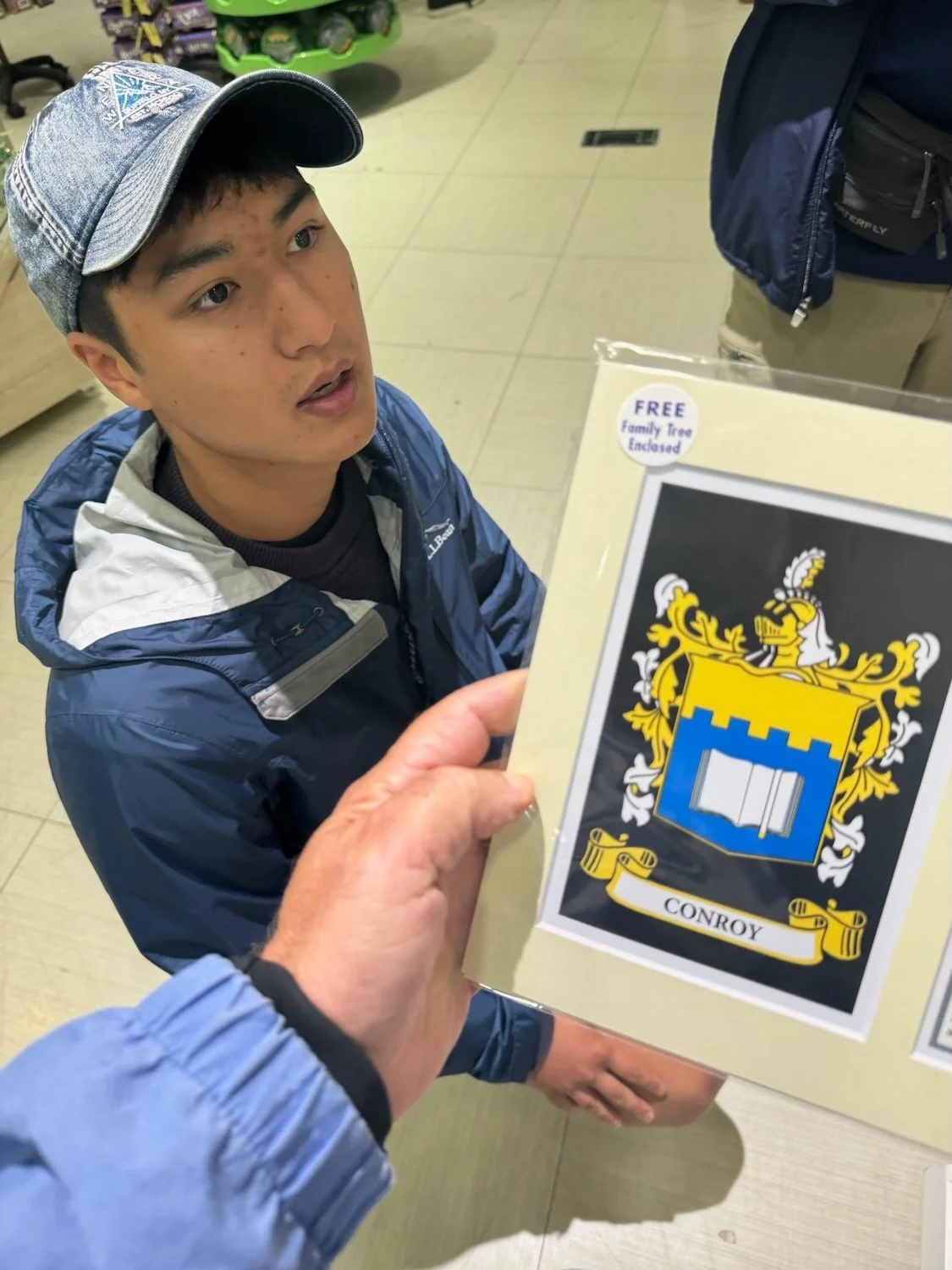
Conroy Coat of Arms
A souvenir shop in Westport sold us this Conroy coat of arms. Conroy, it turns out, anglicises two old Connacht families: seagoing chiefs from Galway, and the Ó Maolconaire of Roscommon, hereditary poets, historians, and chroniclers to the kings of Connacht for five centuries, singled out by Cromwell's men precisely because they kept the records.
Who they were: P.J. and Mary Ann
The short version is in the story above. This is the fuller record, for the cousins and for anyone who comes looking for these names later.
P.J. was born at Foremass in 1861 or 1862, the fourth of eight: John, Tom, Sarah, then P.J., an infant Mary Anne who lived ten weeks, Terence, Daniel, and Catherine, called Kate. Tom stayed and dealt in cattle and raised the marble stone at Beragh. Kate married Patrick McCann and kept a shop at Altamuskin. Terence farmed Foremass to the end and left no children. Daniel followed P.J. to Kansas in 1895, went home for two years in 1907, never married, and died in P.J.'s house in Beloit in January 1920, fifteen days after Mary Ann. The passport says P.J. was five foot eight, with a prominent forehead, blue eyes, a straight nose, a small mouth, a double chin, dark grey hair, and a florid, fat face. It is the only physical description of him that exists, and it was written by a clerk in Beloit in May 1910.
Mary Ann was born at Rathangan on the 12th of September 1859 and left Ireland at about three, with her parents and her older sister Bridget. The family settled first at Falls City, Nebraska, and in 1872 took one of the last homesteads in Jewell County, Kansas, on Limestone Creek. Bridget married John Doyle of County Down there in 1876; Mary Ann married P.J. at Esbon in October 1890. The two Rathangan sisters lived a few miles apart for the rest of their lives and died the same year, of the same heart condition, certified by the same doctor.
Their six children were Thomas, Mary, called Mayme, John, William, Daniel, and Nelle, my grandmother, the youngest, born in 1902. She was seventeen when her mother died and twenty when her father did.
By his death P.J. had put together close to six hundred acres across Jewell and Mitchell counties, and keeping it became the next generation's fight. Through the drought and dust storms of the 1930s his son Thomas carried the debt, sold timber and corn, lived by barter, and was rescued once by the Federal Land Bank before a second foreclosure moved the family into town in 1939. From a Tyrone farm to a Kansas one, the Conroys stayed people of the land, and then, like the Foremass Conroys, they stopped being farmers.
Nelle married and moved to Ohio, where my father was born. I was born in Idaho, grew up in Ohio, studied in New England, spent five years in Japan, and have lived in Texas since the mid-1990s, with a decade in Grand Rapids along the way. Jim and I are P.J. and Mary Ann's great-grandsons; Andrew is their great-great-grandson.
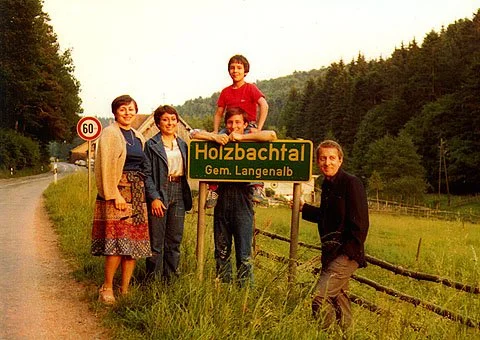
at the "Holzbachtal" village sign, Black Forest, 1978. Left to right: my mother Lorraine, my sister Ellen, my brother Jim on my shoulders, me, and my father Tom, Nelle's son. The surname means "wooded brook."
Before the trip I wrote a two-page version of all this for the relatives we hoped to meet and carried ten copies to Ireland. It is here as I printed it. It has P.J. leaving at sixteen and gives him no birth year, because the passport and the parish register had not yet been found; everything above is the corrected account.
Click here to view the handout as carried, June 2026 (PDF)
A note on sources. P.J.'s life comes from his 1922 obituaries, his 1910 passport application, the Beragh parish registers, and the U.S. censuses of 1900 to 1920; Mary Ann's from her own and Bridget's obituaries in the Beloit Daily Call; the farm and Depression account from a memoir by his grandson, Richard "Dick" Conroy. I have kept to what we can show, and I would welcome corrections.
A request
Jim read an early version of this and wrote back with a line I'm not going to try to improve on: "Your message via this blog really is timeless and becomes part of our Conroy family roots lore for generations to come." I'm leaving it here as proof that the ask below actually works. This page is a first draft of a family story, and I know it is incomplete. Whatever you do, even if you do nothing else, please leave a comment at the bottom of this page! Corrections, additions, images, text, and video can go to me directly at mholzbach@alum.mit.edu, and I will fold them in with credit. If you have a photograph, a video, or a memory that belongs here, I would like to have it.

(Last edit 27 August 2026)