
Through Artists’ Eyes Japan: Early Arrival Notes, Free Time Ideas, and Gentle Preparation

Yozakura (Night time cherry blossom viewing) at Nakameguro
Version 2026.03.12 (NOTE: this page is subject to updates)Welcome to Japan!
For those of you arriving in Tokyo before our official tour begins on April 6, welcome!
Arriving early is a wonderful way to ease into the rhythm of Japan. We encourage you to use these first few days to walk gently, observe, construct a calm routine, and adjust to the time zone without feeling rushed.
Please use this page as a light resource. None of this is required reading or mandatory "homework"—simply a curated selection of ideas to ensure you feel supported and oriented before the tour begins.
Essential Tour Documents
For your reference (and for sharing with any interested family or friends), here are the key documents for our journey. You do not need to read these right now, but they are here when you need them (just click on them to open):
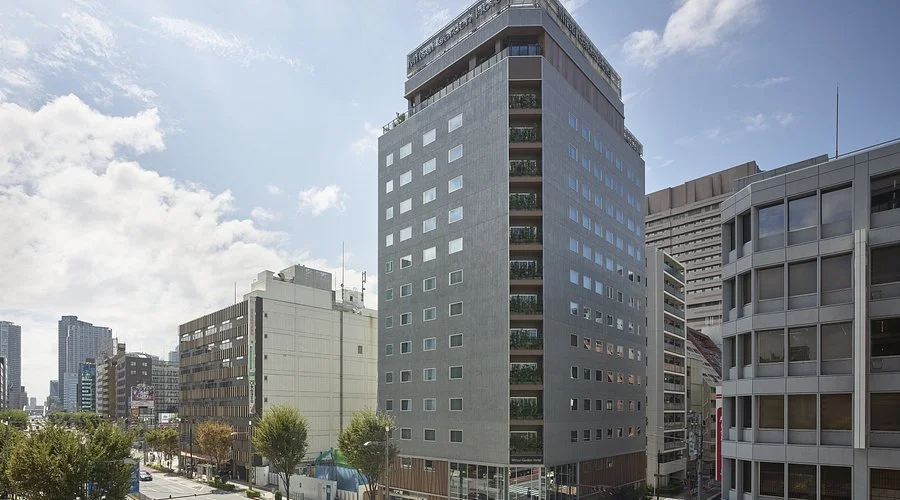
Mitsui Garden Hotel Ginza Tsukiji
Your Tokyo Base: Mitsui Garden Hotel Ginza Tsukiji
This lovely new hotel (opened in 2024) serves as our starting point. It is uniquely equipped for a comfortable extended stay.
In-Room Amenities: Every room is equipped with a washer-dryer, microwave, and refrigerator.
Dining in the Hotel: If you are tired, you don't even need to leave the building. The Ono Market Café (1st floor) is great for a casual bite, and Ono Gratia Smoke Dining (14th floor) offers a more formal experience.
Room Service: Click here to view the Room Service Menu.
If You Have Just Arrived
If you have just landed, your energy may be low. Here is a simple, no-stress plan for your first afternoon:
Stay close to the hotel: Take time to unpack, perhaps run a load of laundry, and rest.
Take a gentle walk: Wander the immediate streets of the Ginza and Tsukiji neighborhoods. There is no need to navigate the subway today.
Visit one nearby landmark: Allow yourself to simply be in Tokyo without trying to "do" Tokyo.
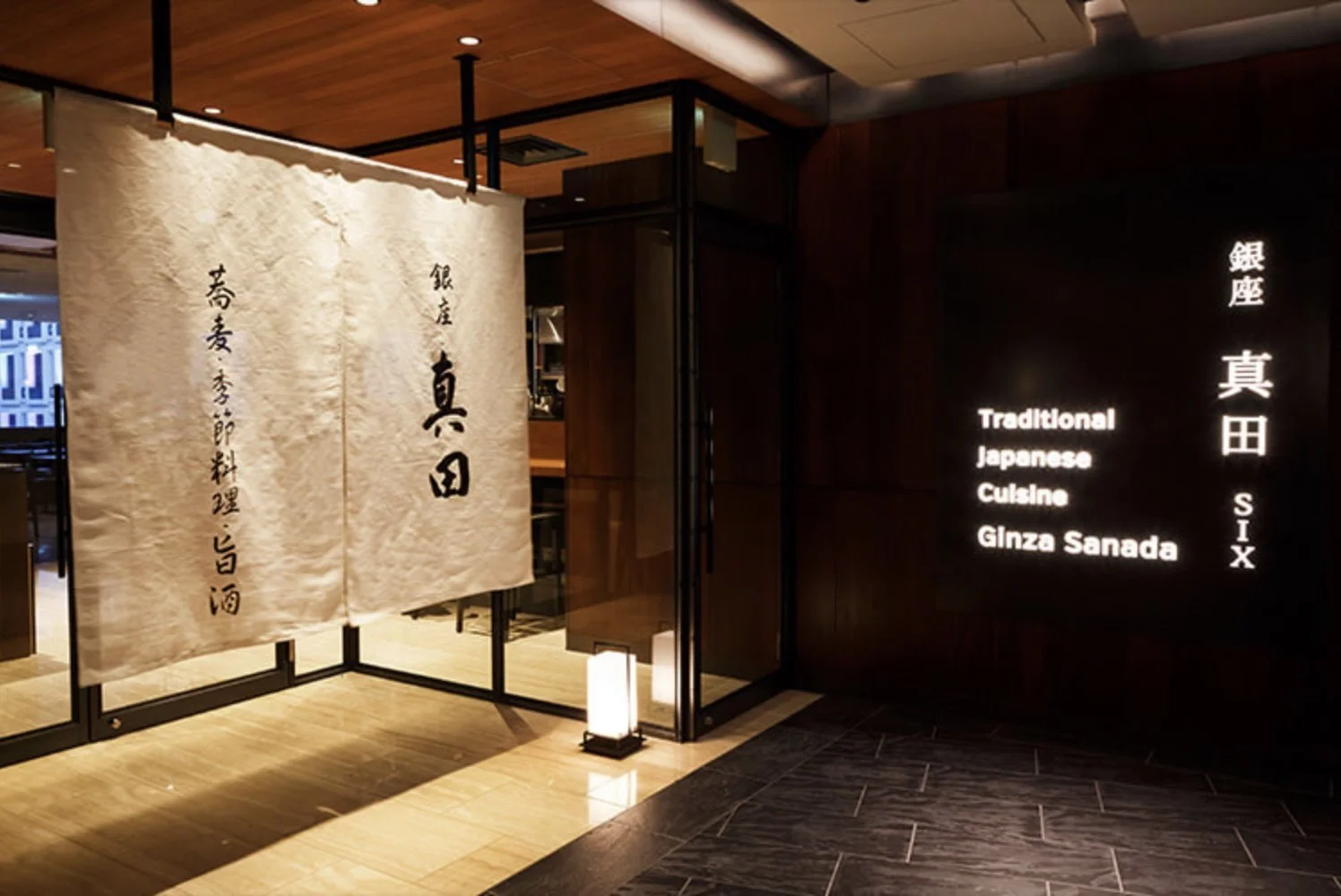
Ginza Sanada SIX restaurant (on 6th floor of Ginza SIX shopping center)
A Recommended Ginza Dinner: Sanada SIX
If you are looking for an excellent meal within walking distance, this is one of our absolute favorites.
Located on the 6th floor of Ginza SIX (about a 14-minute walk from the hotel), Sanada specializes in handmade cold soba noodles served with tempura, alongside seasonal izakaya-style dishes and an excellent sake selection.
Google Maps link: https://maps.app.goo.gl/YmAB6Em6wU6zcbC96
Tips for visiting:
Reservations: You can ask the hotel front desk to call ahead and check availability for you.
Timing: We recommend arriving before 9:00 PM so you have time to explore the rest of Ginza SIX, which houses a beautiful Tsutaya Art Bookstore and other good restaurants including an impressive branch of the international EATALY Italian restaurant chain.
Featured Optional Excursions (April 4, 5, & 6)
Before the official tour welcome dinner, we are organizing a few optional gatherings to explore the city together.
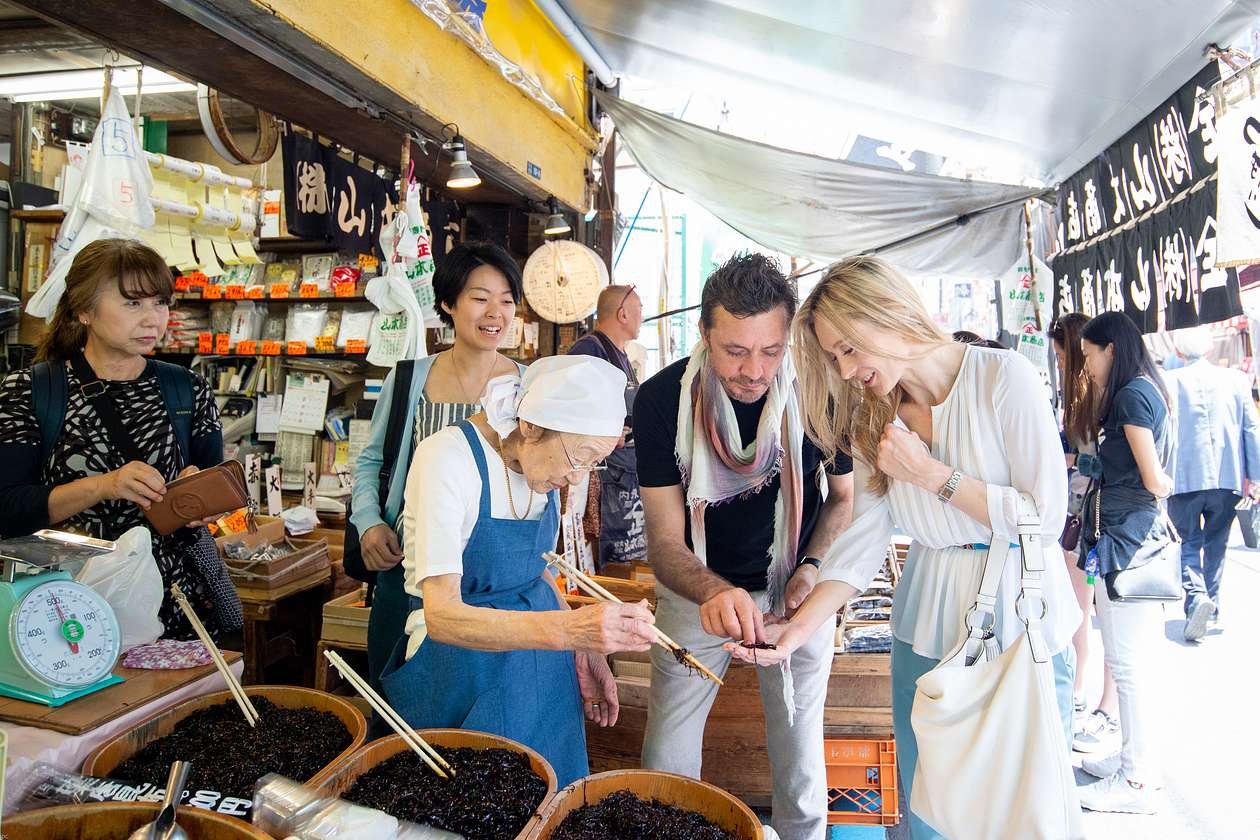
Tsukiji Outer Market (very near Mitsui Garden Hotel Ginza Tsukiji)
Saturday, April 4 & Sunday, April 5: Tsukiji Outer Market Breakfast
If you are awake early and looking for a lively morning, Mark will lead an informal walking tour of the nearby Tsukiji outer market on both Saturday and Sunday morning. No need to indicate in advance whether or not you’re coming … just show up (or not)!
7:25 AM - 7:30 AM: Meet in the Mitsui Garden Hotel Ginza Tsukiji lobby for a ~5-minute walk to the market.
What to expect: An informal walk, shopping, and an incredible sushi breakfast.
Return: We plan to return to the hotel by 10:00 AM (or earlier if you prefer), leaving the rest of the day completely open and on-your-own.
Cost: ~$30 per person - Mark will split the bill and ask you to reimburse
RSVP: Not required, but if you do RSVP, Mark will try to contact you if you’re not in the hotel lobby by 7:30 AM departure time.
Monday, April 6: Sumida River Boat Ride and Hama Rikyū Garden
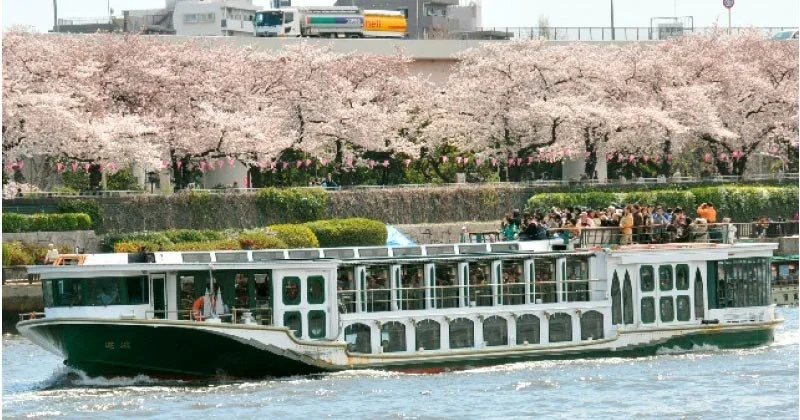
Sumida River Cruise (hopefully we’ll have cherry blossoms!)
Explore the historic contrast of Tokyo before our welcome dinner. We will meet in Asakusa at the striking Kengo Kuma-designed Culture Tourist Information Center, explore Sensō-ji temple, and have lunch at Komakata Dōjō, a historic Edo-period restaurant where diners simmer small iron pots of loach hot pot (dojo-nabe) topped with shaved burdock root, experiencing a simple, traditional meal largely unchanged for centuries
In the afternoon, we will take a relaxing 40-minute boat cruise down the Sumida River to Hama Rikyū Garden, where we will enjoy matcha at the Nakajima teahouse surrounded by the contrast of historic gardens and the modern skyline. There’s a very good chance that there will be many cherry blossoms along the shore during our cruise.
8:25 AM - 8:30 AM: Meet in the Mitsui Garden Hotel Ginza Tsukiji lobby or if you are staying at a different hotel, you may prefer to join us at 9:00 AM on the outdoor top-floor observation deck of the Asakusa Culture Tourist Information Center.
Return: We usually finish in Hama Rikyū Garden in the early afternoon (or earlier if you prefer), leaving the middle of the day completely open and on-your-own. NOTE: Later on this day, starting at 16:30 PM, we’ll meet in the Mitsui Garden Hotel Ginza Tsukiji lobby for an orientation walk & tour presentation followed by an informal welcome dinner.
Cost: $150 per person (includes guide, lunch, boat ride, and garden admission). If interested, please ask Mark to send an email with more descriptive details.
For more details please view the descriptive web page at: https://www.tinyworldtours.com/2026-optional-6-april-tour
RSVP: Please let Mark know by 5 PM (Japan Time) on 5 April if you will like to join.
Optional Independent Experiences
If you find yourself with extra time and energy, here are two highly recommended cultural experiences you can enjoy on your own.
Kabuki at Kabuki-za Theater

Kabuki-za Theater
Our hotel is within walking distance of Kabuki-za, the main Kabuki theater in Tokyo.
If you are looking for one memorable cultural experience before the tour begins, this is a strong candidate.
The April program includes scenes from Ukare Shinjū, a lively comic kabuki play known for its playful energy and inventive stagecraft. The story itself is lighthearted and chaotic and includes traditional theatrical karakuri effects—mechanical stage transformations, sudden reveals, and physical comedy that demonstrate the ingenuity of kabuki theater.
A few practical notes:
Full kabuki programs can run four hours or longer and advance ticket prices can run from about $60 - $200 depending on show and seat location
However, it is often possible to buy high-balcony last-minute single-act tickets for only about $20
A single act usually runs 60–90 minutes
English explanation tablets can be rented for about $10
For many first-time visitors, the last-minute single-act ticket is ideal. It allows you to experience kabuki without committing an entire evening.
If you would like help securing tickets in advance, please let Mark know. Otherwise we can often try for last-minute single-act tickets the day before.
teamLab Borderless and Azabudai Hills

teamLab Borderless
Some guests have heard about teamLab Borderless, one of Tokyo’s most talked-about digital art experiences. Although it is not part of our official tour itinerary, it can make an interesting optional outing if you have free time before or after the tour.
teamLab Borderless is located in Azabudai Hills, one of Tokyo’s newest architectural districts. The area was conceived as a “modern urban village” and designed by Pelli Clarke & Partners together with Heatherwick Studio.
The development integrates offices, residences, gardens, shops, and cultural spaces within a carefully planned urban environment. Public art appears throughout the district, including works by Yoshitomo Nara, Zhan Wang, and Yutaka Sone.
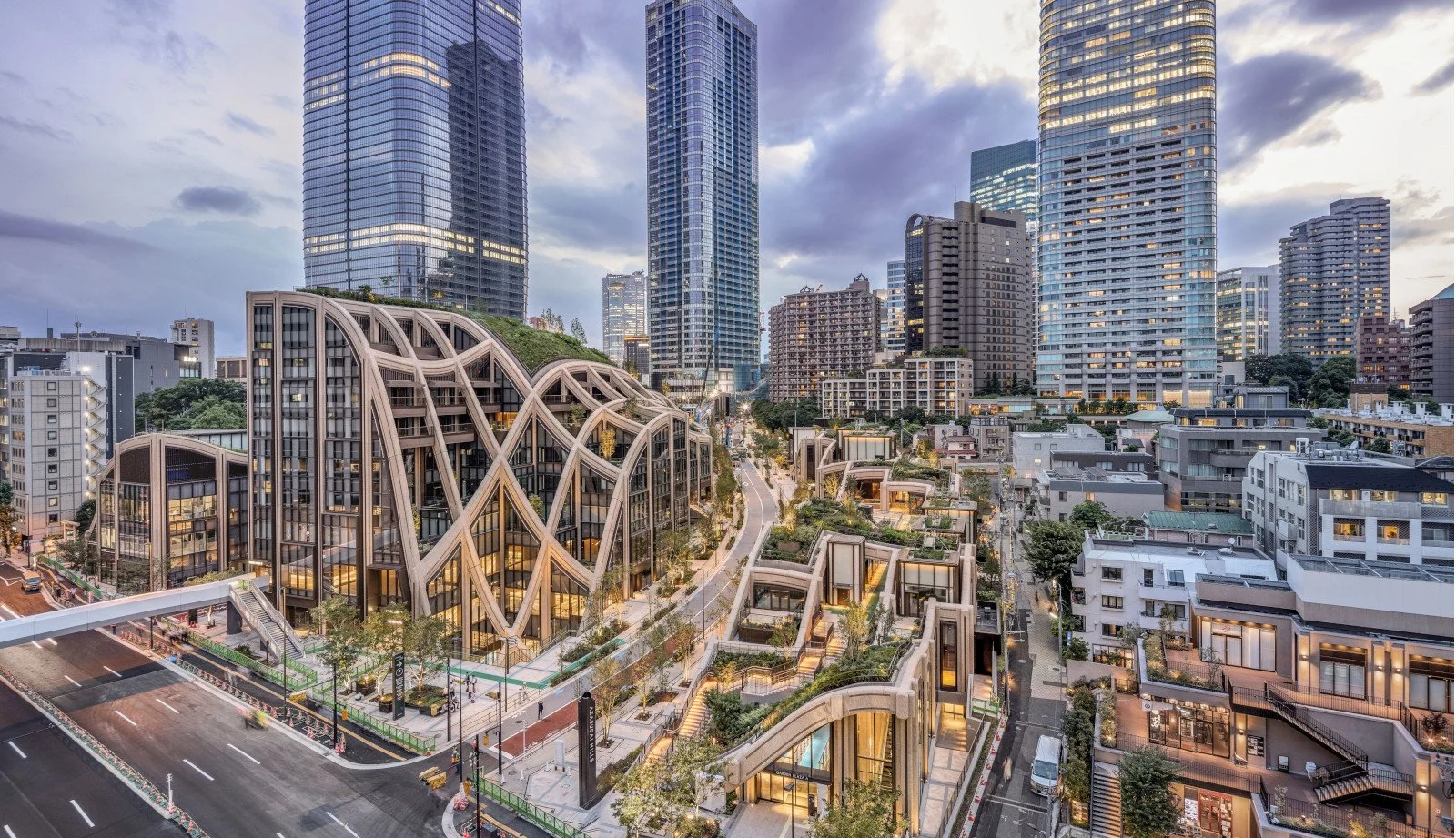
Azaubdai Hills District
In February 2024, the interdisciplinary collective teamLab opened a re-imagined and expanded version of their widely known project teamLab Borderless at the Mori Building Digital Art Museum within Azabudai Hills.
teamLab, founded in Japan in 2001, brings together artists, programmers, designers, engineers, and scientists to create immersive digital environments.
Inside the museum, visitors move through large interconnected spaces where projected light, sound, and motion respond to the presence of people. Images migrate between rooms, dissolve, and reappear elsewhere, creating an environment that feels less like a traditional museum and more like a continuously evolving artwork.
Tickets
teamLab Borderless tickets usually cost $30–$40 USD per person and it is best to purchase them in advance, as popular time slots often sell out.
If you would like help securing tickets, Mark can purchase them for you ahead of time.
"On-Your-Own" Tour Nights (Advance Reservations Encouraged!)
As you plan your free time, please note the following evenings during the tour are "on-your-own" for dinner. If there is a specific restaurant you wish to experience, we highly recommend making advance reservations now:
Tuesday, April 7 (Tokyo / Ginza)
Wednesday, April 8 (Tokyo / Ginza)
Friday, April 10 (Kyoto)
When you are ready to explore your options for these nights, we have compiled a few extra curations:
Kyoto Area Restaurant Recommendations: A curated list for our April 10 free evening in Kyoto, expertly assembled by local guide Masa Fujiwara.
Recommended restaurants to consider for your April 7 and 8 free evenings in Tokyo (other than our favorite, the Sanasda SIX, listed above).
Ginza Restaurants recommended by the Peninsula Hotel Concierge
Best Restaurants in Ginza recommended by Timeout Tokyo
A Simple Guiding Principle
You do not need to see very much on your first day.
Choose one small experience, enjoy a good meal, and get a good night’s rest. The city will still be here tomorrow.
Easy Places to Explore Near Our Ginza Hotel
Visit a Ginza major department store
We recommend positioning yourself outside one of the main department store entrances just prior to opening time (opening times are noted below, and worth double-checking). The store will open exactly on time and the staff will bow and will greet you with a loud “irrashaimase!” (welcome!) as you walk through the doors.
1. Matsuya Ginza (opens at 11 AM)
2. Mitsukoshi Ginza (opens at 10 AM)
3. Takashimaya Nihonbashi (opens at 10:30 AM)
Visit the Art Aquarium Museum (Ticketed Attraction)
The Art Aquarium Museum in the 8th and 9th floor of the Matsuya Department store in Ginza is a permanent exhibition of Japanese goldfish swimming in a variety of colorful tanks. Although online advance ticket purchase is possible, on site ticket purchase works fine on most weekdays.

Walk around the Imperial Palace
The Imperial Palace serves as the residence of the Emperor of Japan.
The palace’s moat perimeter is a favorite local jogging route. Although you cannot enter inside the palace grounds, you can view some of the exterior from outside the perimeter. On this same site previously stood Edo Castle, constructed in 1457. It was the residence of the Tokugawa shogunate who ruled Japan from 1603 until the Meiji Restoration in 1868. Some of Edo Castle’s stone walls and gates still remain.
Ginza Shopping
Ginza shopping includes a large array of flagship stores of many world-renowned luxury brands including Mikimoto, Louis Vuitton, Chanel, Gucci, Dior, Cartier, Tiffany & Co., Hermès, Bulgari, Mont Blanc, Prada, Burberry, Chaumet, and Armani. The Japanese fashion chain Uniqlo has a very large outlet here. The Ginza district also includes lifestyle and home goods at Muji, creative and innovative finds at Loft, stationery at the Japanese mecca Itoya, and a wide variety of gadgets and tools at Tokyu Hands. Within a very short walking distance of the Hyatt Centric Ginza Tokyo Hotel, the Ginza Six stands out among shopping complexes, offering over 200 high-end shops, diverse dining options, cultural experiences with art installations and a Noh theater, alongside a tranquil rooftop garden, all encapsulated within a modern design that blends tradition and innovation. When you check prices, you may notice the US dollar’s favorable exchange rate with the Japanese Yen.
Here Are a Few Optional Practical Tip YouTube Videos
What is a SUICA card?
A SUICA card is a smart prepaid card used for “touchless” public transportation and cashless payments in Japan, offering convenience and wide acceptance across various transportation networks and retail outlets. Tourists benefit from the ease of navigating Japan's transport systems without needing to purchase individual tickets, and the card can be used for small purchases (e.g. at vending machines, convenience stores, etc.). An electronic version of SUICA can be added to Apple Wallet on iPhones, enabling users to manage and recharge their card digitally and use their iPhone for transportation and small purchases.
Fun fact: SUICA stands for "Super Urban Intelligent Card." - Suica is also a Japanese word that can mean either “watermelon” or “picked squid” (usually the context helps to clarify which word you mean)
Using Google Maps in Tokyo
Google Maps is highly efficient for navigating in Tokyo (and across Japan) due to its comprehensive and up-to-date information on public transportation routes, including train and bus schedules, making it easy to plan travel itineraries. Its detailed maps and walking directions are helpful for navigating Japan's complex city layouts and finding points of interest, restaurants, and accommodations, often including opening and closing times. Additionally, Google Maps offers real-time traffic updates and alternative route suggestions.
Recommended spots for viewing Cherry Blossoms in Tokyo
Paolo’s ten cherry blossom viewing recommendations are:
Sumida River
Yoyogi Park
Ueno Park
Chidorigafuchi
Yasukuni Shrine
Shinjuku Gyoen
Yaesu Sakura Dori
Imperial Palace
Meguro River
Rikugien
Managing Tokyo’s Various transportation options (e.g. Taxis, Buses, Subways, and Trains)
Tip: Bring a hotel business card with you in order to show it to your taxi driving
Visit a Japanese Convenience Store or “Konbini”
Convenience stores, or "konbini" in Japan, are an integral part of daily life in the country, offering an astonishing variety of services and goods that go far beyond what is typically expected from such establishments elsewhere. Open 24/7 and located at nearly every corner in urban and rural areas alike, these stores provide a convenient and efficient shopping experience, catering to the needs of people at all hours with their wide range of products, from ready-to-eat meals and snacks to household essentials and beyond. Try paying with a SUICA card here!
Preparation Materials (Optional Books, Videos, & TV Series)
If you enjoy preparing for a trip by learning about the culture in advance, we have put together two optional resources for you:
Optional Preparation Videos for Japan: A calm, curated playlist covering the basics of Japan travel, and polite Japanese phrases for those who like to study up before they fly.
Reading and Movie Recommendations: A wonderful collection of books, movies, and TV shows to immerse yourself in the culture and history of Japan before departure.
THANK YOU!
Mark Holzbach mark@tinyworldtours.com +1 512.689.6777
Dana Friis-Hansen dana@tinyworldtours.com +1 512.653.8188
Masa Fujiwara (Kyoto-based collaborator)
Dugan Lunday (Tokyo-based collaborator)

Tiny World Tours Collaboration Partners on a design research trip to Asahikawa, Hokkaido (l-to-r: Dana, Mark, Dugan, and Masa)